
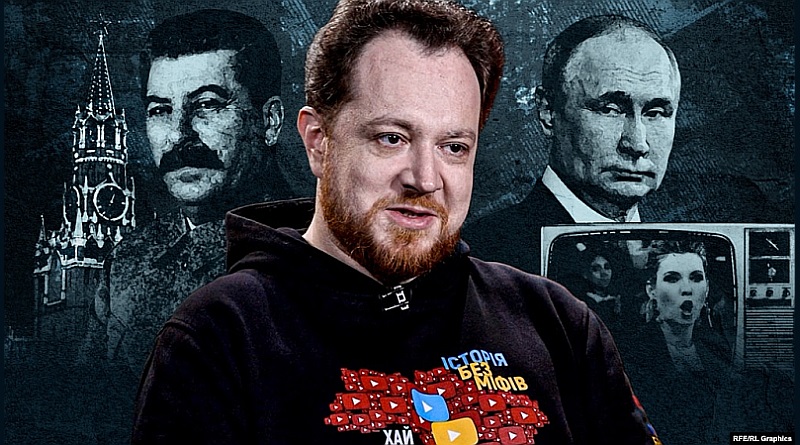
Why the disintegration of the Russian Federation is an inevitable scenario, and what awaits it after the end of the Putin era?
In an interview with Radio Svoboda, historian and co-author of the YouTube channel “History Without Myths,” Vladlen Marayev, analyzes, among other things, internal threats to the Kremlin and explains whether Putin’s departure could change the political regime in Russia.
In the conversation, Marayev also discusses the nature of “rashism,” the mechanisms of Russian propaganda, and whether Ukraine has managed to form its own narrative about the war. There was also a separate discussion about how the role of the US is changing and whether the global security system is functioning today.
(Interview edited for clarity and flow)
Has the Third World War begun?
– The past month has brought a new war in the Middle East, affecting more than a dozen countries. A full-scale war in Ukraine has been ongoing for the fifth year. Against this backdrop, there are increasing speculations about the approach or even the start of the Third World War. As a historian, how do you assess whether the Third World War has already begun or if the world is approaching it?
– I would prefer to stop speculating about the Third World War, so as not to unintentionally provoke it, as they say. When it begins, we will all surely know. So it’s better for it not to begin.
In general, perhaps, in the future historians will determine that the Third World War is what we’re currently living through. Or maybe the Third World War is what we now call the Cold War, as it lasted for almost half a century. It involved numerous local conflicts, in which, in one form or another, the USSR and the USA were usually the opposing sides.
Therefore, let’s not claim that this war is already ongoing, or has begun or not, but rather let future researchers, who will have access to much more source material, evaluate it after some time, discarding unnecessary emotions and worries.
– Is it practically impossible to understand this in the moment?
– Our concept of a world war is, of course, formed by the First and Second Wars. So, from that perspective, it’s certainly not happening.
Both the First and Second World Wars involved virtually all major countries, with millions of troops, massive ground operations involving millions of people simultaneously, fundamentally changing life around the entire planet.
That is not the case at the moment.
Perhaps historians will later determine that the Third World War is of a new format. For example, the Cold War was clearly not like the Second. That is, it was already a new format, not like before.
Perhaps the formats of wars change over time.
– Then can we assess today who opened Pandora’s box of war and when did it happen?
– If we talk about Europe, it is quite obvious that the Pandora’s box was opened by the Russian Federation in August 2008, as it invaded the territory of Georgia. There was a ground operation when Russian forces reached the capital of Georgia. And they facilitated the formal declaration of independence by two separatist republics, which had no right to do so, no legal grounds. Thanks to the Russian occupation, Russian troops did this, effectively being pro-Russian governments.
Secondly, of course, the same Russia definitively opened the Pandora’s box in March 2014 by announcing the annexation of Crimea. This is the next step in opening Pandora’s box.
It’s not about creating some pseudo-republics or quasi-states.
It’s about the direct seizure of part of another country’s territory. What was prohibited in Europe after the Second World War.
– You say Russia opened it in Europe, but is the conflict we are now observing in the Middle East a continuation? Does what happened in Europe have any connection with the Middle East?
– Of course, it does. Everything is absolutely interconnected.
You noticed how rapidly the situation in the world began to deteriorate after Russia’s large-scale invasion of Ukraine. October 2023 – Hamas attack on Israel. Then at the end of 2023 – there was a very serious crisis between Venezuela and Guyana.
In Syria, the conflict had been ongoing for a long time, but there was a change in power. Venezuela, I remind you, too: operation against Nicolas Maduro on January 3, 2026. Finally, what is happening now in the Middle East.
And in general, before that in 2025, I remind you, there was a 12-day war, where Israel on one side, Iran on the other, and then in the final phase of this war, the US also openly sided with Israel.
In other words, the situation in the world is frankly worsening. Why? Because Russia is destroying international law.
And when the law is destroyed, when we live in this world, more and more temptations appear for various players to do the same. “Because if someone is allowed to do it, why shouldn’t we?” – many politicians in the world think.
– Is there then a mechanism to close this box today? Or will it continue to escalate to some point?
– At this moment, stopping it just like that is unrealistic. Something has to happen; a complex series of events and reasons must occur. Right now, in the heat of it, it might just be getting inflamed.
Therefore, I don’t see the possibility of closing this box anytime soon.
This box could be closed if Russia received a collective coordinated response to its aggression, condemnation of its regime, and punishment for its actions.
In fact, we have seen that the world has instead chosen a position of supporting Ukraine so that it is not completely destroyed, does not disappear from the political map. Such support is frankly insufficient, barely enough to sustain Ukraine itself, but not to punish the Russian Federation for its crimes and give it a decisive rebuff.
Russia after Putin: Will the regime change?
– Speaking about the war in Iran, Donald Trump often stated that one of the goals of this operation in the Middle East was to change the regime in Iran. At the same time, one often hears the opinion that the removal or elimination of the leadership of an authoritarian state automatically leads to the fall of that regime. Such assumptions are also heard regarding Russia. But how much is this logic confirmed by history? Do we see this in Iran now, where the situation is still developing?
– As we see, it is not confirmed at the moment. In the first hours of the operation, a significant part of the ruling elite of this state was , but the system stood firm. It demonstrated stability, strength, and readiness to respond within its capabilities.
Let’s consider that, first, the Islamist regime in Iran has existed for almost half a century. Accordingly, it is deeply rooted.
Second, if there were hopes for an internal explosion provoked by airstrikes, unfortunately, the moment was practically irretrievably lost.
Mass protests against the regime in Iran took place in December 2025, in January 2026, but they were suppressed. Their potential likely exhausted.
Third, Iran is an extremely religious country. And the killing of religious leaders, who are considered spiritual authorities by many, regardless of their role, is unlikely to contribute to the popularity of such actions. Rather, on the contrary, it can consolidate the population around the regime.
So “we have what we have” at the moment, as the classic said.
In principle, any invasion usually causes the consolidation of the state’s efforts, the society’s efforts around its state.
Therefore, I don’t know, by the way, why the Putinists hoped, invading Ukraine on a large scale, that everything would collapse here.
Probably, they proceeded from some completely insane notion that there is no such thing as a state here, that it is some kind of fake construct, supposedly, that just blowing on it is enough – and it will dissipate.
– And speaking of Russia and the scenario “after Putin”, could the departure of the current head of the Kremlin change the Russian regime? Or is the system already so entrenched there that it can even survive without him?
– We don’t know, of course, how it will be.
Putin will, in any case, depart in some way soon, considering that he is almost 74.
But, look, Russia is an extremely unpredictable country. This is its particular complexity.
We have seen from history that sometimes radical things happened there that were completely unexpected.
The “Revolution of 1917” was completely unexpected for the people living at that time.
The elimination of Emperor Paul in 1801 was a vivid example of precisely a palace coup. That is, a coup involving a very narrow circle of the elite, but not society itself. And there were practically no opposition forces. This, too, was unexpected for most. Moreover, the state then tried to hide it.
104 years after Paul was killed, the state said he died of a stroke. An apoplectic stroke. But people, in principle, knew the truth from various rumors and added: “an apoplectic stroke with a snuffbox to the temple.”
So, historical experience only shows trends.
When a fairly harsh, autocratic regime exists in Russia for a long time, after the person disappears, dies, or is killed, there usually follows a period of instability at the top. Because this person, during their long rule, tries to eliminate any real competitors to secure themselves. And when there are no figures of similar scale, ambitions, influence, or popularity around, immediately after the leader dies or is killed, a power struggle begins. Because usually they have neither significant support in society nor support in the state apparatus.
When Stalin died in 1953, neither Malenkov, nor Beria, nor Khrushchev, nor Kaganovich, nor Molotov were figures equal to Stalin in terms of, conditionally speaking, popularity, influence, or power in the USSR. And so, for several years they figured out among themselves who would ultimately lead the state?
So, usually, there is an undercover struggle for several years.
But this is in case the deceased leader did not manage to appoint a successor. Moreover, a successor who will be accepted by all, and not perceived as hostile. On the other hand, such a leader usually fears appointing such a successor, understanding that he may shorten his life even during his lifetime to hasten his own rise to power. Therefore, this dilemma is actually very, very complex for these tyrants, and their safety and life depend on it.
The Disintegration of the Russian Federation – What is the Probability?
– At the same time, Ukrainian officials, intelligence representatives, and Western analysts often voice predictions about the possible disintegration of the Russian Federation. You have also repeatedly addressed this topic in your videos. From a historical perspective, is this a realistic scenario today, or is it more wishful thinking for Ukraine?
– Passing off wishes as reality is the expectation of Russia’s collapse here and now, in the near future. But the expectation of Russia’s collapse in general is the understanding that it is inevitable, a reality that can’t be avoided. There are many prerequisites for this.
Russia is a classic empire, specifically of the continental type, the old continental kind. Historical experience shows us that none of these states survived. They all collapsed sooner or later.
Additional factors for Russia include its vast territory and, at the same time, a very small population. Weak communications between the center and the peripheries.
A very unevenly distributed population across this territory, mostly concentrated in the European part, while the vast majority of lands are practically undeveloped or very far from the center.
Therefore, in such a country, contradictions between the peripheries and the center inevitably exist. Between elites that form somewhere in the east, say in the south, and consider they have their own ambitions and are far enough from the capital.
In this state, the main regions that create its wealth, the oil and gas regions, are far from the center.
This is a multinational, multi-confessional country. This is also undoubtedly a threat of collapse for Putin.
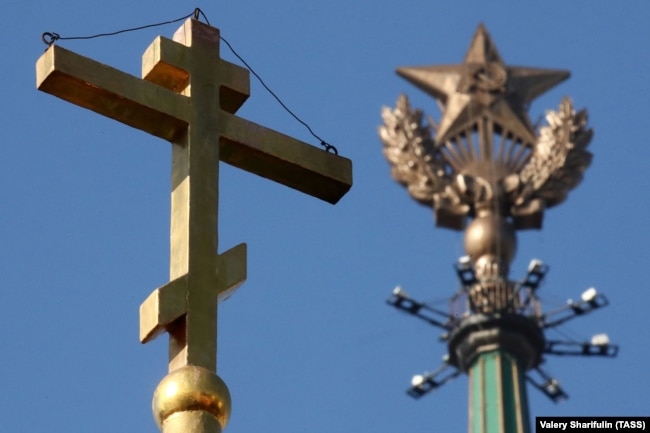
Therefore, the collapse of Russia is inevitable, but when it will happen, no one can currently say or determine.
It’s simply unrealistic to do so. We expected this collapse literally in 2022. But on the other hand, Russia shows the ability to adapt to what’s happening, to a big war, to a war of attrition, to international sanctions. It adapts gradually, weakening some sectors, but all in the interest of the military sector, and so, in my opinion, there won’t be real reasons or grounds for the collapse of the Russian imperialist state until there is a radical fall in the living standards in this country. Especially in central cities like Moscow, St. Petersburg, Novosibirsk.
Because, again, we refer to historical experience:
The Soviet Union was unlikely to have collapsed at the turn of the 1980s-90s if there hadn’t been a massive fall in living standards.
And one of the main reasons this happened, by the way, was a sharp drop in oil prices in the mid-1980s.
Do we see this now?
Sorry, we see the opposite process. And it is provoked by the US war against Iran. Oil prices have soared…
Until this changes, they will hold on, because they are used to enduring, shaped by a culture of subordination, a culture of slavish obedience to the boss, to authority, to the state.
That is to say, the state is everything, the person is nothing. It’s a cog, a small mechanism – a submissive person who follows orders. “I am the boss, you are the fool.”
So, I think they will endure until the fridge is empty.
The year 1917 (looking further into the past) – The Russian Empire began to collapse only due to a colossal economic crisis, particularly in large cities. In the winter of 1916–1917, Petersburg (now Saint Petersburg), Moscow, and especially Petersburg – the capital at the time – started experiencing serious problems with bread in stores and heating. And there, winters are very cold, of course. Medicines… that’s when the revolutionary processes began.
– So, does it mean that an empty refrigerator can defeat the television?
– Indeed.
– Because there is also an ideological component. Although, despite the war and sanctions, Russian society may seem rather monolithic.
– Look, there are many sociological studies that even in Russia don’t hide that the popularity of the war against Ukraine in the society is gradually declining. Not drastically, but gradually. Because it has been going on for a very long time, because Russians themselves are gradually getting exhausted, and their economy is slowly deteriorating.
So, in reality, there isn’t such extraordinary monolithic unity. But, I repeat, they will endure for a long time until it really hits their refrigerator.
In the Soviet Union, propaganda was also disseminated from every iron. Everything was geared towards propaganda. Art, television, radio, and the press. And what? As a result, all this propaganda did not prevent the country from collapsing.
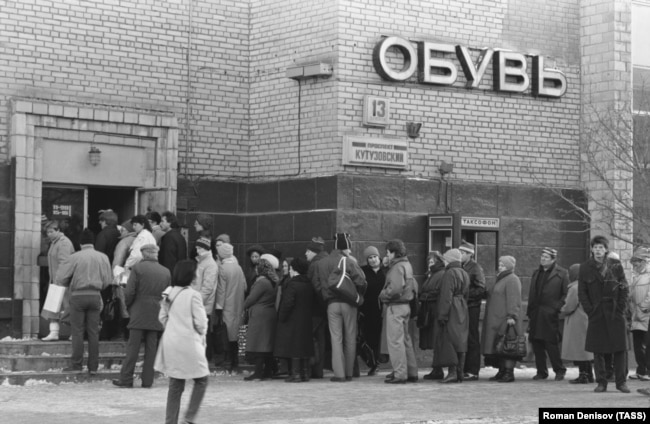
The country was destroyed by a shortage when there was practically nothing in the stores, and people were forced to stand in lines from dawn for countless hours. They were constantly running from store to store in search of anything. They “released” shoes here, and there they “released” sausage…
“Released” – a term from that time, to manage to snatch something. Meanwhile, people knew that in Europe everything was available, no problems, just have money, earn – and you could buy anything you want.
Of course, many did not want to live in such a system. On one hand, now people have much greater access to information thanks to the internet. On the other – Russia tries to somehow restrict all these loopholes.
They remember the experience of the Soviet Union, especially those like Putin, who worked and served in the secret services, they know very well what loopholes from the free world are. What it is to listen to the voices of Radio Liberty. What it is to read some foreign press secretly brought in. What contacts with acquaintances abroad are, or with people coming from abroad bringing different information.
So that’s how it is, they try to close these loopholes, but I think that in such a colossal large country in terms of area, first of all, it is very difficult to close everything now.
What is “rashism”?
– Today, when discussing the ideology of the Russian state, the term “rashism” is increasingly used in public discourse. What is its essence? And how do you explain this phenomenon in comparison with classical ideologies such as Nazism and Fascism?
– Rashism is a combination of the terms “fascism” and “Russia” in English. The term itself is relatively new, it appeared in the 1990s but has been actively used literally for the past 5–10 years. Because the phenomenon existed much earlier but was called a little differently.
For example, Dzhokhar Dudayev called it “Rusism.” There were other variations. “Russian fascism” was even a direct designation. In the 20th century, there were even Russian fascist parties operating in exile, Russian political parties openly called themselves Russian fascists.
In essence, Russia is now governed by fascists. That is, this rashist ideology has a great deal in common with Italian fascism, which is considered classical fascism, with Hitler’s German Nazism, but of course, also with Stalinism.
This is a cult of the state. The state above all, the state is the most important in everything – nothing outside the state, nothing against the state, as Mussolini said.
This is very aggressive chauvinism, which suppresses other nations, which fosters imperialism and fanatical devotion to its own empire. It is a dictatorial system, almost a one-party system. In Russia, besides “United Russia,” all other parties are openly marginal and very weak, currently playing practically no role. And those represented in the Duma support this “United Russia.”
This is aggressive propaganda, comprehensive, a very powerful propaganda mechanism aimed at covering the youngest categories, from very young children to youth, to educate them in the spirit of complete loyalty, devotion to the regime.
But what might be the peculiarity of this system? This system has deeper roots and a longer existence than even the origins of Italian fascism or German national socialism.
– To which times?
– To the times of the late Middle Ages, I think, it’s worth reaching. This is the great difficulty in overcoming this system.
Starting from the Pskovo-Eleazarovsky Monastery, the monk Philotheus, who said that “Moscow is the third Rome, and there will not be a fourth.”
And this was later adopted by the political leadership as justification for not just greatness, not just a desire to be on par with the greatest empires of the past – the Ancient Roman, Medieval, Byzantine, but as, in fact, exceptionalism because “there will not be a fourth.”
But look, Putin also seemed to say that if there is an end of the world or we perish, as he said, “they will go to hell, and we will go to paradise.” It’s practically the same.
In summary, it must be said that Italian fascism and German Nazism were defeated, vanquished, and exposed as criminal ideologies.
In Russia, firstly, this issue has been forming much longer, and therefore it will be much harder to eradicate.
Secondly, Russia has not yet been defeated, vanquished, occupied, nor has Russia undergone denazification to truly influence the entire population.
About Russian Propaganda
– You mentioned propaganda as an element of “rashism.” In Russia, history has become such a crucial element of ideology, propaganda, and overall one of the tools for justifying and rationalizing the war against Ukraine. Why have historical narratives proven so effective in the war?
– Because the Kremlin is based on the idea of the greatness, power, and capability of its state, on one hand, to repel other states or conquer them, and on the other hand, to suppress any resistance within the state.
Accordingly, they constantly refer to this past to highlight those episodes when Russia achieved military successes.
Their history, which they study and promote, is mostly a history of wars that were victorious for them.
After all, they don’t really publicize the Russo-Japanese War of 1904–1905, right? Nor do they heavily publicize the War with Napoleon of 1805–1807.
Surely, they don’t highlight how the Russian army in the 18th century lost to the Yakuts in the Far East, and many other episodes of their history. Or the same Livonian War, where the Muscovite army suffered numerous defeats by European countries.
But they emphasize various victorious wars and especially, of course, World War II.
They have chosen victory in World War II as the most important story of their success.
From here comes all this: “We can repeat,” “We can reach Berlin again.” Sometimes now they even start talking about Japan, because they always have complicated relations with Japan, as they seized part of its territory, and this issue is still unresolved.
Regarding Ukraine, they constantly refer to their concept from which they start. They tie the history of their statehood to Kyiv, which is actually not its origin.
Their statehood comes from the Vladimir-Suzdal Principality, from which the Moscow Principality later emerges, which later becomes the political center that conquers other territories, subjugates them, and builds a centralized state around Moscow.
But they derive this history from Kyiv. They openly consider Kyiv their ancient capital, and view Ukraine as part of the historical core of their country.
Therefore, the very fact of Ukraine’s existence independently of Russia is seen as an encroachment on the historical core of their state. And hence, they currently cannot reconcile with this.
– Has the modern Russian-Ukrainian war created any new propaganda narratives?
– They also work with this.
There was recently a story about the game “Heroes of Hostomel” – where the invaders who landed in Hostomel with the aim of capturing the airport prepare to receive the Il-76 with paratroopers and capture Kyiv. There you can, supposedly, fight for them, for example, or against them, I don’t know.
But this story is played out not as an invasion of another state, not as a crime against the civilian population, who were killed there, but as, supposedly, just a regular military operation. What’s the big deal, supposedly.
And this normalizes aggression, even on a subconscious level, spreading the narrative that in this war there is no side with truth or lies. In this side, there are no good or bad people; they are all roughly the same.
Accordingly, why then support Ukraine, why finance it, why supply it, if they are roughly the same?
“Let them fight among themselves,” they might say. This is Russia’s goal. Because without this support, Ukraine cannot fight for long, let’s be honest. This is extremely necessary for us.
Thus, by normalizing aggression, they aim to achieve such an effect.
By the way, I am reminded again of the Iran-Iraq War today, for some reason, from the 1980s. It was exactly the kind of war that involved colossal armies, but only two sides – Iran and Iraq.
About a million people died in that war. It’s horrific. But from the perspective of most countries in the world, this war seemed as though there were no good and bad sides. Two countries in Asia are fighting, so let them fight. The main thing is that others aren’t affected and that it doesn’t have too much of an impact on the world.
– In this context, it is important to add to the Western narrative transmission that an aide to Putin Vladimir Medinsky returned to the Russian delegation in the negotiations between Ukraine and Russia. He left Ukraine and is often called the ideologist of Putin’s regime. He holds a doctorate in historical sciences. He is also the author of a series of books, supposedly on history, aimed at debunking negative stereotypes about Russia, but the factual basis of which is questioned by authoritative historians. After the last negotiations in Geneva, there was a moment when Russian media even asked Medinsky if there were history lessons today for the negotiators.
Do you consider Medinsky a historian at all, and what is his role at the negotiating table?
– He is certainly not a historian; he is a propagandist. He is a conduit of the Putin narrative, historical, which has nothing to do with historical science.
We’ve seen the Putin narrative. By the way, anyone can familiarize themselves with it by opening Putin’s article from July 12, 2021, “On the Historical Unity of Russians and Ukrainians” and watching an interview with Tucker Carlson. Because there, he almost talks for two hours about his view of history.
We analyzed why Putin is speaking complete falsehoods there.
Medinsky is essentially a conduit for what Putin told Tucker Carlson. So there is no connection to history here.
His appointment only means that Russia has no real intentions to negotiate directly with Ukraine.
Possibly with the USA, possibly with someone else, but definitely not with Ukraine. The presence of people like Medinsky serves only to create the appearance of Russian willingness to negotiate, not for Ukraine, but again for the USA and other countries.
The Ukrainian Narrative about the War and Why It’s Important to Study History
– In terms of the importance of history for Ukrainians, can it be considered that knowledge, and especially understanding, of one’s own history is essentially an element of national security? How can we simply explain why Ukrainians need to study history?
– Ukrainians need to study the history of Ukraine because otherwise Russia, or Poland, or Hungary, or some other neighbors will tell us about our history. That’s all. And there will be no Ukraine, only what other countries narrate about us.
And they will always narrate in a way that is advantageous to them. It is inevitable because every state utilizes history to its own benefit. This is fundamentally unavoidable.
This should not be confused with history as a science. It’s a completely different approach.
History lessons in school are mostly designed not for you to know history, but for you to become a citizen. To know why we exist here, why such a state is needed here, why this land is ours and not Russian, for example. Why we cannot let just anyone come here?
Why, in simple terms, the truth is on our side in this war?
Understanding all this requires knowledge of history. Otherwise, you will be highly susceptible to manipulation by other countries, which will also try to tell you that you do not exist, you are part of their people, or this territory is part of their country.
– Is this an objective presentation of history?
– Of course not. It is not an objective presentation of history.
An objective presentation of history does not exist at all. Not in full format—it doesn’t happen.
Even the most reputable scientists, no matter how hard they try, each of them is a person with their own ideas, life experiences, and some understanding of the world. And therefore, some element of subjectivity is inevitably embedded in any research.
In scientific monographs, where they are written by scholars with source references and conclusions, there is certainly more science than in a school history course or, for example, in what Vladimir Putin broadcasts to Tucker Carlson. These are simply different levels of what is called history.
History is both a science, a system of upbringing, an educational subject, and a propaganda tool.
I always urge not to evaluate propaganda exclusively as something bad. We’ve been fighting this for many years, trying to convey to the audience that propaganda is not always bad. Propaganda is necessary. No country, no society exists without it. Even in pre-state societies, there was propaganda.
Because, metaphorically speaking, for the leader of some tribe to rally their people to fend off an enemy, they needed to gather them and conduct some kind of propaganda. To say: “Why must we defend our land from the invader approaching us?” Even in such cases. Therefore, propaganda—especially during war—is necessary.
– Then, has Ukraine managed to create its own narrative about the war?
– Within Ukraine – yes. Overall, if this hadn’t happened, Russian troops wouldn’t be in Donbas now; they would probably be somewhere in Lviv. Because if it weren’t for this, Ukrainians simply wouldn’t be fighting for Ukraine, for this state. Because a significant number of Ukrainians have already been raised in our Ukrainian education system. And that’s wonderful, and that’s great.
These are people who didn’t study under the Soviet Union but in independent Ukraine.
And even those who studied during the USSR also, of course, defended the country, because firstly, many of them became interested in history in times when information could be freely accessed and realized they had been lied to, told untruths, and manipulated.
Secondly, because it was clear where justice lay. That we, as Ukraine, were clearly the country that suffered from this attack as unprovoked aggression.
– You say Ukraine succeeded in creating a narrative within the country, but what about for partners?
– For partners, the situation is much more complicated. Because here, systematic work is needed, first of all, the existence of channels to convey this information, and thirdly – colossal financial investments.
Of course, by these indicators, we usually lag behind Russia because its resources are greater. But at least as we saw in 2022–2023, at the beginning of the large-scale phase of the war, yes, the understanding that Russia is an aggressive state and a criminal was present in at least the vast majority of countries in the world. But since then, the international situation has become much more complicated and worsened. Many other conflicts on the planet have emerged, which have significantly diverted attention from ours. That’s one.
Secondly, of course, it may even be funny for Ukrainians to hear about war fatigue abroad, but information fatigue is natural.
What is sensational at first, unfortunately, then becomes a certain element of normalization.
Another point. I read that some films about Russians are now finding success in the West. About Russians who dared to stand against the system.
Why is this story so popular? Because overall, the image of a person who suffers, who is a victim of something, and who stands against the system is very popular.
But a state, a person, a society that is not a victim, not sufferers who are simply being annihilated, but who rally together and resist this aggressor very effectively, is perhaps not as commercially appealing a story as some might think. More precisely: it may be commercially attractive at a certain stage, but perhaps not always.
How is US policy changing?
– We mentioned partners. And I want to talk in more detail about what American policy towards Ukraine is and how it is changing. The current Western strategy is often described as a new “policy of appeasement,” drawing analogies with the 1930s. How correct and appropriate, in your view, is such a comparison, particularly in the context of Washington-Moscow relations?
– To some extent, it’s appropriate, of course. But on the other hand, it’s not appropriate because the situation was very different then, and international relations quickly led to the beginning of a real world war.
Now a lot has changed with the arrival of Donald Trump’s administration.
This administration seemingly set a course to achieve the end of the Russian-Ukrainian war, but without punishing the aggressor.
This greatly undermines the international role of the USA as a defender of freedom, democracy, and justice in this world.
If you look at how it was in the First World War, the USA, joining in 1917 and sending its troops to Europe, did so under the campaign that they were fighting for democracy, for freedom, and for the liberation of the oppressed.
Another extremely important aspect was Woodrow Wilson, who was president at that time. He presented his famous program—the Fourteen Points of Woodrow Wilson—which essentially included the right to self-determination, the possibility of limited decolonization, freedom for nations, and arms limitation. The Americans strongly promoted this after WWI.
Remember the Washington Conference, where they seriously limited the competition of naval fleets. Thus portraying themselves as defenders of freedom, also trying to be peacemakers in the world. After WWII, this became even more noticeable.
But what is happening now, unfortunately, greatly dilutes this role.
And, in my opinion, this is extremely threatening for them. The USA has long built an image of itself as a bastion of world democracy. To destroy it is to destroy practically everything that America is. It has influence all over the world, practically across the whole planet.
And I don’t think they will destroy it. Because that would be a catastrophic mistake for Washington.
– Donald Trump, when he returned to the White House, officially made the policy of America First a key principle of his foreign policy during his second term. But how new is this trend if we look back at the period of American isolationism, the period before the events at Pearl Harbor in 1941, when the USA entered the war? Can we even say that this policy of isolationism is returning now?
– This is a long-established narrative that the USA periodically revisits.
Isolationism refers primarily to Europe. Because even President Monroe in the early 19th century put forth a concept whereby “we, the Americans, will not interfere in the affairs of Europe, the Eastern Hemisphere, but the Western Hemisphere, both Americas, are our sphere of influence.”
Or, as they said, South America or Latin America is our “backyard.” Here we can do what interests us. And do not interfere with it, other countries, mainly European, and we will not interfere in yours. But it didn’t work out that way because they still had to gradually involve themselves with other parts of the world.
World War II approaches. Before Pearl Harbor, the Americans maintained an isolationist course.
But then Pearl Harbor changed that, and America, once it became a victim of an attack, of course, American propaganda immediately managed to sharply turn the lever, saying that yes, we are the victim, we suffered. So who is bad, who is evil, let’s unite and retaliate. This allowed society to mobilize the idea that yes, now we need to fight everywhere: in the ocean, in Asia, and then—in Europe.
Now what isolationism?
Perhaps Trump approached this term with certain slogans, but the war against Iran is definitely not about isolationism. We see the opposite. How long this will last, who knows.
The US is clearly becoming more involved there because it concerns the military, the navy, aviation, the economy, military production, and money. Therefore, it definitely doesn’t look like isolationism.
– In the context of the Russia-Ukraine war – how are relations between Washington and Moscow developing? What is the course here?
– Speaking of Joe Biden’s administration, the course was quite obvious. I would say, more traditionalist.
It involved recognizing there is an aggressor and a victim of the attack, and the need to help the victim, but in a way that does not provoke the aggressor to nuclear retaliation.
The new administration of Donald Trump clearly, essentially immediately, started a course to stop the war along the front line. This is evident from many of its statements, but the Russians do not want this for now.
Russia demands to capture significantly more territories.
And most importantly, the factor that there is an aggressor, an occupier, a violation of all possible laws, injustice, and crimes in the occupied territories somehow completely disappears from the information field.
To leave this unpunished and without resistance is to encourage evil to return and repeat.
On collective security alliances
– Donald Trump often criticizes NATO, which was essentially created as a key mechanism for collective defense and deterrence. It was interesting to observe the reaction of the Alliance when, at the start of the Middle East war, Iran launched a missile strike on Turkey, a NATO member, and then Secretary General Mark Rutte said the fifth article would not be applied. Perhaps one missile is not a basis for organizing joint defense, but the reaction to this event is important. I will also remind that there were obviously Russian drones in Poland, and there was no reaction then either. What is happening ultimately with these security alliances that were created after World War II? Have they not exhausted themselves today?
– I recommend everyone read NATO’s fifth article, which is much talked about.
Firstly, there is no clear obligation for other NATO members to go to war on the side of the NATO member that suffered aggression. It outlines various joint actions, meaning it’s quite vague. Joint actions, including a military response. So there may be a response with or without it. That’s first.
Secondly, one Iranian missile on Turkey or 10 drones on Poland is evidently not considered full-scale aggression or a full invasion.
And thirdly, in the case of those ten or however many drones on Poland, everyone understood the drones were Russian. Russia is a nuclear country. The desire to directly fight with a nuclear country is still much less than with a non-nuclear country. Everyone understands that any nuclear war is the end of civilization in the world. Therefore, they try to avoid it in various ways.
– So, do these cases not assess the viability of collective security alliances?
– So far, we can only see that they are trying to prevent nuclear war.
There are currently many considerations in the information space regarding the possibility that Russia is preparing aggression against NATO members in Europe. It concerns either the Baltic countries, Finland, or Poland.
And of course, we wouldn’t want it to be so, but theoretically, in the event of such a scenario, or even a ground operation, let’s imagine – this could indeed be a real test for NATO as a collective security body.
Because Ukraine was never a member of NATO, they can always say, unfortunately for us, that they are not obligated here.
But in the case of those countries that are indeed NATO members, there is no doubt that Article Five should be invoked in the event of any operation. And then this is a real crash test, as they say, a survival test. We can only observe this.
What might the new security architecture look like?
– Considering the entire situation, taking into account the US position, and the fact that the world order is clearly changing, have you thought about what the new architecture of international relations might look like? When can we see it?
– This order was rather formed after the Second World War: when the United Nations was created, and its Security Council with veto rights for five members was established.
Yes, this order is indeed collapsing now.
To a large extent because the “immunization” provided by the Second World War has disappeared. Its essence was that humanity suffered colossal losses and destruction, and it does not want to repeat this experience in the near future.
Over 80 years have passed, and the effect of the immunization has worn off. But the creators of this system – Roosevelt, Truman, Churchill, Attlee, Stalin – they talked about 50 years of immunization.
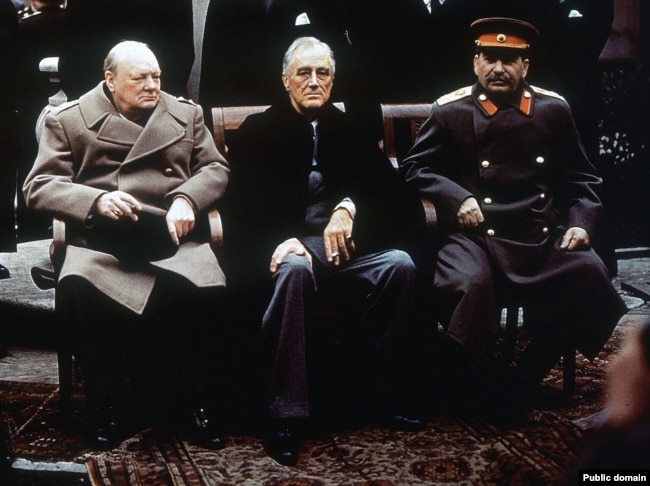
“We want global peace for 50 years.” Such were their discussions in Yalta, for example, in February 1945 or in Potsdam in July–August 1945.
Still, over 80 years have passed.
Therefore, this collapse is certainly inevitable, but what this world will be like now is extremely difficult to say. What will it be like?
It’s already clear that it definitely won’t be unipolar. Because the PRC, at the very least, has long challenged the global dominance of the US. And note: Russia is at war, Iran is at war, the US is essentially at war with Iran, but the PRC is not at war with anyone.
Much can be said about whom the PRC supports, secretly or openly, but openly they are not at war with anyone. Following their ancient Chinese tradition, they wait by the riverbank for the bodies of their enemies to float by. That’s their Chinese strategy.
Therefore, at the very least, the PRC is an alternative global center of influence.
Russia will do its utmost to become one as well, but frankly, apart from the “nuclear club,” it has no grounds to be a center of global power equivalent to the PRC and the US. Neither economically nor in any other way.
Sorry, the entire economy of Russia is roughly equivalent to that of Texas—one of the 50 states of the USA. Granted, one of the most developed.
Lessons of 1917–1921: Why Ukraine Is Stronger Today
– I want to shift from the global to the internal Ukrainian situation. Against the backdrop of a potential peace agreement and possible elections, various political forces have become active internally, although the war is still ongoing, and no one knows when these elections might take place. With what period in Ukraine’s history might you compare the current situation?
– There is a constant desire to somehow compare it with 1917–1920, when Ukraine was also independent, when there was also aggression from Russia, but back then everything was different.
Now the situation is much better for Ukraine than it was in the past. Now there is a formed Ukrainian political nation, a Ukrainian state, despite its imperfections. No matter how much it may not appeal to many Ukrainians, it exists, it is theirs, and it functions. It withstood the 2022 crash test.
And what happened in 1917, 1920, and 1921? Back then, there were several Ukrainian states, each essentially advocating different paths for future development.
There was the Socialist Ukrainian People’s Republic, purely parliamentary in nature. Then there was the Socialist Ukrainian People’s Republic, not parliamentary, but rather a group dictatorship—the Directorate, a dictatorship of five, which eventually led to the dictatorship of one, Symon Petliura.
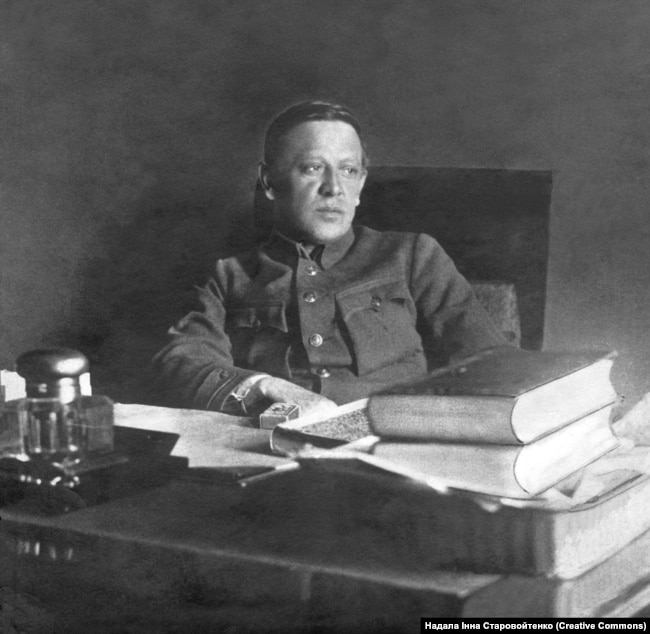
There was the Ukrainian State of Hetman Skoropadskyi, which was a dictatorship but relied not on its own enforcement apparatus, but on foreign—German-Austro-Hungarian—forces. Its administrative apparatus was developed with significant involvement of Russian officials and officers.
And there was the West Ukrainian People’s Republic, which was mainly national-democratic in its political vector and for which the greatest threat came from Poland. Its main intentions were to free Eastern Galicia from Polish influence and occupation. This clashed with the interests of those from the Dnieper region, for whom the number one aggressor was not Poland, but Russia—both Bolshevik and White Guard Russia.
And that is why they, though united, very soon effectively split because they could not find common ground—their enemies were different. This is, you’ll agree, much worse than now. That’s one.
Secondly, back then, the West did not recognize us. We fought in international isolation, as a practically unrecognized country.
Third, at that time the overall Ukrainian population was largely disoriented, disorganized, and to some extent denationalized. After a very long period within the Russian Empire and Austro-Hungary, many Ukrainians did not feel Ukrainian.
And unfortunately, there were very few people who were truly ready to be sincere patriots, serve this country, and fight for it.
So, I say again: let’s not lament, but rather appreciate what we have, thank our predecessors who contributed to Ukraine’s existence. Now let’s do everything not to lose it.
About the Pantheon of Heroes
– Today, there is an ongoing discussion in society about the creation of a national Pantheon of Heroes. In your opinion, is such a thing needed in Ukraine and could there be discussions about reburial of Ukrainian leaders, figures like Symon Petliura, Pavlo Skoropadskyi, Stepan Bandera, Yevhen Konovalets, and others who are currently buried in European cemeteries?
– I really don’t understand what there could be to discuss here. There should be none, because this is a necessity, an absolute necessity for Ukraine. The absence of this Pantheon shows us that… well, where are our, shall we say, I won’t say “heroes”?
In principle, I am not a fan of glorifying politicians, for example, or even military leaders – it’s not necessary, but people who at least fought for Ukraine, even if they saw it differently, saw its development differently, still fought for it. And the fact that they are scattered around the world doesn’t work in our favor.
Symon Petliura is buried in Paris. Yevhen Konovalets is buried in Rotterdam (Netherlands). Stepan Bandera is buried in Munich (Germany). Pavlo Skoropadskyi is in Oberstdorf (Germany).
There are precedents. Yevhen Petrushevych, the leader of the West Ukrainian People’s Republic, who died and was buried in Berlin, was reburied in Lviv at the Lychakiv Cemetery in 2002.
Dmytro Vitovsky was also reburied there. This idea is old; it was discussed at the beginning of the 2000s. For example, during Viktor Yushchenko’s presidency, it was articulated and discussed, but unfortunately, nothing has been done yet.
Sorry, but I believe that even despite the war, despite any economic difficulties, this needs to be dealt with here and now. And after the end of the war, this must certainly be completed. Because this is necessary to form our understanding of the past and so that Ukrainians can always come and see this Pantheon, feel their own connection with this past: that here they are, these are the people who built this Ukraine.
And one more important point I want to emphasize is: there is no need to argue about who was more right, who was more wrong, more guilty or less guilty. Otherwise, we will never agree. Sorry, Skoropadskyi, Petliura, Vynnychenko, Hrushevskyi, Petrushevych – there were enormous conflicts and contradictions among them all.
In Ukraine, it should be like this: let’s posthumously reconcile them all despite their views and differences.
– Should these be Ukrainian figures of the last century, as we discussed: Skoropadskyi, Petliura, Bandera, or should they also be heroes of the modern Russian-Ukrainian war?
– Modern heroes – yes. If there is a general consensus that this person is a modern hero – yes. But there are just so many now. Obviously, we need to think further because a question will immediately arise: who among the modern heroes should be in this Pantheon, and who should not?
– So the discussion is still open?
– Yes, but in the sense that there has to be a Pantheon, I am absolutely convinced, and it should be in the capital of Ukraine.
Collage on cover: Radio Svoboda
Copyright © 2021 RFE/RL, Inc. Reprinted with permission from Radio Free Europe/Radio Liberty
