
Vitaliy Portnikov / The Times of Israel
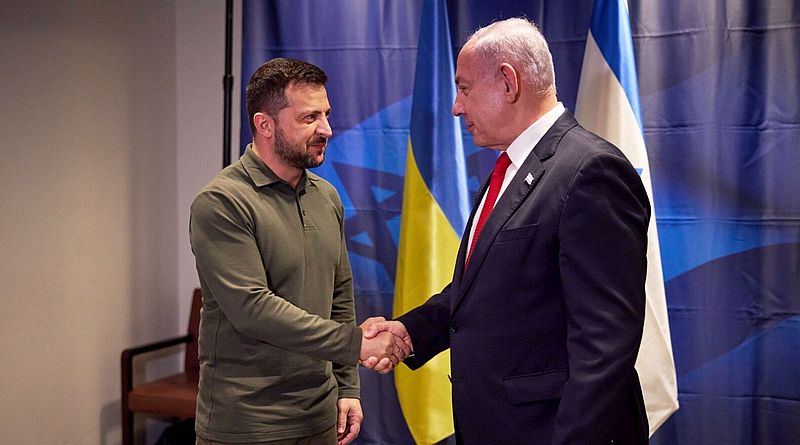
A brief conversation between Israeli Prime Minister Benjamin Netanyahu and Ukrainian President Volodymyr Zelenskyy became a true sensation for the media because the leaders of two countries, each in a state of existential conflict, hadn’t met for three years. The very fact of this lack of contact seems strange, especially against the backdrop of reports that the office of the Israeli Prime Minister rejected the Ukrainian side’s proposal for a bilateral meeting. And seriously, if it weren’t for the funeral of American Senator Lindsey Graham, who was ready to support both Ukraine and Israel, there would have been no proposal for a meeting and this brief contact.
The absence of dialogue cannot fail to surprise. Ukraine and Israel are essentially fighting against the same enemy. Of course, when I talked about this in the early months of 2022, it might have caused some skepticism among the Israeli audience. And I understand that even the appearance of Iranian “Shaheds” in the Ukrainian sky might not have significantly changed this skepticism. But now it seems obvious to me that Iran was not only helping the Russian Federation but also testing its military technology for a future attack on Israel. It seems evident that the Russian Federation itself perceives itself as an ally of Iran and assists this country during its confrontation with the United States and Israel. It helps not only with diplomatic statements but also with concrete intelligence information designed to facilitate an Iranian strike on the enemy. Donald Trump might afford the luxury of ignoring these obvious things and even dismissing Ukrainian information on the matter. But can the Israeli Prime Minister afford this?
Even if earlier we could talk about two different wars, now to a certain extent, their merging is happening. Russia provides Iran with intelligence, and Ukraine strikes an Iranian tanker on the Caspian. It is no longer two theaters of military operations but essentially one, transitioning into the other. Ukraine and Israel share one crucial ally — the United States, and common enemies.
Then why is there no understanding of this fact in Israel? Fear of Russia? Unwillingness to compete with Ukraine for U.S. military assistance? Unpreparedness to perceive the new war as part of a global confrontation, rather than a traditional Middle Eastern conflict? In fact, Israel’s very survival depends on the answer to this question. And, of course, Ukraine’s as well. Because if we can unite our efforts against our common enemies, we can be much more effective in the future.
In the image: President of Ukraine Volodymyr Zelenskyy (left) and Prime Minister of Israel Benjamin Netanyahu. New York, September 19, 2023. Photo: OPU
