
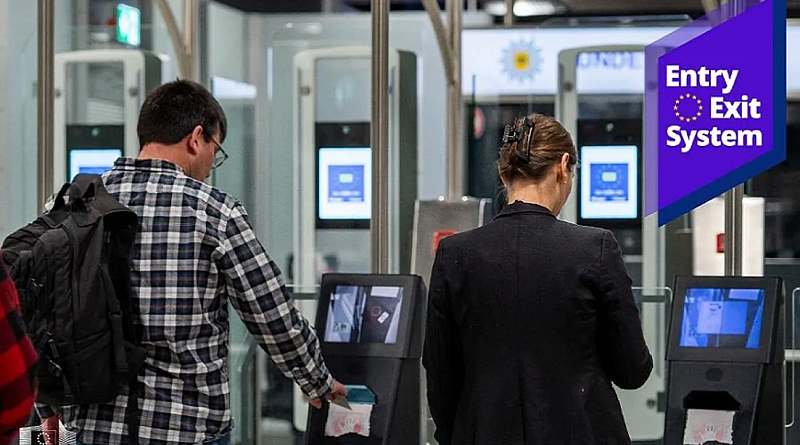
From Friday, April 10, a new digital border system will begin full operation in the European Union. It concerns, in particular, Ukrainian citizens, as Ukraine is not part of the EU or the Schengen Area.
From now on, travelers entering the Schengen Area will need not only to present a passport but also undergo biometric registration. This involves submitting fingerprints and taking a photo, which will be entered into the system and checked during subsequent travels.
This is the Entry/Exit System (EES), which will be implemented at all border points in 29 Schengen Zone countries.
The system began a gradual rollout in October. However, due to technical issues and organizational difficulties, it has been operating inconsistently.
Long queues have been reported at certain airports, and authorities warn: the situation may worsen during peak periods.
What is EES and where does it apply
This is a digital system for recording the entry and exit of citizens from non-EU countries into the Schengen Area, including Ukrainians.
The zone encompasses 29 European states where internal border checks are typically absent. These include popular tourist destinations: France, Spain, Portugal, Italy, Greece, and others.
Instead of traditional stamps, data will now be in digital format along with photos and fingerprints.
Data is stored for up to three years. This is done for convenience: during future trips, there is no need to start from scratch – the system will simply verify the information.
Why is this necessary? The EU explains:
- to make border control more modern and faster,
- to reduce the number of forged documents,
- to identify potentially threatening individuals earlier.
According to the European Commission, even during testing, the system showed results: over 24,000 people were not permitted to enter Europe due to document issues or unclear travel purposes. More than 600 were deemed potentially dangerous.
Who EES concerns and who is exempt
If you are traveling to Europe for a short time without a residence permit – EES applies to you.
The system applies if you are:
- a citizen of a non-EU country;
- traveling to the Schengen Area as a tourist or on business;
- staying no longer than 90 days within a 180-day period;
- and do not have a residence permit.
This pertains to typical short trips, which previously required just a passport stamp.
Exempt from EES are:
- citizens of EU and Schengen Zone countries;
- individuals with a long-term visa (type D) or a valid residence permit;
- citizens of Andorra, San Marino, Monaco, and the Vatican;
- those entering via Ireland and Cyprus, where the system is not yet in place, and document checks are conducted in the usual manner.
There are also specific exceptions – for example, for certain cruise trips, if they are short-term and do not involve full entry into the Schengen Area.
How registration occurs
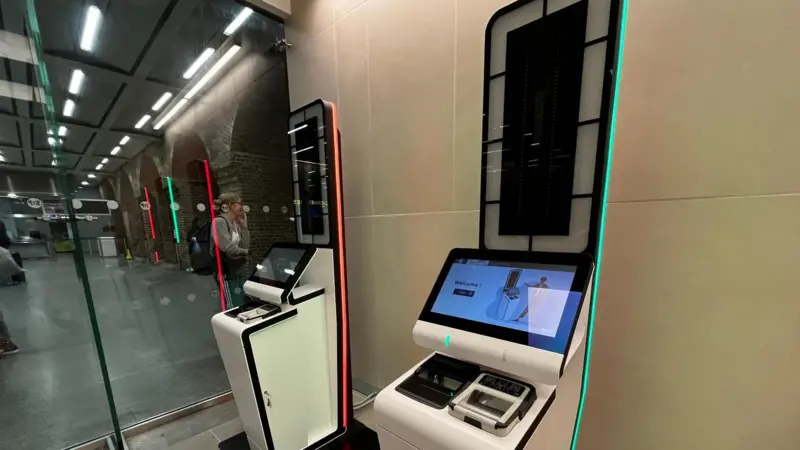
During the first use of EES, non-EU citizens must undergo biometric registration.
The procedure is simple: show a passport, submit fingerprints, and take a photo.
This happens directly upon arrival at airports.
If you cross the border by means other than an airplane (for example, by car or train), it might look a little different — but the essence is the same: document check plus biometric data.
Afterwards, the information is stored in the system for three years and is only checked during subsequent trips.
Will there be delays at airports
In the first months of full operation of the EES, delays are almost inevitable — experts openly state this.
Despite EU assurances that the system will be used flexibly during peak periods, border pressure is already increasing. For example, at the beginning of the year, large queues were observed in Geneva — a popular destination for ski tourism.
One reason is technical difficulties.
The system is not yet working stably everywhere, and this slows down passenger processing. Because of this, the European Commission allows temporary easing or suspension of checks during peak hours — at least until September, to alleviate airport congestion.
An important nuance: the launch is uneven. Not all airports are connecting simultaneously — Milan and Lisbon, in particular, are postponing full implementation for now.
Representatives of the ACI Europe airport association and Airlines for Europe also warn: at peak times, the wait at the border can reach two hours, and in some cases even more.
Therefore, after April 10, it is advisable to plan your arrival at the airport earlier — approximately 1.5–2 hours more than usual. This will help avoid stress and not miss your flight.
What’s next: the ETIAS system
In parallel, the EU is preparing another innovation — ETIAS.
This will be an electronic entry permit for citizens of countries that do not require a visa. The application will need to be submitted online before traveling.
The system is expected to be operational no earlier than the end of 2026, though an exact date has not yet been set.
The cost of processing will be 20 euros, and it will be valid for three years. For people under 18 and over 70, processing will be mandatory but free.
