
The tragedy of Oleshki, whose last residents are starving and have no chance of escaping the city on mined roads, has caught the attention of even the American First Lady. Putin, so as not to have a conflict with Trump on the eve of such important elections for the U.S. president to Congress, was forced to agree to a temporary truce and a humanitarian corridor from the doomed city, although how its residents will manage to escape this bombed trap, no one knows today.
The fate of Oleshki is like the fate of Ukraine. It is what they would like to do to all of us if they could. It is a demonstration of their hypocritical indifference—when the residents of the territory, who “voted” to join the Russian Federation and were declared its citizens, are left to die abandoned precisely because their lives were never a value to the “liberators.”
Oleshki are dying not for the first time. In 1728, the Oleshki Sich, created by supporters of the disgraced Hetman Ivan Mazepa on the territory of the Crimean Khanate after the defeat in the war with Moscow and after Moscow’s defeat in the war with the Porte, perished here due to Cossack infighting. This Sich was the brainchild of the future Dubossary hetman Kost Gordienko, who went with Mazepa not out of personal loyalty (he did not particularly like Mazepa) but out of a sincere belief that under Moscow, the Cossacks would perish. Gordienko was among the last khoshovyi otamans who tried not just to escape from Moscow but also to free Ukraine from this evil, but was forced to settle at the Oleshki Sich. Its destruction—not by Moscow, not by the khan, not by the sultan, but by its own Cossacks—marked the end of the hetman’s political career, but still not the end of the settlement itself, which until its last days remained the successor to the Oleshki Sich—Ukrainian and Ukrainian-speaking. Even sovietization and the transformation of Oleshki into Tsyurupinsk in honor of the Leninist commissar born there, one of the organizers of the sinister prodrazvyorstka detachments and a hero of the Bolshevik myth about the unfortunate head of the food commissariat starving in his own office—a great proof of the revolutionary power’s effectiveness—couldn’t change that!
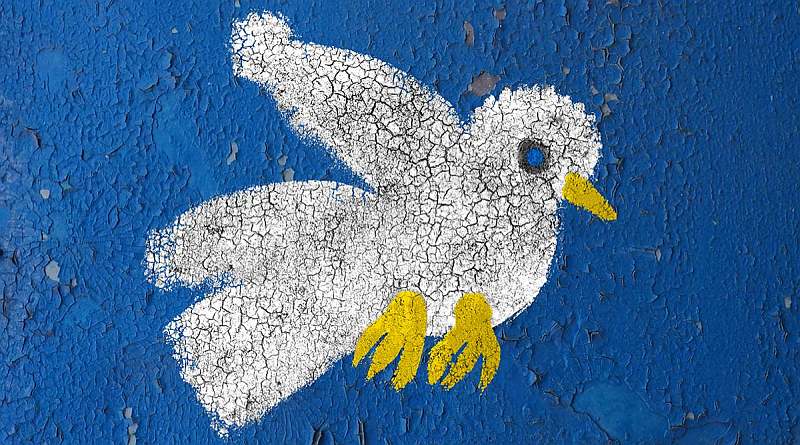
But the most important figure for Oleshki turned out to be not an associate of the first Soviet leader, but a humble resident who lived her entire difficult life of the Tsyurupinsk era here—the artist Polina Rayko, who turned her small house into a fairy tale world. This incredible house, only a copy of which I saw in the Kyiv Art Arsenal, is still before my eyes. But on June 6, 2023, the Russians blew up the Kakhovka Hydroelectric Station dam. The house with all its murals perished. And Oleshki died again. Later it was agony—the city underwater, the exodus of residents, the tragedy of those who remained, mines, drones, hunger…
And the Russians? What do the Russians care about another Ukrainian settlement, the suffering of its residents, the starvation of the elderly and infirm? They flooded an ancient city, destroyed its soul preserved in the unique paintings of Raiko, and indifferently watched as the last residents of Oleshky suffered from hunger. Because Oleshky, like the entire occupied Kherson region, is just a foothold for them—just as Ukraine is just a foothold. As they organized the Holodomor in the 1930s and observed the famine in Ukraine, which was for them a “breadbasket” and a money reservoir for further expansion westward, so now—hunger, indifference, plans for new wars. In a hundred years, even without communism, they have not developed but degraded. Although, it might seem, after such a frenzied dictatorship, they couldn’t degenerate further. But they can!
Melania Trump, at the right moment, might still help the residents of a small Ukrainian town escape from starvation, although we do not yet know what the real result of her initiative will be. But Ukraine itself cannot be saved by Melania or her husband.
Only Ukrainians themselves can prevent this plague from taking over Ukraine. Because from the sad fate of Oleshky, we already know what will happen next.
In the cover photo: Her first drawing—a white dove—Polina Raiko created on a fence at the age of 69 after a series of severe life traumas. In the years that followed, she painted the walls of her house, ceilings, and outbuildings in Oleshky, creating a unique object of naïve art. The artist’s house-museum was severely damaged and submerged in June 2023 after the Kakhovka HPP was blown up by Russian troops.
