

Information on current Russian losses due to sanctions as of 25.04.2026.
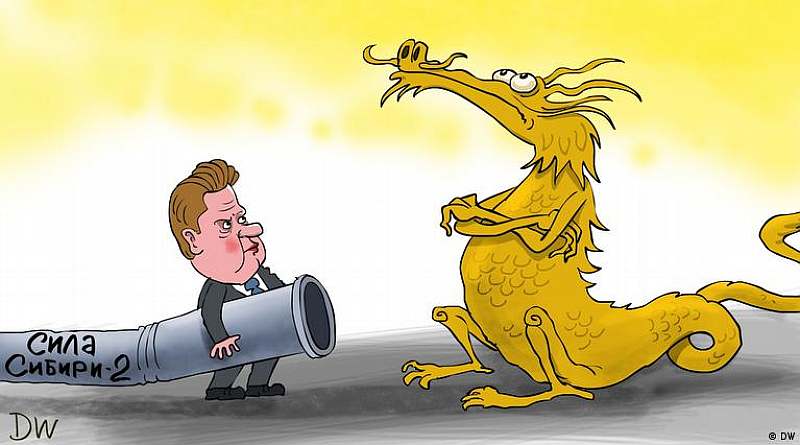
1. The Kremlin no longer expects a quick launch of the “Power of Siberia-2” pipeline to China, despite previous loud statements.
– The Russian government forecast shows that by the end of the decade, the country will not be able to significantly increase gas supplies to China. In 2025, exports amounted to 38.8 billion cubic meters — about half of the total volume, which after the start of the full-scale war fell to a minimum since the late 1980s.
– By 2029, supplies will increase only to 52.4 billion cubic meters (+13.6 billion), which is significantly less than the Kremlin’s expectations. For comparison, the capacity of “Power of Siberia-2” is 50 billion cubic meters per year, and it was planned as a replacement for the European market.
– The increase in exports will be ensured by existing routes: in 2027, the Far Eastern direction will be launched (10 billion cubic meters per year) and pumping through “Power of Siberia-1” will be increased.
– Despite Putin’s statements about allegedly reached agreements with China, there have been no confirmations from Beijing. This indicates a lack of real progress in the negotiations.
2. The situation in Russia’s metallurgy is deteriorating, as is clearly visible in the case of the Magnitogorsk Iron and Steel Works (MMK).
– The plant started the year with a loss of 1.4 billion rubles after profits the previous year, and revenue fell by almost 20% — to 129 billion rubles. Operating indicators deteriorated sharply: EBITDA more than halved to 8.6 billion rubles, profitability dropped to 6.7%, and sales decreased by 7.4%. Free cash flow became negative (−14.1 billion rubles), prompting the company to cut investments by 24% and switch to an austerity mode.
– Despite reserves, the company acknowledges a slowdown in business activity in Russia and weak domestic demand. The expected seasonal upturn in construction appears more temporary than a sign of recovery.
– The dynamics of MMK show a systemic crisis: Russian metallurgy is losing profitability, cutting investments, and relying on unstable domestic demand, which is no longer able to compensate for the loss of external markets.
3. The increase in tax burden on small businesses in Russia had the opposite effect and led to a sharp drop in budget revenues.
– In January-March 2026, tax collections from small businesses and self-employed individuals decreased by 22.2% year-on-year. This refers to revenue from special tax regimes — simplified and patent systems, the single agricultural tax, as well as the tax for self-employed individuals.
– These sources are critically important for regional budgets. From January 1, 2026, the authorities significantly increased fiscal pressure: raising VAT from 20% to 22%, canceling exemptions on insurance contributions, and substantially lowering the revenue threshold for operating under the simplified system — from 60 to 20 million rubles.
– The expectation was for an additional 200 billion rubles in revenue. Instead, businesses began to reduce activity or move into the shadows, impacting actual tax collections.
– The decline in collections demonstrates that attempts to finance the war at the expense of small businesses undermine the very tax base. Instead of stimulating business activity, the authorities increase pressure, leading to reduced entrepreneurship, a drop in regional incomes, and a narrowing of Russia’s internal economic base.
4. Estonia urges the EU to impose additional tariffs on Russian goods to direct these funds towards Ukraine’s recovery.
– This was stated by the country’s Prime Minister, Kristen Michal. According to him, Europe has already imposed extensive sanctions against Russia, including a ban on significant portions of imports, as well as tariffs on specific product categories such as grain and fertilizers.
– At the same time, the idea of purposefully using customs policy to finance Ukraine’s recovery has not yet gained support within the EU. The Prime Minister emphasized that additional tariffs on Russian goods could become a tool to compensate for the damages caused by the war.
– Similar proposals have already been discussed: in November last year, seven countries, including Estonia, advocated for the introduction of tariffs on Russian products, particularly steel and fertilizers. However, this initiative was not included in the EU’s 20th package of sanctions.
– According to European officials, even approximately 210 billion euros of frozen Russian assets may be insufficient to cover the costs of Ukraine’s recovery.
5. India and China have sharply intensified competition for Russian oil amidst supply disruptions from the Middle East.
– After the escalation of the situation around Iran and disruptions in the Strait of Hormuz, the available volumes of oil on the market have significantly decreased. As a result, the two largest economies in Asia are compelled to turn more actively to Russia as an alternative supplier.
– According to Kpler analysts, in April, India and China purchased approximately the same volumes of Russian oil — about 1.6 million barrels per day each.
– At the same time, shipments through the Strait of Hormuz sharply fell: Chinese imports via this route decreased to about 222,000 barrels per day from over 4 million before the war, and Indian imports dropped to 247,000 from nearly 2.8 million.
– Actual restrictions in the key transport corridor made Russian oil more attractive — primarily due to its reduced price. Meanwhile, the situation highlights the weakness of Russia’s position. The country is forced to compete not with quality or reliability of supply, but with low prices, effectively subsidizing large importers.
– India already receives almost half of its oil imports from Russia, which increases dependence on a limited range of buyers.
– China, with significantly larger strategic reserves, is in a more advantageous position and can negotiate more firmly on price. This means further pressure on Russia’s oil export revenues, which increasingly depend on external crises and forced discounts, rather than stable demand.
