

Information on the current losses of the RF due to sanctions as of 24.04.2026.
1. Another major oil infrastructure facility in Russia caught fire after a drone attack.
– A fire occurred at the “Gorky” oil pumping station in the Nizhny Novgorod region. After the UAV strike on April 23 at the station, which is part of the “Transneft” system, at least two out of four oil tanks with a volume of approximately 50,000 cubic meters each caught fire.
– The “Gorky” OPS, located about 50 km from Nizhny Novgorod, is an important hub for the transportation of Russian oil. Through it, raw materials are pumped for export towards the port of Primorsk on the Baltic Sea, and also go to several large oil refineries, including the Moscow Oil Refinery, “Slavneft-Yaroslavnefteorgsintez,” and “Kirishinefteorgsintez.”
– The series of strikes on oil transportation infrastructure increasingly undermines the stability of the Russian energy sector and complicates the logistics of oil exports.
2. The Russian Ministry of Finance is forced to return to currency buying at the expense of the budget for the first time in a year.
– Russian authorities are trying to curb the strengthening of the ruble and replenish the depleted National Welfare Fund. From May, the Ministry of Finance resumes operations under the budget rule — buying or selling yuan and gold depending on the oil price.
– The target for the year is $59 per barrel, while Urals rose to $100. In March, Urals cost an average of $77, which may increase oil and gas revenues in April by 38% — up to 850 billion rubles.
– In May, the Ministry of Finance may release 300–400 billion rubles on the market, trying to weaken the ruble, as a strong currency reduces export revenues. The dollar rate dropped below 75 rubles — for the first time since 2023, although about 92 was budgeted.
– After the Ministry of Finance’s statement, it briefly rose but quickly stabilized. The yuan also fluctuated slightly. The return of interventions indicates dependence on exchange rates and oil and gas revenues, while fund reserves are shrinking.
3. The European Union will ban the import of Russian stable gas condensate, produced at natural gas liquefaction plants, from January 1, 2027.
– This decision is included in the EU’s 20th package of sanctions, adopted on April 23. The restrictions also introduce a price cap on this product, similar to the mechanism already in place for Russian oil. The goal of the measure is to reduce Russia’s income from energy exports.
– Stable gas condensate is used as a raw material in petrochemical fractionation units. It is processed to produce oil, aviation kerosene, diesel fuel, and low-sulfur fuel oil.
– The European Union already banned the import of Russian oil in December 2022. At the same time, a price cap mechanism was implemented to limit Russia’s export revenues.
– In February 2026, the cap on Russian oil was further reduced to approximately $44 per barrel. Previously, stable gas condensate temporarily remained outside sanctions due to concerns about disruptions in Russian liquefied natural gas supplies to Europe.
– This product is generated as a by-product in two Arctic LNG projects. Specifically, the condensate is produced at the “Yamal LNG” project, from where it is exported from the port of Sabetta.
– In recent years, a significant portion of the supplies headed to Rotterdam. In 2025, the export volume of this product from the project exceeded 1.2 million tons, which is approximately 7% more than the previous year.
– The second major project, “Arctic LNG-2”, was subjected to strict US sanctions back in 2023, which significantly limited its operations.
– The implementation of new EU restrictions means a further narrowing of Russia’s opportunities to earn foreign currency from Arctic gas projects and increases pressure on the country’s energy sector.
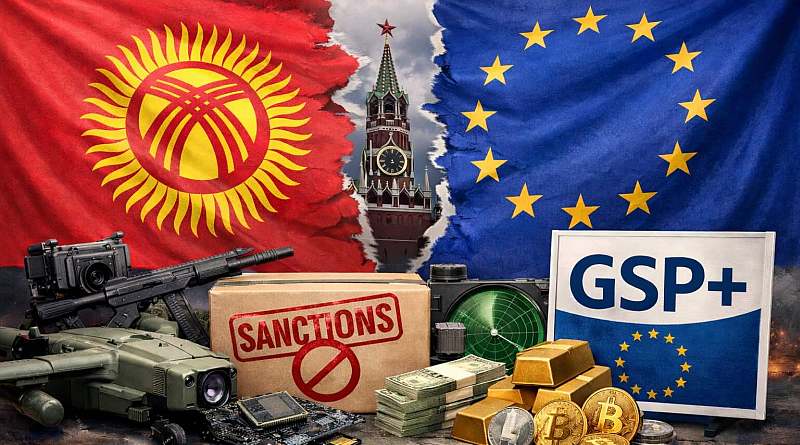
4. The European Union has imposed sanctions against Kyrgyzstan for the first time for assisting Russia in circumventing restrictions.
– The decision was made as part of the EU’s 20th sanctions package, which includes a special mechanism to combat sanctions circumvention — the so-called “anti-circumvention tool”.
– From now on, the export of European CNC machines and telecommunications equipment, including routers and switching equipment, to Kyrgyzstan is completely banned.
– The European Commission explained the decision by stating there is a high risk of re-export of these products to Russia. Trade analysis showed a sharp increase in deliveries to Kyrgyzstan of goods considered priority from a sanctions control perspective.
– After the start of the full-scale war against Ukraine, Kyrgyzstan, a member of the Eurasian Economic Union and the Collective Security Treaty Organization, has become one of the key transit hubs for supplying sanctioned goods to Russia.
– It is estimated that exports from Estonia to Kyrgyzstan increased by approximately 10,000%, from Finland by 3,100%, from Poland and Greece by 2,200% and 2,100% respectively, and from Norway, the United Kingdom, Germany, and the Czech Republic by more than 1,000%. The cryptocurrency exchange Grinex, operating in Kyrgyzstan, was also sanctioned. It trades the A7A5 stablecoin pegged to the ruble. The exchange’s managing company — TengriCoin — is also included in the EU sanctions list.
5. Singapore has begun actively purchasing Russian fuel oil due to reduced fuel supplies from the Middle East.
– According to Vortexa, an analytical company, the import of Russian fuel oil to Singapore sharply increased after the latest escalation in the Middle East. In April, supply volumes more than doubled the average monthly level of 2025.
– Singapore plays a key role in supplying the international trading fleet with fuel, so changes in supply structures quickly affect the global market. Due to disruptions in traditional supplies, traders have started to more actively purchase cheaper Russian fuel oil.
– Meanwhile, Russian oil products remain under sanction restrictions. According to the “price cap” rules established by the G7 countries and the EU, trading Russian fuel oil is allowed only if its price does not exceed approximately $45 per barrel. In April, the supply volumes of Russian fuel oil to Singapore may reach their highest level since 2016.
– The emergence of such flows indicates a forced policy by Russian exporters – to maintain sales, they are forced to offer fuel with significant discounts, which reduces the real income of the Russian energy sector.
6. Indonesia has agreed with Russia on the supply of 150 million barrels of oil at a significant discount.
– The agreement was reached during the April meeting between the Indonesian president and Putin in Moscow. According to Indonesian sources, the oil will be supplied at a specially reduced price and used by Indonesia to build strategic reserves.
– Jakarta explains this by the desire to create a reserve in case of possible economic shocks and instability in the global energy markets.
– Offering large discounts has become a forced practice for Russia after losing part of its traditional markets due to sanctions and political isolation. To maintain export flows, Russian companies are increasingly selling oil below global prices.
7. The Venice Biennale jury excluded Russia and Israel from the artist award competition due to EU threats of funding cuts.
– The jury of the International Art Exhibition “Venice Biennale” refused to consider the works of artists from countries whose leaders are accused by the International Criminal Court of crimes against humanity.
– The statement notes that jury members will not consider the works of such states when selecting the laureates of the exhibition’s main awards — the “Golden Lion” and the “Silver Lion”. The decision is explained by the need to protect human rights and adhere to the principles of international law. Formally, the statement does not name specific countries.
– Meanwhile, the wording likely refers to Russia and Israel, whose leaders are subjects of cases in the International Criminal Court. This year’s Venice Biennale brings together over 110 participants from various countries around the world.
– The jury’s decision effectively means that artists from states whose leadership is accused of international crimes will not be able to compete for the main awards of the exhibition.
8. Tankers transporting Russian oil have started avoiding Swedish waters after Sweden’s authorities intensified checks on suspicious vessels in the Baltic Sea.
– According to ship tracking data, since April 7, a significant number of tankers have changed their route and started passing south of the Danish island of Bornholm, instead of the usual northern route closer to the Swedish coast.
– Of the 22 tankers on this route, 13 chose the southern detour. This change is associated with increased control over the so-called Russian “shadow fleet.”
– Northern countries have begun conducting maritime inspections of vessels, including reviewing documents and insurance, which is forcing some tankers to seek alternative routes. These ships often have opaque ownership structures, questionable insurance, and sail under convenient flags. This fleet has become one of the key tools allowing Russia to continue exporting oil despite sanctions and to use the proceeds to finance the war against Ukraine.
– Increased control is already affecting transportation logistics. Longer routes mean additional fuel costs and delivery time, reducing the efficiency of Russian oil exports. In March, the Swedish Coast Guard detained several ships suspected of belonging to the Russian shadow fleet due to suspicions of using false flags or possible environmental violations.
– The Swedish government states that such inspections simultaneously protect the maritime environment’s safety and complicate schemes that help Russia circumvent sanctions.
