

Information on current Russian losses due to sanctions as of 16.11.2026.
1. Ukrainian drones attacked oil depots in Azov, Rostov region: fires broke out at two oil storage facilities following the strikes.
– On the night of November 16, the Ukrainian Defense Forces struck the fuel infrastructure of Russia in the city of Azov. Local residents reported explosions, after which a large-scale fire broke out in the industrial area.
– According to OSINT analysis, the fire occurred in the area of two oil depots located close to each other. These are the “Flesh Energy” terminal, which has 10 tanks with a total capacity of over 6500 cubic meters, and the “Yug-Impex” enterprise, which is engaged in the trading and storage of fuel.
– In addition, local residents reported a fire at a gas distribution station.
2. Ukraine attacked the Crimean Bridge: damage to the arch of the navigable span.
– On the night of November 16, the Ukrainian Defense Forces struck the Crimean Bridge across the Kerch Strait. According to the monitoring channel “Crimean Wind” citing local residents, around 05:38, the arch of the navigable span of the bridge was struck.
– Following the attack, the Russian side stopped movement on the crossing. The Moscow-appointed head of Crimea, Sergey Aksyonov, confirmed the strike and reported that the operational headquarters was in action.
– The Crimean Bridge is a key transport artery through which Russia transfers military equipment, personnel, and supplies to occupied Crimea.
3. The past week has been the toughest for Russian oil refining since the beginning of summer.
– The third wave of the fuel crisis seems to have already begun, despite the seasonal decline in demand. Over the past seven days, Ukraine’s Defense Forces have attacked Russia’s three largest oil refineries — Kirishi in the Leningrad region, Omsk, and Volgograd. The oil pumping hub in the Samara region and the TANEKO plant in Nizhnekamsk (Tatarstan), located in the same industrial area as the refinery, were also hit.
– At Rosneft gas stations across the country, there are restrictions on fuel sales: no more than 30 liters per fill-up at regular stations and 50 liters on highways. This week, limits were also introduced in the Leningrad region and the Trans-Baikal Territory. Increasingly, it is the fuel and diesel producers themselves, not the regional authorities, setting these restrictions.
– It is estimated that by mid-November, Russia’s oil refining volumes decreased by approximately 25–30%. New attacks on refineries could further worsen the situation.
– Ukrainian strikes are becoming more regular and intense: instead of one-time damage to enterprises, there is systematic targeting of key production facilities, including primary and secondary processing units, to complicate the restoration of their operations.
– An additional problem is the accelerated wear and tear of equipment due to the cancellation or postponement of scheduled maintenance. It is most difficult to restore secondary units, which significantly affect the production of gasoline and diesel fuel. Protective nets, containers, and other structures do not provide reliable protection for refineries from attacks.
– The October respite allowed Russian companies to accumulate certain fuel reserves, but, according to experts, these will last only 7–10 days of consumption. Therefore, a new wave of shortages and restrictions may start at the end of November.
– Even with the seasonal reduction in demand, the production of gasoline and diesel remains below the usual level for this period.
4. Wholesale gasoline sales in Russia fell by a third after Ukrainian strikes on the largest refineries.
– Russian oil companies have sharply reduced gasoline sales following a series of Ukrainian attacks on refineries. In the last two weeks, at least 10 refineries were hit, including five of the largest in the country.
– During the week of November 9–13, gasoline sales on the St. Petersburg Commodity and Raw Materials Exchange fell by 31% — from 76.74 thousand to 52.98 thousand tons. Sales of AI-92 gasoline decreased by 33% to 34.26 thousand tons, and AI-95 by 27% to 18.72 thousand tons.
– Sales of summer, off-season, and winter diesel fuel fell by another 10% — to 125.58 thousand tons. The shortage is already evident at gas stations in major Russian cities.
– According to the “GdeBenz” service analyzed by economist Yanis Kluge, the share of gas stations with AI-92 available decreased from about 60% to 50%. The availability of AI-95 fell to 30% compared to about 55% two weeks earlier.
– Diesel fuel was available at only 20% of gas stations. It is estimated that oil refining volumes in Russia have decreased from a pre-war 5–5.5 million barrels per day to approximately 3.7 million barrels. This is almost the lower limit of the volume needed to meet domestic demand for this time of year, which is estimated at 3.2–3.8 million barrels per day.
– Ukrainian strikes increasingly impact the Russian fuel market: the reduction in processing is already leading to a drop in exchange sales, supply disruptions at gas stations, and the growing risk of a new wave of the fuel crisis.
5. Turkey reduces purchases of Russian pipeline gas despite two supply routes through the Black Sea — the “Blue Stream” and “TurkStream”.
– From January to September 2026, Russia exported 13.1 billion cubic meters of gas to Turkey — 18.2% less than the same period last year. In September, deliveries through the two pipelines amounted to only 968 million cubic meters. Turkish authorities explain the reduction in purchases mainly by economic reasons.
– Energy Minister Alparslan Bayraktar stated that Russian gas is too expensive, so Ankara increasingly seeks more advantageous alternatives. He also emphasized that Turkey does not plan to completely cease trade with Moscow.
– For Russia, this means losing part of its volumes in one of the key gas markets remaining after the reduction of supplies to Europe. Even the presence of two Black Sea pipelines does not guarantee “Gazprom” stable demand: Turkish buyers are increasingly guided by price, with Russian gas losing competition to cheaper offers.
– Meanwhile, in October, “Gazprom” reported a 78% increase in supplies to Turkey compared to September. This may partially offset the decline but does not change the overall picture of reduced exports over nine months.
6. Swiss ammunition, whose export to Russia has been banned since 2014, continued to enter the country even after the start of the full-scale war.
– An investigation by a Swiss newspaper uncovered a scheme for supplying cartridges through Slovenia and Kyrgyzstan that allowed bypassing export restrictions. According to Russian customs documents, in December 2022, two Russian companies registered the import of 60,000 cartridges from the Swiss manufacturer Ruag Ammotec AG. In April 2023, another batch of 50,000 cartridges was processed. The importers claimed that the ammunition was intended for civilian use, although the specified calibers are mainly used by snipers.
– The Swiss State Secretariat for Economic Affairs (SECO) confirmed that the ammunition belongs to the category of military equipment, the export of which to Russia is not permitted.
– The probable supply route ran from Switzerland to Slovenia, and from there to Kyrgyzstan. The Swiss authorities allowed export to Slovenia because the Slovenian arms dealer Gasper Heibal assured that the ammunition would remain in the country. However, documents from the Slovenian Ministry of Defense indicate that he likely resold them to two Kyrgyz companies, which officially traded in hunting goods.
– Further shipment of cartridges to Russia was facilitated by Kyrgyzstan’s membership in the Eurasian Economic Union, along with Russia. This case demonstrates how Russian importers can use intermediaries in third countries to circumvent sanctions, and end-use control mechanisms do not always prevent illegal re-export of weapons.
7. South Korea sharply increased purchases of Russian LNG: in October, imports reached 328,000 tons for $238 million.
– This is the largest monthly volume since November 2021. With this figure, Russia ranked fourth among gas suppliers to the Korean market after Australia, Malaysia, and the USA. In total, in October, South Korea imported 4.05 million tons of LNG for $3.67 billion — 23% more than the same month last year.
– However, the October surge does not indicate a stable strengthening of Russian exporters’ positions. From January to October, supplies of Russian LNG to South Korea decreased by 7.4% — to 1.75 million tons. Their value amounted to $1.09 billion.
– Thus, despite a record result for an individual month, Russia continues to lose volumes in this market over ten months. The largest LNG supplier to South Korea remains Australia. Russian gas still maintains a place among the main sources of imports, but the October result does not yet signify a recovery of lost positions.
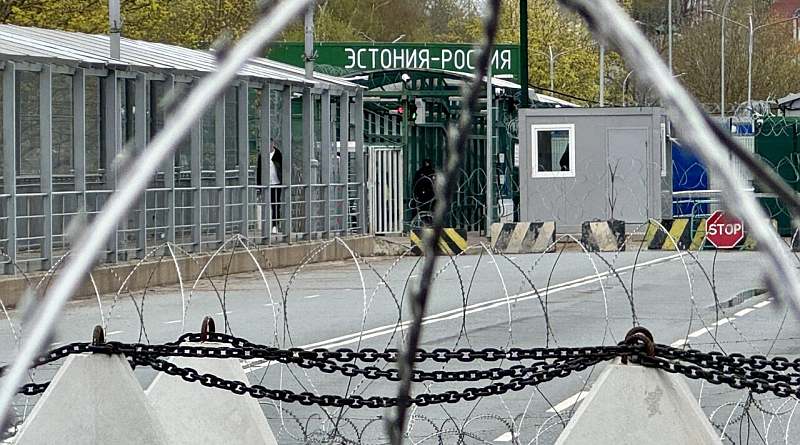
8. Estonia will close all border checkpoints with Russia from December 1.
– This will significantly limit one of the main routes Russians use to reach Europe: in 2024, over 60% of all overland trips by Russian citizens to European countries went through the Estonian border. The decision was announced by the Estonian Minister of Foreign Affairs, Margus Tsahkna.
– He linked the border closure to an attempted sabotage at the Threod Systems defense industry plant in the suburbs of Tallinn. On the night leading to Saturday, a group of intruders tried to enter the company’s premises to start a fire and cause an explosion. The attempt was thwarted by the company’s security forces, and as part of the investigation, eight Latvian citizens were detained. According to the Estonian Internal Security Service, the Russian military intelligence — GRU — was behind the attack.
– Tsahkna stated that closing the checkpoints aims to limit Russia’s capabilities for hostile activities in Estonia and strengthen the enforcement of sanctions.
– He informed colleagues from Finland, Latvia, and Lithuania about the decision. The duration of the restrictions is yet to be determined.
– According to the Russian Association of Tour Operators, in 2024, Russians made 821,000 overland trips to Europe. Of these, 510,000 were through the Estonian border: 70,000 crossings by car and 440,000 on foot.
– For comparison, through Poland, including the Kaliningrad region, there were 209,000 trips, through Lithuania — 54,000, Latvia — 32,000, and Norway — 16,000. In 2023, 561,000 Russians traveled to Europe through Estonia out of a total of 850,000 overland trips — about 66%. The border closure will deprive Russian citizens of the most popular land route to the EU.
