

Information on current losses of the Russian Federation due to sanctions as of 28.07.2026.
1. Ukraine massively attacked the Moscow region: a rubber goods plant and a logistics warehouse were hit.
– On the night of July 28, Ukraine executed one of the largest drone attacks on the Moscow region.
– A fire broke out at the Chekhov Regenerate Plant in Chekhov. According to Astra, the enterprise is one of the largest in Russia producing products from recycled rubber and specializes in tire recycling, rubber crumb production, and other rubber products.
– Also, Astra reports that a warehouse of an independent 3PL logistics company caught fire in the village of Koledino, located near the Wildberries distribution center.
2. After the drone attack, two more Russian ports on the Sea of Azov faced operational restrictions.
– After Ukrainian drone attacks on Rostov-on-Don, the operations of the Azov and Taganrog ports, with a combined cargo turnover of about 13 million tons per year, were restricted.
– Russian Railways (RZhD) suspended cargo shipments to these ports at least until August 4. The restrictions affect the “Azov” and “Taganrog” stations.
– Earlier, the Russian Ministry of Transport also banned anchoring near the port of Azov. Additionally, following a series of drone attacks in the Sea of Azov region, Russian authorities suspended applications for vessel passage through the Kerch Strait.
– As a result of these restrictions, grain exports via the Don River effectively stopped. In the previous agricultural season, 14.7 million tons of grain and its products were exported via this route, accounting for 27% of all Russian grain exports.
3. The Tyumen Refinery halted oil processing after attacks by Ukrainian drones.
– The Tyumen Oil Refinery has completely halted oil processing and production of petroleum products after Ukrainian drone attacks on July 25. The strike caused a fire at the diesel fuel hydrotreating unit with a capacity of 2.6 million tons per year, as well as at the combined high-octane gasoline production unit. The timeline for resuming gasoline production is currently unknown.
– The Tyumen Oil Refinery, owned by the “RI Invest” company, is the largest independent oil refinery in Russia with an annual capacity of 9 million tons. Its gasoline complex, built under a license from the American company UOP, was commissioned in 2018. The enterprise annually produces about 500 thousand tons of gasoline and nearly 3 million tons of diesel fuel.
– The Tyumen Oil Refinery has become the sixth major Russian oil refinery to cease operations due to Ukrainian strikes since the beginning of July. Previously, the Gazpromneftekhim Salavat, Syzran, Saratov, Omsk refineries, and Lukoil-Nizhny Novgorodnefteorgsintez were shut down.
4. Military expenses will remain the main priority of Russia’s budget for 2027–2029.
– Military spending will remain the main priority of Russia’s federal budget while forming the financial plan for 2027–2029. The 2026 budget initially allocated 12.9 trillion rubles for “national defense.” However, the actual war expenditures may exceed the plan by an additional 4–5 trillion rubles.
– To finance additional military expenses, the Ministry of Finance is preparing to cut civilian expenses and plan to attract 2–3 trillion rubles in additional state borrowings.
– According to estimates by German economist Janis Kluge, Russia spent 5.9 trillion rubles on the war in just the first quarter of 2026, or almost 65 billion rubles per day. This is 29.9% more than the same period last year, 68.7% more than in 2024, and 4.6 times more than at the beginning of 2022.
– Russia’s cumulative budget expenditure on the war since the start of the full-scale invasion has already reached 53 trillion rubles (about $680 billion). The increase in military spending occurs against the backdrop of worsening state finances, which exacerbates the pressure on civilian budget items and forces the government to increase national debt.
5. Russia to raise railway tariffs early due to Russian Railways’ financial crisis.
– The Russian authorities decided to increase Russian Railways tariffs from October 1 to support the state monopoly, which has accumulated almost 4 trillion rubles in debt and faced a sharp deterioration in its financial condition.
– Freight railway tariffs will rise by 8.5%, and long-distance passenger tariffs by 9.2%. This increase was initially planned for 2027.
– Russian Railways’ financial problems are exacerbated by the largest decline in freight transportation in the last 16 years. Last year, the company’s net profit decreased 22 times — from 50.7 billion to 2.2 billion rubles, and debt increased by another 800 billion rubles.
– Due to the crisis, Russian Railways has already reduced its investment program by a quarter — to 713.6 billion rubles — and announced a cut of about 6,000 central office employees.
– Since the beginning of the full-scale war, Russian Railways tariffs have been raised multiple times. After the October indexation, their cumulative increase will reach 56%, which will intensify business costs and put pressure on prices in the economy.
6. The US Senate prepares to begin consideration of Graham’s bill on new sanctions against Russia.
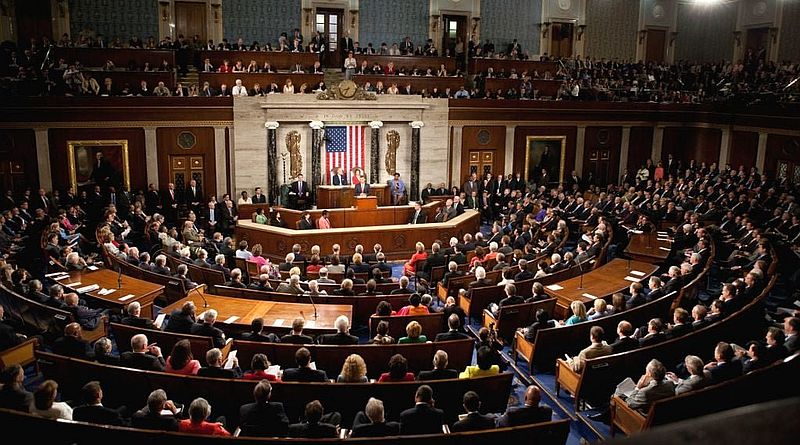
– On July 28, the US Senate is set to hold a preliminary procedural vote to begin consideration of Bill S.5025 — Lindsey O. Graham Sanctioning Russia Act of 2026, which involves a substantial increase in sanctions against Russia and its trading partners.
– The document, submitted to the Senate on July 16, proposes mandatory sanctions against the Russian leadership, state banks, energy companies, defense enterprises, shipping structures, and financial institutions, as well as significantly expands secondary sanctions on foreign companies that help Moscow finance the war.
– A separate section of the bill concerns countries that continue to purchase Russian oil, petroleum products, natural gas, uranium, and petrochemical products.
– The document grants the US president the right to impose import duties up to 100% on goods from such countries. In the previous version of the bill, the maximum rate was 500%, but it was reduced to 100% to broaden political support for the document.
The bill also provides for:
– the blocking of assets and entry bans for a wide range of Russian officials and individuals involved in aggression;
– sanctions against Russia’s banking, energy, shipping, defense, and financial sectors;
– restrictions on companies and countries that help circumvent sanctions or support the Russian defense industry;
– the possibility of additional economic measures to reduce Kremlin’s revenue from energy exports.
– The preliminary procedural vote in the Senate will determine whether the bill moves to full consideration.
– The document remained stagnant for a long time, but after the death of its main author — Senator Lindsey Graham — Republicans and Democrats intensified efforts to bring it to a vote. Consideration may begin as early as July 28.
7. EU delays sanctions against Irish “Rusal” plant due to risks for its own industry.
– The European Union is not yet ready to impose sanctions on the Irish alumina plant Aughinish Alumina, owned by Russia’s “Rusal”, despite suspicions of supplying products to the Russian military-industrial complex.
– The reason is concerns that it could disrupt the aluminum supply chains for the European automotive, defense, and energy industries.
– The Irish authorities conducted an investigation following reports that the plant’s products, through a trading intermediary, might have been reaching Russian enterprises linked to the military-industrial complex.
– However, according to a report submitted to the European Commission, there is insufficient evidence of direct use of alumina by the Russian military.
– Meanwhile, the document states that sanctions against the enterprise or a ban on exporting its products could threaten the viability of the plant.
– One European official admitted that the restrictions would effectively deprive the EU of an essential source of raw materials for its own industry.
– According to the report, in the first five months of 2026, 52% of Aughinish Alumina’s products were sent to Russia, while France, Sweden, and the Netherlands together accounted for only 34% of deliveries. Additionally, the factory’s exports to Russia increased by approximately 23% from 2022 to 2025. Aughinish Alumina is the largest alumina producer in Europe and is owned by Russia’s “Rusal”, founded by the sanctioned oligarch Oleg Deripaska.
– Despite the EU’s ban on the import of Russian aluminum, the export of alumina, aluminum, and bauxites from the European Union to Russia is still not prohibited.
– The issue of possible sanctions against Aughinish is unlikely to be considered until the end of the summer break in EU institutions in late August. One of the main conditions for such a step is finding alternative sources of alumina supply for European producers.
8. TotalEnergies will retain income from Russian LNG due to the postponement of EU sanctions.
– French TotalEnergies will continue to earn profits from selling Russian LNG from the “Yamal LNG” project to Asia due to exceptions in the 21st EU sanctions package.
– This postponement was made possible after Greece secured a relaxation of restrictions on the transshipment of Russian LNG. This allowed the Greek shipping company Dynagas to continue transporting Russian gas, and TotalEnergies to fulfill long-term contracts for LNG supplies to Asian clients from the “Yamal LNG” project, in which the French company holds a 20% stake.
– The new rules lift the planned ban on such supplies, which was to take effect at the end of 2026. Now, EU companies can supply Russian LNG to third countries, provided contracts were concluded before February 2022 and volumes do not exceed 2025 levels.
– According to TotalEnergies CEO Patrick Pouyanné, the company earns about $400 million a year from LNG sales from “Yamal LNG.” Additionally, it holds a 20% stake in the project and a share in “Novatek,” although dividend payments have been irregular in recent years.
– In the first half of 2026, the majority of “Yamal LNG” exports continued to go to Europe: EU countries imported 9.89 million tons of LNG, while only 510,000 tons were sent to Asia.
– It is estimated that the new sanctions exception opens up opportunities for TotalEnergies and “Novatek” to more actively use Dynagas’ ice-breaking gas carriers to increase supplies to China.
– Meanwhile, the sanctions exception for the “Sakhalin-2” project is also retained until March 31, 2028, to avoid disruptions in gas supplies to Japan and South Korea.
