

Information on current losses of the Russian Federation due to sanctions as of 18.04.2026.
1. A fire broke out near the Baltic port of Vysotsk following an attack by Ukrainian drones.
– The fire occurred directly near the port facilities. Vysotsk is an important hub for transshipment of petroleum products, where the Lukoil terminal is located, through which about 9 million tons of fuel, including fuel oil, oil, and diesel, were exported in 2025.
– In addition, within the port operates a coal terminal and the Cryogas-Vysotsk liquefied natural gas complex of Novatek, with a capacity of about 820,000 tons per year.
– The incident fits into a series of attacks on Russian ports at the end of March — in April, which have already led to the decline of sea oil exports to minimal levels in recent years. Attacks on logistics hubs create systemic disruptions: even temporary interruptions in the operation of such facilities complicate shipments, increase logistics costs, and limit Russia’s ability to fully utilize favorable price conditions.
– The situation with Vysotsk once again emphasizes the vulnerability of Russia’s export model, which is critically dependent on the stable operation of a limited number of ports.
– The recurrence of such incidents increases risks for traders and insurers, which could have long-term consequences for the volumes and cost of Russian energy exports.
2. The Russian economy has ranked among world leaders in the cost of money.
– Russia is among the top five countries with the highest real interest rates in the world — alongside Nigeria, Brazil, Ghana, and Lebanon, which is unusual for an economy with relatively low public debt and significant reserves.
– The reason for this situation is not financial stability, but an overheated economy due to the war. Massive government spending on defense and social benefits inject trillions of rubles into the system, fueling inflationary pressure.
– In response, the Central Bank is forced to maintain high rates to curb consumption and encourage the population and businesses to keep funds in deposits rather than spending.
– Despite nine months of gradual reduction in the key rate — down to 15% — the real cost of borrowing remains over 9%, close to historic highs.
– This means that loans for businesses and mortgages remain expensive, and access to financing is limited. The head of the Central Bank herself admits that without a strict monetary policy, inflation could reach 30%, highlighting the depth of imbalances caused by a wartime economy.
– As a result, high rates become not a tool for development, but a forced barrier against further deterioration of the situation. Industries not related to the military-industrial complex are already facing a decline in demand and rising debt servicing costs, while the prospects for easing conditions remain constrained.
– If the current trend continues, economic growth could slow to zero, effectively transitioning to stagnation amid growing internal imbalances.
3. Demand for export freight transportation in Russia continues to decline rapidly, indicating a deepening of problems in foreign trade and an overall cooling of the economy.
– At the end of the first quarter, it fell by 16% year-on-year, and compared to the previous quarter — by 25% immediately, indicating an acceleration of negative trends.
– The most significant decline was recorded in traditional routes: shipments to Belarus decreased by 20%, to Kazakhstan by 16%, and demand for routes to Transcaucasia countries is also falling.
– This indicates a decrease in trade activity even with the closest partners, who previously partially compensated for the loss of Western markets. Among the reasons are economic slowdown, stagnation of foreign trade, and the strengthening of the ruble, which makes Russian exports less competitive.
– An additional barrier has been the tightening of customs control by other countries, complicating international logistics and increasing carrier costs. Increased interest in Central Asian routes — particularly to Kyrgyzstan (+25%), Tajikistan (+34%), and Uzbekistan (+82%) — does not compensate for losses in key markets, but rather reflects attempts to find alternative, but significantly less capacious sales channels.
– In the end, this once again confirms that Russian foreign trade is losing scale and efficiency, and the logistics sector increasingly feels the effects of economic isolation.
4. The US temporarily extended the easing of sanctions, which allows foreign companies to purchase Russian oil and oil products at sea.
– The decision was made by President Donald Trump’s administration to curb the sharp rise in global energy prices amid the US and Israel’s war against Iran.
– The US Treasury allowed deals with parties for Russian oil loaded by Friday to conclude by May 16. This is an extension of a 30-day exemption that expired on April 11.
– The decision was made despite US Treasury Secretary Scott Bessent previously stating that no extension was planned. The initial easing released about 100 million barrels of Russian oil to the market — a volume close to the world’s daily production.
– Oil prices remain pressured due to the partial closure of the Strait of Hormuz, through which about one-fifth of the world’s oil and gas supplies passed before the war.
– At the same time, Europe fears such exemptions may weaken the sanctions pressure on Russia and maintain additional revenue for Russia from energy exports.
– European Commission President Ursula von der Leyen urged not to soften restrictions aimed at reducing funding for the war against Ukraine.
5. The war around Iran unexpectedly strengthened Russia’s position in the energy market and temporarily reduced its dependence on China.
– The blockade of Iranian ports and tension around the Strait of Hormuz forced Beijing to seek alternative sources of oil supply. A key option became Russian crude, giving Moscow additional leverage on prices.
– Against this backdrop, Russian Urals oil began to trade around $100–120 per barrel, whereas at the beginning of 2023, its price was about $60–67.
– The rise in prices provided Russia with additional export revenues and some room to maneuver in energy relations with China, which became the main buyer of Russian oil after sanctions.
– Donald Trump’s policy regarding Iran partially fits the “divide and conquer” logic, aimed at preventing the formation of a strong alliance between Moscow and Beijing. The reduction in Iranian supplies forced China to rely more on Russian oil, enhancing its strategic value.
– At the same time, the effect may prove temporary. Despite the short-term revenue increase, Russia remains heavily dependent on Asian buyers and shows no readiness to change its foreign policy line.
– The rising cost of Russian oil creates additional tension between Beijing and Moscow, as China is forced to buy energy at significantly higher prices.
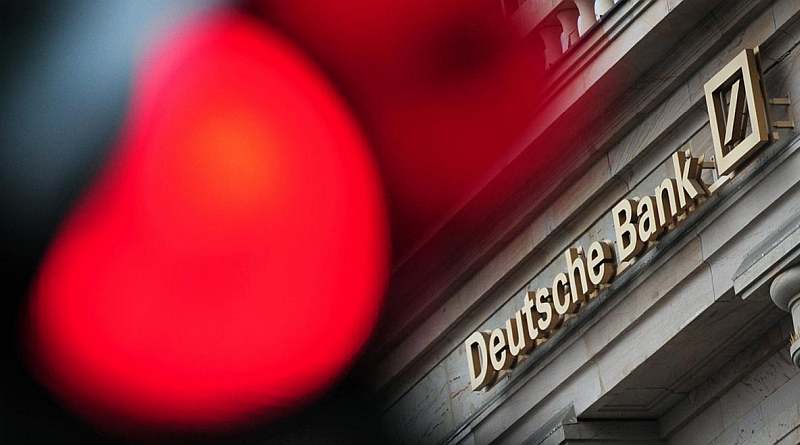
6. The largest German bank, Deutsche Bank, admitted to violating EU sanctions while servicing Russian clients.
– In the bank’s retail division, there were instances of accepting deposits over 100,000 euros from individuals subject to sanctions restrictions.
– This is a direct violation of EU regulations, which prohibit banks from accepting such amounts from citizens and residents of Russia, as well as from legal entities registered in Russia. The bank has already reported the incidents to German financial regulators, which could lead to inspections and potential fines.
– Despite strict sanctions, Russian clients continue to find ways to store funds in the European banking system by exploiting gaps in internal controls or the complexity of identifying ultimate beneficiaries.
– At the same time, for the banks themselves, this means increasing regulatory risks and reputational losses. The sanctions regime, aimed at restricting Russia’s access to financial resources, faces practical implementation challenges.
– However, such cases also increase pressure on banks to strengthen compliance, which in the long run complicates access for Russian clients to the Western financial system.
