

Information on current losses of the Russian Federation due to sanctions as of 08/06/2026.
1. Attacks on Russian refineries continue.
– On August 6, Ukrainian drones attacked the Yaroslavl Refinery (“Slavneft-YANOS”) — one of the largest oil refineries in Russia. Local residents reported a series of explosions, after which thick smoke rose above the facility.
– The Yaroslavl Refinery has a design capacity of about 15 million tons of oil per year and produces gasoline, diesel fuel, jet fuel, and lubricants. It is one of the key fuel suppliers for the central part of Russia and an important element of military logistics.
2. The Saratov Refinery of “Rosneft” completely stopped oil processing after the attack by Ukrainian drones on August 2.
– The facility, with a capacity of 7 million tons of oil per year, had its only primary processing unit AVT-6 disabled. The plant also ceased fuel sales at the St. Petersburg Commodity Exchange.
– The Saratov Refinery annually produces over 1 million tons of gasoline and almost 2 million tons of diesel fuel. Estimates suggest that restoring the facility’s operations may take 2-3 weeks.
3. The Russian government, amid the fuel crisis, allowed the production and sale of gasoline of environmental classes K2–K4 (“Euro-2”, “Euro-3”, and “Euro-4”) until July 1, 2027, as reported by the Russian Ministry of Energy.
– The ministry stated that the decision is temporary and is part of anti-crisis measures aimed at ensuring fuel availability. Information about the ecological class of gasoline will be indicated at gas stations.
– “Euro-2”, “Euro-3”, and “Euro-4” are outdated environmental standards that were used in Europe from 1991 to 2009. Such fuel contains more sulfur, pollutes the environment more, and can accelerate the wear of catalytic converters, oxygen sensors, particulate filters, and exhaust cleaning systems.
– It can also cause increased fuel consumption, engine malfunctions, and costly vehicle repairs.
4. The revenues of 65 out of 85 regions of Russia have not yet returned to pre-war levels.
– The real incomes of the budgets of 65 out of 85 regions in Russia by the end of 2025, accounting for inflation, remained below the 2021 level. The main reasons were a sharp reduction in profit tax revenues and a decrease in federal transfers.
– Profit tax revenues in real terms decreased by 16.6%, and in 51 regions, they were lower than before the full-scale invasion of Russia into Ukraine.
– Despite falling revenues, 52 regions increased real budget expenditures, leading to rising deficits. In the first quarter of 2026, 56 regions executed budgets with a deficit compared to 46 a year earlier.
– Most notably, there was a reduction in healthcare funding: in 76 out of 85 regions, real healthcare expenditures decreased compared to 2021, and in 29 regions, they fell even without considering inflation.
5. Despite a spike in oil and gas revenues in July, Russia’s budget remains in deficit.
– In July, oil and gas revenues of the federal budget rose to 934 billion rubles — the highest since April 2025. The growth was ensured by one-time quarterly receipts from the additional income tax (AIA), while the key tax on oil extraction (MET/NDPI) fell by almost a third for the month — from 837 billion to 584 billion rubles.
– Despite a strong July, oil and gas revenues for January–July amounted to only 4.6 trillion rubles — 17% less than in the same period last year.
– According to estimates, by the end of the year, the government will not meet the plan: instead of the planned 8.7 trillion rubles, the budget might receive only about 7.7 trillion. In fact, even a temporary increase in oil prices due to the war in the Middle East could not offset the drop in oil revenues.
– The budget deficit persists, and reliance on one-time tax revenues only highlights the deterioration of Russian state finances.
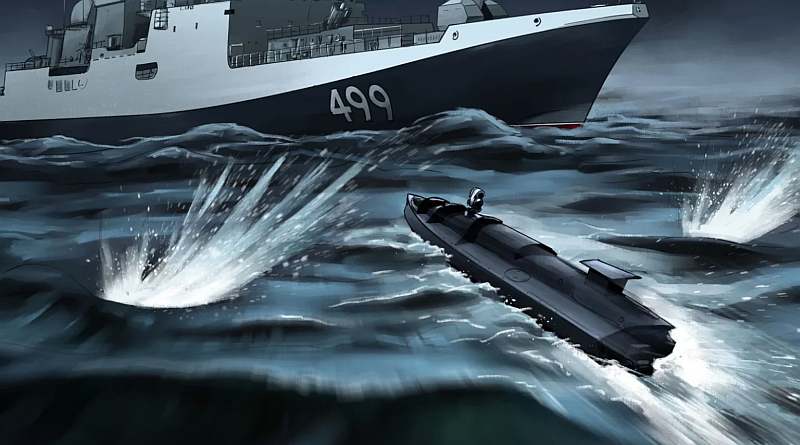
6. The drone war in the Black Sea has sharply increased the cost of maritime transport to Russia.
– Due to attacks by Ukrainian marine drones, shipping companies have raised freight rates on routes between Turkey and Novorossiysk by 3–4 times. Carriers have introduced wartime risk surcharges of up to $1,000 for a 20-foot container and $2,000 for a 40-foot container, whereas previously transport cost $250–400 and up to $900, respectively.
– The increase in shipping costs is associated with growing threats to navigation following a series of attacks on civilian vessels and Russian port infrastructure in the Black Sea.
– Due to the sharp increase in logistical costs, a rise in the cost of imports to Russia is expected, primarily for perishable goods from Turkey and products from third countries entering through Black Sea routes.
– For the Russian economy, this means further increases in import costs, complicated logistics, and additional inflationary pressure.
7. The Russian automotive industry is increasingly dependent on China.
– In monetary terms, the import of cars from China to Russia increased 2.3 times, with Chinese brands accounting for almost 70% of all the country’s car imports. Their market share in the Russian car market is estimated to have already reached around 40%.
– Meanwhile, Russia’s largest car manufacturer, “Avtovaz,” continues to lose ground. The industry’s dependence on Chinese suppliers is rapidly increasing, and local production is unable to compensate for the decline in the presence of Russian brands.
– This makes Russia’s automotive sector increasingly vulnerable to decisions and supplies from China.
8. The war economy is increasingly undermining Russia’s civilian sector.
– The labor shortage caused by the war forces Russian companies to raise wages at rates they can no longer afford. Since the start of the full-scale war, wage growth has outpaced productivity growth by about 5 percentage points, delivering an increasing blow to enterprise profitability.
– Bloomberg economists call this the war version of the “Dutch disease”: the defense industry and army draw labor and resources away from civilian industries, raising business costs and reducing competitiveness.
– Amid record-low unemployment (around 2%) and the annual departure of tens of thousands of men to the war, there are almost no opportunities left to ease the labor shortage.
– In 2026, the Kremlin plans to recruit 409,000 contract servicemen, meaning the civilian economy will lose about 34,000 workers each month. Meanwhile, since the end of 2021, employment in the defense industry has already increased by approximately 510,000 people.
– High wages in the army and defense enterprises force civilian companies to raise wages, although their productivity does not increase. This fuels inflation, reduces business profits, restrains investment, and deepens the crisis in the civilian sectors of the economy.
– Estimates suggest that if the authorities continue to increase payments to contract servicemen, it could further exacerbate the labor crisis or even push the Kremlin towards a new wave of forced mobilization.
9. The United Kingdom has expanded sanctions against Russia.
– London has imposed new restrictions on 19 entities: the list includes 13 individuals and legal entities, as well as 6 vessels involved in supporting the Russian Federation and transporting Russian energy resources.
– The sanctions target six Russian banks, including Ozon Bank, Roseximbank, Center-Invest Bank, Realist Bank, Stavr, and Teleport Bank. Their assets will be frozen, and British financial institutions are prohibited from cooperating with them.
– Restrictions were also imposed on companies that supplied goods and technologies for Russian industry, the Indian company Frion Ship Management LLP, as well as the owner of the chemical company “Siltron,” Alexander Zhdanov.
– Separately, sanctions were introduced against six vessels that transported Russian LNG, oil, and petroleum products. They are banned from entering UK ports and using British technical, financial and brokerage services.
10. One of the largest European brokers, Scalable Capital, has started closing accounts of Russian citizens residing in the EU.
– Clients with Russian passports, including holders of residence permits, permanent residency, and dual citizenship of EU countries, have started receiving notices about service termination from October. In the letters, the company does not directly cite Russian citizenship as the reason. In some cases, the broker refers to the lack of EU citizenship, while in others, no explanation is given at all.
– According to representatives of Russian organizations in Europe, Scalable Capital is linking these steps to compliance with sanctions requirements. In one case in the Netherlands, a client was required to confirm the renunciation of Russian citizenship.
Visualization: Airspace-review/АрміяInform
