
Olesya Zhyhaliuk, BBC News Ukraine
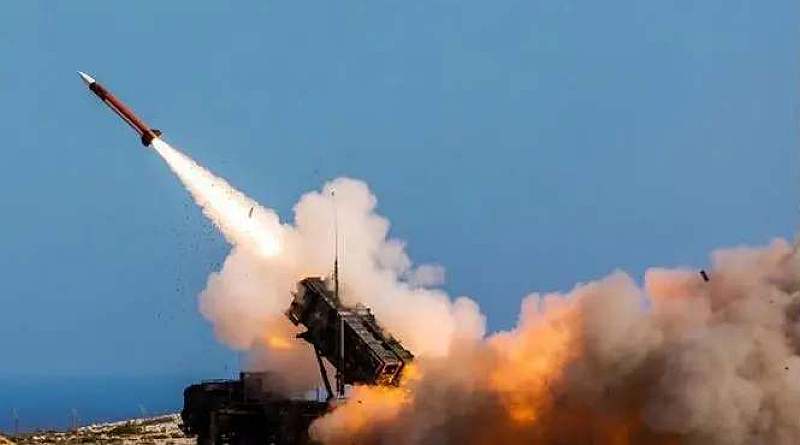
The shortage of missiles for the Patriot systems is just part of a deeper problem of Ukrainian air defense, writes military analyst Franz-Stefan Gady in an article for Foreign Policy.
In his opinion, NATO faces a more complex question: is the West prepared not only to increase weapons supplies but also to reconsider the very concept of Ukraine’s defense?
This topic is also analyzed from different angles by Atlantic Council and New York Times.
Patriots Alone Are Not Enough
Foreign Policy believes that the discussion about additional Patriot complexes and missiles shifts the focus away from the main problem.
Even if Washington agrees to transfer more missiles to Ukraine or allows their production under license, it won’t have a rapid effect.
Franz-Stefan Gady reminds us that the Trump administration has not yet agreed to give Ukraine a license to produce Patriot interceptor missiles. Moreover, according to the author, the White House did not support Kyiv’s request for the delivery of 300 such missiles.
However, even a positive decision would not eliminate the main issue — there are simply not enough interceptor missiles in the world to repel large-scale Russian air attacks, the author points out.
According to Foreign Policy, the US currently produces just over 600 PAC-3 missiles a year. In the future, this volume is planned to be tripled.
At the same time, during the largest Russian attacks, Ukraine may use up to 150-180 of these missiles in just one month.
This is why, the publication notes, the Ukrainian missile defense system will depend on allies and the search for alternatives to Patriots with European partners for quite some time.
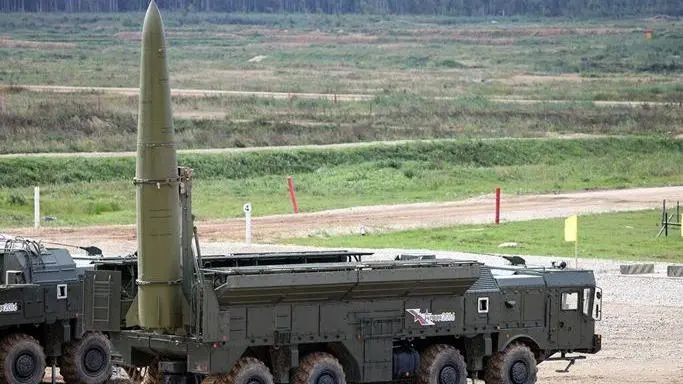
This view is shared by Austrian military expert, Colonel Markus Reisner of the General Staff of the Austrian Armed Forces.
In an interview with ntv.de, he said that President Volodymyr Zelensky’s request for 300 Patriot missiles was intended to help Ukraine through the coming months and survive the winter.
However, according to Reisner, the problem lies not only in production. A significant portion of American stocks remains in reserve and is not transferred to allies.
In his opinion, the situation for Ukraine is gradually worsening. In particular, during the latest Russian attack, according to Ukraine’s Air Force, it was not possible to shoot down any ballistic missiles.
At the same time, Reisner is convinced that the USA could technically provide more to Ukraine.
In his view, Donald Trump’s reluctance to do so is explained not only by military considerations.
“In my opinion, the US President wants to push both sides of the war to a ceasefire”, the expert said.
He believes the White House simultaneously seeks to pressure Kyiv and leave room for negotiations with Moscow.
Financial Times, citing its sources, reported that Trump during a meeting with Zelensky last week refused to provide Ukraine with hundreds of additional interceptor missiles for the Patriot air defense system.
According to the sources, Trump explained this by the shortage of interceptors in US reserves and said they are currently needed to protect American facilities and US allies in the Middle East.
Strike at the source of the threat
According to Foreign Policy, even a sharp increase in missile production will not solve the problem in the coming years.
Therefore, the publication writes, NATO should discuss another defense model.
This involves the principle of not only destroying the missiles themselves but also the launchers, depots, and facilities where they are produced.
According to Hadi, Ukraine is already partially using such tactics.
With the support of Western intelligence, Ukrainian long-range drones and missiles strike at oil refineries, defense industry enterprises, logistics centers, and productions manufacturing components for Russian missiles.
Among the examples, the author mentions strikes at the “Titan-Barricades” plant in Volgograd and the “VNIIProgress” enterprise in Cheboksary.
However, this is where, the author notes, the main political issue arises.
In conversations with German politicians, Hadi repeatedly heard concerns that strikes deep into Russian territory could lead to dangerous escalation, including nuclear blackmail from Moscow.
Meanwhile, such actions are envisaged by NATO’s new military doctrine in the event of a direct war with Russia.
However, whether European governments are ready to allow such operations in practice remains unclear.
Fear of escalation still influences Western decisions
Foreign Policy reminds that fear of escalation has repeatedly delayed the transfer of modern weapons to Ukraine.
This was the case with HIMARS systems, ATACMS missiles, and other types of weapons.
Later, most of the restrictions were lifted, and many of Russia’s “red lines” turned out to be less rigid than Western partners feared.
Despite this, Germany still does not agree to transfer Taurus missiles to Ukraine, and SpaceX does not allow the use of Starlink over Russian territory.
According to Foreign Policy, Volodymyr Zelensky even asked Donald Trump to help change this policy.
In Hadi’s opinion, these concerns are unlikely to automatically disappear even in the event of a direct conflict between NATO and Russia.
He believes there is still a significant gap between the Alliance’s military plans and the political willingness of European leaders to make such decisions.
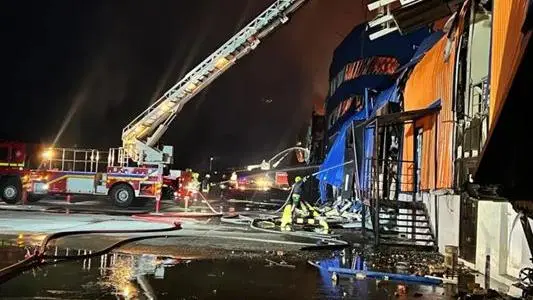
Europe’s Chance to Change the Course of the War
While Foreign Policy focuses on military strategy, the Atlantic Council emphasizes the political situation.
The authors believe that Ukraine is gradually regaining initiative, and Europe has a rare opportunity to influence the further course of the war.
They cite President Volodymyr Zelensky, who stated in an interview with Fox News that Russia no longer has the initiative on the battlefield.
A similar assessment was expressed by Finland’s President Alexander Stubb.
“Ukraine’s positions are now the strongest since the beginning of the war,” he said.
According to the authors, European countries must not repeat the mistakes of 2022, when excessive caution allowed Russia to regroup forces, ramp up weapon production, and build a strong defense.
Among the key tasks, they mention financing Ukrainian defense production instead of constantly using their own reserves, transferring modern technologies—from artificial intelligence to cloud services—and supporting the mobilization system and increasing financial support for military personnel.
Analysts believe this will be a test of whether Europe can become an independent and influential player in the security field.
Is It Time for Negotiations
The New York Times offers another perspective.
Thomas Graham, a former advisor to U.S. President George W. Bush, believes that Donald Trump has a real chance to help bring the end of Russia’s war against Ukraine closer. However, he says, this window of opportunity may close quickly.
According to Graham, there are two main reasons why the U.S. should return to active negotiations as soon as possible.
The first is that the war is intensifying. Ukraine is increasingly attacking military and energy facilities on Russian territory. In response, Russia is intensifying airstrikes on Ukrainian cities, taking advantage of Ukraine’s shortage of air defense systems.
The second reason is that, in his opinion, the war has reached a point where both sides are paying too high a price for its continuation.
“If the war ended today, each side could declare its own victory,” writes Graham.
He believes President Volodymyr Zelensky could say that Ukraine preserved its independence, sovereignty, and European course. Vladimir Putin, on the other hand, could claim that Russia prevented its strategic defeat.
That’s why, Graham argues, it is time to actively seek a diplomatic solution.
In his view, only the U.S. has enough influence to simultaneously negotiate with Kyiv, Moscow, and European capitals.
In the background: Launch of a missile from a Patriot complex during a NATO exercise in 2017. Photo: Sebastian Apel/U.S. Department of Defense
