

Information on current losses of the Russian Federation due to sanctions as of 01.08.2026.
1. Ukraine attacked Wildberries logistics centers with an area of over 1 million sq. m, and 60% of the largest warehouses have already been hit.
– In the past two weeks, Ukrainian drones have attacked or attempted to attack Wildberries logistics centers, accounting for about 60% of the area of the company’s largest warehouse complexes.
– Journalists analyzed the 26 largest Wildberries logistics centers with an area of over 15 thousand sq. m. Their total area is 2.7 million sq. m, exceeding half of the entire marketplace’s warehouse infrastructure (5.2 million sq. m).
– During this period, 10 of the largest warehouses were directly hit. Their total area is 1.023 million sq. m. Some facilities were completely destroyed, others suffered serious damage or ceased operations. Three more large warehouses with a total area of 557 thousand sq. m were also targeted but continued to operate.
– Thus, logistics centers covering about 60% of the area of Wildberries’ largest warehouses have already been hit.
– The most severe damage was suffered by logistics complexes in Elektrostal (250 thousand sq. m), Novaya Usman (156 thousand sq. m), Kotovsk (108 thousand sq. m), Shushary (106 thousand sq. m), Krasnodar (100 thousand sq. m), Nevinnomyssk (94 thousand sq. m), Penza region (90 thousand sq. m), Sarapul (53 thousand sq. m), Volgograd (48 thousand sq. m) and Utkina Zavod (18 thousand sq. m).
– It is estimated that in the European part of Russia, attacks have already covered 64% of the areas of large logistics centers.
2. Russia has not been able to fully restore 18 out of 26 refineries after Ukrainian strikes.
– The Ukrainian campaign of strikes on Russian oil refineries continues to inflict long-term damage on the fuel industry.
– As of July 27, Russia has been unable to fully restore 18 of the 26 major refineries that halted production after Ukrainian drone attacks. Only 8 refineries have returned to full operation.
– Another 11 refineries have partially resumed production, while 7 facilities remain shut down.
– Among the refineries still idle are the Kirishky refinery (“KINEF”), the second-largest in Russia, as well as the Tuapse, Syzran, Kuibyshev, and Novokuibyshev refineries of “Rosneft.”
– Overall, Ukrainian strikes have already knocked out over 30% of Russia’s actual and over 45% of its nominal oil refining capacities.
– Satellite imagery analysis shows that damage at many facilities remains visible weeks and even months after the attacks, indicating serious repair difficulties and a shortage of necessary equipment.
– The oil refining sector accounts for about 12% of Russia’s total industrial production, so the slow recovery of the refineries exacerbates problems with supplying the domestic fuel market, reduces export potential, and increases the country’s economic losses.
3. Russia’s largest metallurgical companies reported a collapse in profits.
– Russian metallurgy, accounting for about 15% of the country’s industrial production, is experiencing its deepest crisis in decades. The reasons include an economic slowdown, Western sanctions, high credit rates, and a sharp drop in domestic demand.
– Russia’s largest steel producer, NLMK, reduced its revenue by 12% in the first half of the year to 388 billion rubles, while net profit more than halved — from 45.6 billion to 21 billion rubles.
– “Severstal” reported a ninefold drop in net profit — to 4.12 billion rubles. The company’s revenue decreased by 14%, and the EBITDA indicator almost halved.
– Magnitogorsk Iron and Steel Works (MMK) ended the first half of the year with a loss of 19.1 billion rubles. Meanwhile, the enterprise’s revenue decreased by 10%.
– Domestic demand for steel is shrinking due to economic stagnation, and exports, which previously supported the industry, suffer from sanctions, costly transportation, and a strengthening ruble.
– The financial condition of the companies is also rapidly deteriorating. In the first half of the year, “Severstal” recorded a negative cash flow of 70.2 billion rubles, and NLMK — 11 billion rubles, indicating a significant liquidity shortfall.
– In 2026, the profit of Russian metallurgical enterprises may fall to the lowest level in decades.
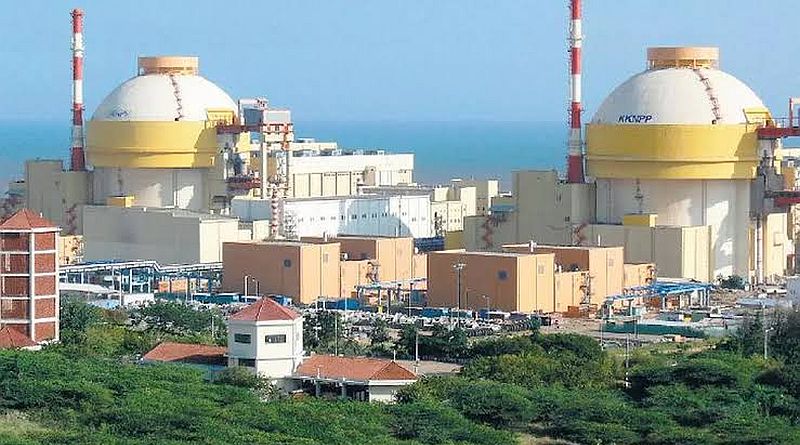
4. “Rosatom” missed the construction deadlines for a nuclear power plant in India: the project cost increased by 55%.
– The cost of constructing four Russian-designed energy units at the Kudankulam Nuclear Power Plant in India has increased by 55% after nearly a three-year delay in implementation.
– The updated cost for the four 1 GW reactors amounts to 1.38 trillion Indian rupees (approximately 14.4 billion dollars). Meanwhile, the construction cost for the 3rd and 4th units has risen by 73%, and for the 5th and 6th by 40%.
– One of the main reasons for the delays was the impact of the war unleashed by Russia against Ukraine, which disrupted equipment deliveries and work schedules.
– The Indian side also cites the COVID-19 pandemic, logistics problems, shortages of certain materials, and contractor difficulties among the reasons.
– The first two Russian reactors at the Kudankulam Nuclear Power Plant are already operational, while another four remain under construction.
– Previously, India planned to complete the project by 2027, but now the commissioning of all new units is expected only by March 2030.
– The increase in project costs will lead to higher electricity production costs, complicating the development of nuclear energy in one of the world’s most price-sensitive energy markets and dealing another blow to the international standing of Rosatom.
5. Russia has started importing gasoline from Morocco due to fuel shortages following strikes on refineries.
– For the first time, Russia imported about 30,000 tons of A-92 gasoline by sea from Morocco amid fuel shortages caused by Ukrainian drone attacks on refineries.
– A tanker under the Panamanian flag loaded gasoline at the Moroccan port of Tangier in mid-July and is now unloading the fuel at the Russian Arctic port of Murmansk. The shipment supplier is Lukoil.
– Previously, Russia also began importing gasoline by sea from India, which is atypical for one of the world’s largest oil producers.
– By early July, gasoline production in Russia had decreased to about 65% of the average summer demand due to the shutdown of several large refineries following Ukrainian strikes.
– As a result, Russia, which traditionally exported fuel, is increasingly covering its internal deficit through imports, indicating a deepening crisis in its oil refining sector.
