
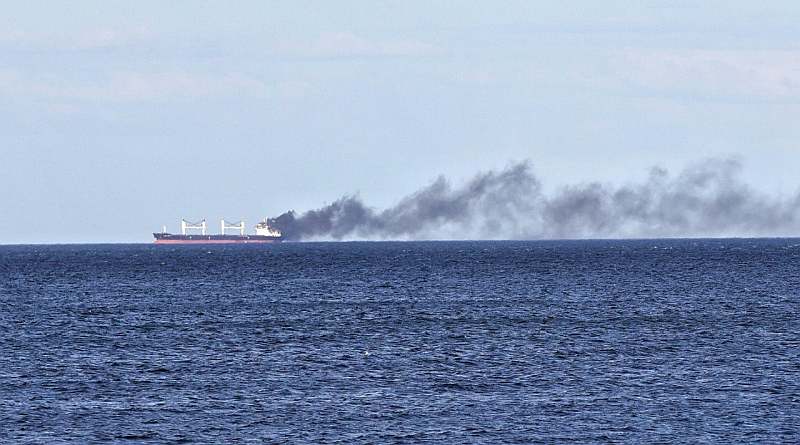

Systematic missile and drone attacks by the Russian army on the sea infrastructure of the ports of Odessa, Chornomorsk, and Yuzhne are deliberately destroying the logistical chains of global food supplies, as the destruction of grain terminals and constant attacks on civilian cargo ships deprive world markets of millions of tons of essential agricultural products.
The Kremlin leadership’s strategy of destroying the port facilities of Greater Odessa coincided with a severe climate crisis, where abnormal drought, along with large-scale forest fires, has engulfed key agricultural regions of Europe, while the global climate phenomenon El Niño has dealt a devastating blow to grain yields in Asian and Latin American countries.
The combined effect of the destruction of Ukrainian elevators and extreme weather conditions is creating an unprecedented shortage of wheat, barley, and corn, leading to a rapid rise in the cost of basic food products worldwide.
In conditions where European farmers are losing up to 30% of their harvest due to crop burn and acute water shortages, and Asian producers are facing historical temperature records, Russian aggressors are deliberately blocking alternative paths for food exports from the Black Sea region by systematically attacking foreign ships and setting fire to warehouse complexes.
International food security experts emphasize that the consequences of these military actions will be most destructive in poor countries because Global South nations critically depend on the import of affordable Ukrainian grain.
The targeted destruction of port infrastructure in the Odessa region deprives tens of millions of people of regular bread supplies, as the sharp rise in logistics and insurance costs for maritime carriers makes the purchase of grain impossible for most developing countries.
The Global South is caught in a catastrophic trap, where massive droughts and natural calamities destroy local crops, and the aggressive actions of Putin’s troops completely block external sources to replenish the deficit.
This artificially created food shortage is bound to lead to a humanitarian collapse, triggering waves of mass hunger, spontaneous social unrest, political coups, and deep state crises in African and Middle Eastern countries.
Actions of Russian troops in the Black Sea region demonstrate the deliberate transformation of food into a weapon of hybrid warfare, as the undermining of the global food system occurs at a time when humanity is most vulnerable to climate threats. The destruction of terminals holding over 100,000 tons of grain stocks, along with the damage to more than 23 civilian ships, proves the Kremlin regime’s intent to cause widespread instability on a global scale.
The community of leading world powers must realize that further indulgence of the barbaric attacks on Greater Odessa’s ports threatens a global catastrophe, as the synchronization of Russia’s war crimes with natural shocks of 2024 and 2026 places hundreds of millions of the planet’s inhabitants on the brink of survival.
As climate changes continue to reduce global grain reserves, the destruction of Ukraine’s export potential becomes a crime against all humanity, which will lead to inevitable revolutionary upheavals in the poorest corners of the earth.
