
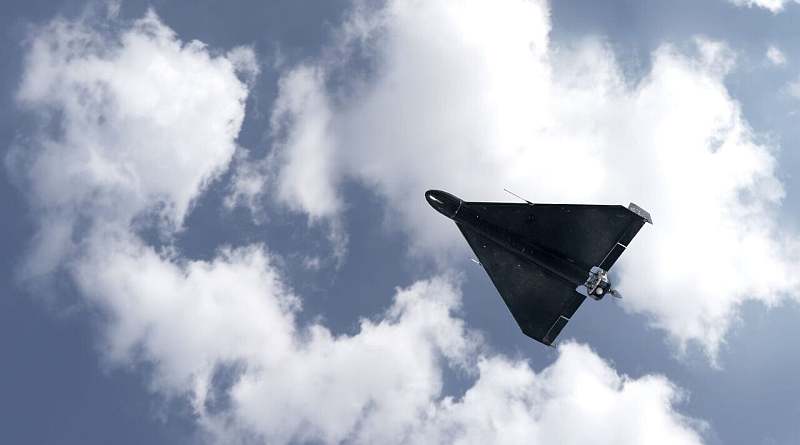
Alexander Kovalenko / Obozrevatel
The intensification of Russian kamikaze drone strikes and the introduction of two modes of air alerts (yellow and red) in Ukraine have sparked a highly ambiguous discussion on social media—which drones are more dangerous, and which are not so much. Arguments supporting one position or another include mass of the warhead, flight speed, interception probability, and many other factors. The discussion is extremely strange but nevertheless deserves attention to clarify certain points.
Details on this are in the new material of the joint project by OBOZ.UA and the group “Information Resistance.”
First of all, I should note that there are no less or more dangerous drones. Everything that kills—kills. It doesn’t matter whether a drone’s warhead contains 90 kilograms of explosives or 500 grams—they kill. The difference lies in the scale of the explosion, the destruction, and the number of potential victims.
Therefore, I don’t accept the concept of a discussion about “more” or “less” dangerous drones in principle. The effects of destruction and potential threats of specific types should be considered separately.
By the way, I have a similar attitude towards the new air alert modes, which create an imaginary sense of absence of danger during the “yellow” mode compared to the level of danger that occurs during the “red” mode. However, if we analyze the strikes and tragedies of the past week, many casualties in the capital and cities affected by kamikaze drone raids happened precisely during the “yellow” mode.
Threat Level
Since August 2022, Russia has been actively using primarily one architectural type of kamikaze drone—Shahed-136 against rear Ukraine. Over the past 4 years, it has undergone hundreds of modifications, various innovations, changes, and has evolved beyond recognition. But the main basic distinctive features and characteristics have remained unchanged. In particular—the ultimate combat capabilities.
Initially, the Shahed-136 had a warhead mass of 50 kg, but the actual explosive TGX-35P2 (a mixture of TNT and phlegmatized RDX) weighed about 30 kg.
At that time, in 2022, a recommendation began to spread in the information space regarding the precautionary measure known as the “two walls” during drone raids. And it should be noted that when impacting an apartment, the Shahed-136 with such a basic warhead “two walls” and staying in the bathroom really did (in some cases) save lives. But not from injuries and concussions.
The Russian occupiers were not satisfied with the power of this warhead and constantly worked on its improvement as a means of terror. They began adding tungsten alloy destructive elements to the warhead to increase the area and number of civilian casualties, and then experimented with thermobaric TBBCH-50 mixtures – and from this point on, the “two walls” principle stopped working.
In 2025, it was officially confirmed that Russia began installing reinforced warheads weighing 90 kg on kamikaze drones. The destructive effect of such warheads is much larger, and the “two walls” principle under such conditions no longer works. When hitting an apartment in a multi-story building, serious damage occurred in an area covering 3 by 3 windows/apartments. A central hit resulted in complete destruction, depending on the type of construction and materials of the building, with destruction of inter-floor overlaps. Three windows/apartments on the sides of the explosion center experienced serious damage.
Additionally, the 90 kg warhead uses a metal hydride mixture, leading to a strong fire at the impact site.
Currently, the enemy is considering the possibility of scaling the use of cumulative warheads that concentrate impact energy in a narrow zone to increase the penetration effect.
Thus, we see that the enemy uses a similar type of drone for strikes on rear Ukraine, which can be equipped with completely different types of warheads. Seeing a Shahed-136 (“Geran-2”), or Shahed-238 (“Geran-3/4”), or Karrar (“Geran-5”) overhead, who can confidently say what type of warhead it carries?
Low-power, basic 50 kg? Or thermobaric? Or the standard 90 kg? Ordinary fragmentation-explosive or cumulative, or equipped with thousands of tungsten munitions for strikes on open, crowded areas?
For at least these reasons, the discussion about the low or high degree of danger posed by kamikaze drones loses its meaning. However, perhaps their danger can be assessed by other tactical and technical characteristics?
Speed and Tactic of Use
Before the emergence of jet versions of the Shahed-238, Russian occupiers experimented a lot with different raid tactics performed by piston-driven Shahed-136. These were experiments with very low flight altitudes and at maximum altitudes – up to 5 km. Difficult-to-intercept routes were used – along riverbeds, through forested, lake, and marshy areas.
However, the speed of Shahed-136 around 180 km/h allowed not only civilians to timely react to the threat and hide in safe places but also affected the efficiency of interception by air defense systems and mobile fire groups.
But the real problem began to be created by the jet versions themselves.
However, it cannot be said that Shahed-238 is some elusive “Wunderwaffe.” It has no fewer drawbacks than the Shahed-136, but its speed does not allow for its interception by mobile fire groups and interceptor drones as effectively as with the piston modifications. In particular, the speed of Shahed-238, depending on the installed engine, could reach 500–600 km/h.
Additionally, the installation of more powerful jet engines allowed UAVs not only to increase speed performance but also to reach altitudes inaccessible for interception by even short-range air defense systems—7 km and more.
A separate story involves the Karrar (Geran-5), which are difficult to intercept not only due to their speed and flight altitude but also because of their missile-like design, providing interception means (like an interceptor drone) a smaller area for attack. In the case of “Shaheds,” designed with a “flying wing” glider aerodynamic scheme, the effective hit area is significantly larger.
Therefore, subjectively speaking, it can be said that jet kamikaze drones are more dangerous than piston ones, especially Karrar (Geran-5).
In addition to the aforementioned, Ukraine still does not have an entirely effective means of intercepting jet kamikaze drones. There are alternative means that provide a probability of interception, but not a sufficiently high guarantee. This does not mean that such tools will not appear, especially since jet kamikaze drones are not a “Wunderwaffe.”
However, Russia is exploiting the window of opportunity to intensify terror with these means of destruction—while Ukraine has not yet developed a countermeasure. Such a tool could be a jet-powered interceptor drone, a very cheap guided anti-aircraft missile for short-range systems, or something else entirely of a different concept.
Conclusions
As I mentioned above, I see no point in debating which kamikaze drones are more dangerous and which are not. All are absolutely dangerous.
Yes, there is a difference in the type of destruction and damage from different types of warheads, which they can be classified by. And even by speed, application tactics, and interception complexity.
But I believe that any threat, whether from piston or jet kamikaze drone attacks, should always be responded to in the same way: quickly leave open areas and move to a safe place (bomb shelter, metro, basement, or any other shelter).
And forget about the “two walls” . This should have long been forgotten as a rudiment of the past.
