
The Svalbard Archipelago, long considered a symbol of low tension in the Arctic, is increasingly at the center of the confrontation between Russia and NATO, writes the European publication Politico. Norway and its allies are noting Moscow’s activity in the “gray zone”—from military-style maneuvers to suspicious activities around underwater infrastructure, and are enhancing surveillance and defense capabilities in the north. The archipelago’s unique legal status makes it a potentially convenient place for testing the Alliance’s unity without directly escalating into a large-scale war. This is why Oslo is simultaneously trying to strengthen deterrence and prevent escalation.
Russia’s intensifying hybrid activities on Svalbard raises fears that Moscow might provoke an incident that would test NATO’s Article 5 principle of collective defense, writes the European publication Politico.
The publication notes that for most of the last century, the biggest threat to Svalbard residents was only polar bears. Now, Russia is becoming an increasing threat.
There are growing fears that Moscow might use the sprawling Arctic archipelago, part of Norway with an unusual legal status, to militarily test NATO amid growing uncertainty about the US’s commitment to Europe’s defense.
Politico notes that allies suspect Russia of reconnaissance of critical underwater cables in waters near Svalbard and conducting military-style activities that test the boundaries of the rules governing its presence there. Amid Russia’s increasing hybrid attacks across Europe, Oslo is rushing to enhance naval capabilities and surveillance to protect its northern flank, and local authorities in Svalbard are investing in critical infrastructure—and even have a plan for evacuation.
“In the Arctic and the High North, tension has increased, and of course, Svalbard is part of this,” Norwegian Defense Minister Tore Sandvik told Politico. “We know that Russia… uses many means to provoke or seek opportunities for hybrid threats.”
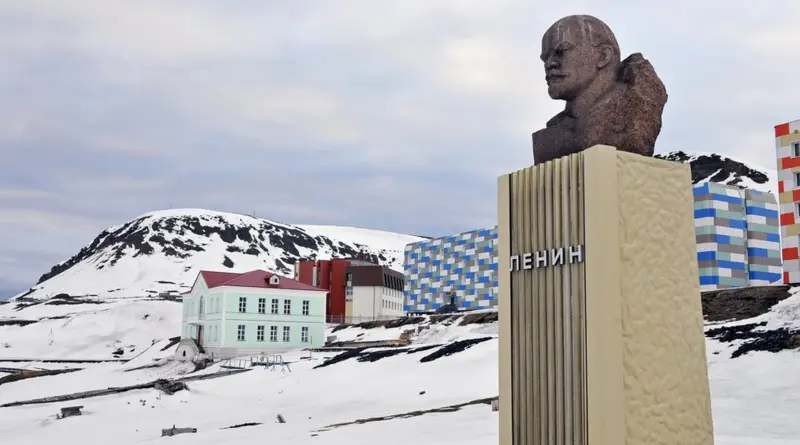
Despite its status as Norwegian territory, the publication reminds, there is a Russian town on the main island of the archipelago—Western Spitsbergen.
For decades, Moscow and Oslo mostly managed to avoid sharp escalations of tension, but now this fragile balance is under increasing pressure. Western countries are increasingly concerned about Russian hybrid attacks in Europe and warn that Moscow may attempt to launch a limited invasion of a NATO member country by the end of the decade.
“The Russian leadership is extremely unpredictable and increasingly risk-prone,” said Kari Aga Myklebust, a professor of Russian history and Svalbard expert at the Arctic University of Norway. “I wouldn’t dismiss any scenario when it comes to the Kremlin’s readiness for confrontation with NATO.”
The Far North, High Tension
For decades, Svalbard embodied Norway’s maxim “The Far North, Low Tension,” which involved efforts at cooperation among Arctic countries, including Russia.
As noted by Politico, this was facilitated not only by the remoteness of the archipelago – it lies more than 900 kilometers from mainland Norway – and low temperatures but also by its unique status. Under the 1920 international treaty, states recognized Norway’s sovereignty over the islands but obtained rights to exploit natural resources; shortly after, the Soviet side acquired the town of Barentsburg for local coal mining.
The treaty also prohibited any state from using Svalbard for “military purposes,” including building naval bases and fortifications, yet Norway sends coastguard ships and military vessels to the archipelago.
At the peak of the Cold War, Svalbard, the only inhabited island, was home to 2,400 Soviet citizens, accounting for about 70% of its population.
Politico believes that Moscow has little incentive to disrupt this treaty order, as it could backfire on its own interests. Russia’s northwestern Kola Peninsula, where about two-thirds of Russia’s nuclear retaliatory strike potential is based, is located approximately 1,000 kilometers from here, so “Russia carefully avoided any escalation,” Myklebust said.
This makes the region strategically important for NATO as well. “In the event of a military conflict… it is here that Russian submarines could enter the North Atlantic, hide at greater depths, and pose a threat to NATO and the USA,” she explained.
However, Politico emphasizes that after Russia’s full-scale invasion of Ukraine, tensions have increased.
Since 2022, local Russian officials have been criticized for hosting a youth organization indirectly linked to the navy, announcing missile exercises nearby, and holding annual parades with military symbols, one of which was accompanied by a helicopter flyover.
In 2024, Moscow also initiated direct sea routes from Russia, and last year opened a branch of the Russian Geographical Society, headed by former Defense Minister Sergei Shoigu.
“We call these provocations in the gray zone,” Mjølkebust assures. “It’s a very low-cost way to assert Russian presence and… challenge Norway’s jurisdiction.”
As a result, the publication writes, this year Norwegian internal security services and intelligence warned that the Kremlin “seeks to expand Russia’s freedom of action in Svalbard.”
It was previously reported that this spring British, American, and Norwegian forces detected Russian vessels near Svalbard’s coast, testing a secret device for cutting underwater cables.
Although coal reserves in Barentsburg are dwindling, Moscow is not abandoning the town. In 2025, it granted the state trust “Arktikugol,” which manages Barentsburg, around 1.89 billion rubles (€20 million) in federal subsidies, according to its reports.
Russia’s ambassador to Norway, Nikolai Korchunov, told Politico that he would like to see the “transformation of Barentsburg’s economic activities” from coal mining to services and said that “Arktikugol” is investing in the maintenance of the town.
Cranes and scaffolding cover many Soviet-era buildings in Barentsburg, scattered on a rugged slope opposite the majestic Vøring Glacier dusted with snow — a sign that Russia remains interested in the site.
However, “we do not question Norway’s sovereignty,” Korchunov insisted. “We emphasize the necessity and importance of fulfilling all the provisions of the Svalbard Treaty,” he stated, accusing Oslo of fostering a “negative trend toward NATO militarization of the entire Baltic-Arctic region.”
On Thin Ice
Vice Admiral Rune Andersen, chief of the Norwegian Joint Operational Headquarters, stated that his priority is “to find a balance between deterrence and maintaining stability” on Svalbard and to remain “calm and composed” in response to hybrid threats.
However, given the “risks” of escalation, the military is investing in strengthening surveillance capabilities, he said. Specifically, next year there are plans to launch three new maritime surveillance satellites as well as “upgrade the naval fleet and coast guard… to ensure continuous presence” nearby.
Aiming to strengthen its northern flank, Norway is purchasing five Type 26 anti-submarine frigates from the United Kingdom and six Type 212CD submarines from Germany. Oslo is also deepening military integration with allies, particularly with London and Berlin, and this month conducted joint exercises near the northern Norwegian island of Jan Mayen.
“NATO countries are appearing more often in our waters,” said Minister Sandvik. According to him, the defense of Svalbard is also part of NATO’s defense planning process.
Locally, the strategy is to deter tensions. Deputy Governor of Svalbard Katharina Rise stated that her office meets with representatives of the local Russian consulate four times a year. “We have a good and constructive dialogue,” she said. “Our duty is to ensure stability and… a low level of tension here.”
Terje Aunevik, mayor of Longyearbyen, the main Norwegian town on Svalbard, reported that authorities have plans for a rapid evacuation of the settlement in case of a sudden escalation of the situation.
In Longyearbyen, there are only two submarine internet cables, one airport, one reservoir, and one diesel power station reliant on imported fuel. According to Aunevik, “significant investments” are currently being made, including the construction of two new reservoirs by approximately 2029. “From this perspective, we are quite vulnerable,” he noted.
In the Cold
Up close, notes Politico, Barentsburg does not seem particularly threatening. Few locals venture outside among the few dozen crumbling buildings. A plume of smoke rises from the old coal-fired power station, and the Soviet flag with a sickle and hammer flies lonely in the wind. Barentsburg resembles a relic of a bygone era.
Part of the recent hybrid activity is explained by the locals’ desire to attract Moscow’s attention, said Arild Moe, a senior research fellow and expert on Russian affairs at the Fridtjof Nansen Institute. He believes: “They are playing on nationalist sentiments… to gain priority and funding.”
However, Politico highlights that Putin’s unpredictability and Trump’s repeated wavering on NATO remain factors of uncertainty. Amidst an increase in sabotage, cyberattacks, and airspace violations across Europe, concerns are rising that Putin may escalate further, according to two NATO diplomats.
The tension is palpable in Svalbard. In Barentsburg, “we don’t talk about [political] issues,” said a waitress from St. Petersburg, who asked not to be named, while admitting that locals fear a potential war between NATO and Russia. “Of course, it worries us,” she said.
“Of course, there are constant talks about whether the Russian government will want to test a NATO member country and whether Svalbard will be the place to do it,” remarked Jonathan Svensson, an expedition guide who has lived in Longyearbyen for five years.
To alleviate these concerns, NATO should consider air patrols over Svalbard, move air defense systems to northern mainland Norway, and conduct joint exercises nearby, stated two NATO diplomats—pending Oslo’s agreement and the measures’ alignment with the Svalbard Treaty.
However, Politico notes, NATO currently has no publicly announced plans to strengthen its naval or air presence around the islands. Meanwhile, some fear that the Alliance’s current stance might be insufficient to deter Moscow.
Theoretically, it would be “very easy” for Russia to occupy Svalbard, believes Stole Ulriksen, a lecturer at the Royal Norwegian Naval Academy: it could deploy special forces from northern Russia and seize the airport. However, he says such a scenario is unlikely.
Nevertheless, Moscow doesn’t necessarily need to initiate a full-scale occupation. According to analyst Myklebust, Russia could stage an emergency affecting its local citizens and introduce crisis response forces—a move that might not clearly justify invoking NATO’s Article 5 on collective defense.
“The worst-case scenario is a situation where Moscow sees an opportunity to test NATO cohesion,” she stressed. “Perhaps Norway will cry for allied help, and then Donald Trump will say: ‘No—we won’t risk our beneficial agreements with Russia over this tiny island.’”
Cover image: Bust of Vladimir Lenin on the town square of Barentsburg. Photo: Occupying media
