
Thomas Kent, CEPA / Translation iPress
Consultant on Russian issues and information warfare, lecturer at Columbia University, Thomas Kent argues that a compelling narrative helps explain to society the purpose of the war, the means to achieve it, and the possible ending. However, after four and a half years of full-scale war, neither Russia nor the West has developed a consistent story about what they strive for and how exactly the war should end. Ukraine maintains the most distinct central narrative – a democratic state opposing a totalitarian aggressor, but Kyiv is also forced to adjust specific goals under the pressure of frontline realities and allies’ positions. As a result, the main external players increasingly offer their societies a story of war without a clear conclusion, complicating the justification of further sacrifices and costs.
Persuasion is most effective when backed by an engaging story. But after four and a half years of full-scale war, neither Moscow nor the West has created a clear narrative about this conflict or how it might end.
The audience responds to stories that lead to an achievable climax. In the main film of this summer, Odysseus overcomes endless trials on his way home, to Ithaca, but we know that his goal is to reunite with Penelope and Telemachus, and we also know that he is skilled with the bow. The story unfolds along a narrative arc leading to his final triumph.
Both Russia and the West have tried to offer a logical narrative arc leading to the end of the war in Ukraine, but their narratives lacked clear goals and means. Both sides failed to clearly define what they wanted or convince the world they could achieve it.
After Russia’s full-scale invasion, Western states promised to give Ukraine “whatever it takes” without specifying what exactly that means. President Joe Biden’s administration never aimed to completely repel the Russian invasion, nor did its European allies.
Three months after the invasion, Biden even indicated that Russia might retain part of the territories captured at the beginning of the war. He stated that the US would help Ukraine resist “further” aggression so that it would be in the strongest possible position at the negotiating table.
The Trump administration’s approach to Ukraine also lacked a consistent storyline. The White House would suspend and resume aid to Kyiv and tried to both flatter and intimidate both Putin and Ukraine’s President Volodymyr Zelensky.
In November 2025, Trump presented a 28-point peace plan, but a few days later stated it was not his “final proposal.” Since then, neither the president’s statements nor the words of his envoys after closed-door negotiations clarified which parts of this plan still remain on the table.
European countries have increased their aid to Ukraine and continue to demand the full withdrawal of Russian troops, but they have not dared to engage their own armed forces to help achieve this. Their narrative does not reveal a clear vision of how such a withdrawal can be achieved.
It seems that Europe’s strategy is to support Ukraine’s ability to fight until some form of divine intervention, such as a coup in Moscow, brings the war to an acceptable end. With such a vague approach, it is difficult to maintain the enthusiasm and solidarity in Europe that Ukraine needs.
European countries have also failed to articulate a clear narrative on how they plan to counter the increasing incidents of arson, murders, and drone intrusions into their sovereign territory from Russia. The absence of a clear narrative plays into the hands of right-wing parties, which accuse governments of endless spending on Ukraine without a clear goal, while their own population is at risk.
As for the Kremlin, despite its stories of Ukrainian Nazis and alleged NATO encroachments on Russia, its strongest narrative has been the claim that Russia is unbeatable, and by aiding Kyiv, the West risks triggering World War III.
However, the reality of the war has seriously undermined Moscow’s narrative of Russia’s invincibility, and Putin’s frequent threats of global nuclear war have partially lost their impact—especially after Trump’s sharp response that the U.S. could also launch a nuclear strike on Russia.
Russia has also proposed various versions of what it wants in Ukraine.
Announcing the full-scale invasion in February 2022, Putin said Russia aims to “demilitarize and denazify” Ukraine, but not to occupy it or “impose anything by force”—a contradictory set of goals. Two months later, he suggested that Russia is primarily interested in Donbas, and in July 2024, Russian Security Council Deputy Chairman Dmitry Medvedev stated that all of Ukraine should be absorbed by Russia.
In June 2025, Putin suggested that the outcome of the ground war is the work of fate: “There is a certain logic to military actions, and the troops find themselves in different territories,” he said. However, at a summit with Trump in Alaska in August 2025, Putin stated that Ukraine has the right to security, thereby hinting that he recognizes the continued existence of the Ukrainian state.
Possibly sensing the chaos in its narrative, the Kremlin shifted to broader themes about the need to remove the “root causes” of the war, including claims about NATO’s military capabilities in Europe. But this narrative finds little resonance—largely because almost nobody in the West believes that NATO intends to attack Russia at all.
Meanwhile, Ukraine’s own central narrative—about a brave democratic state fighting against a totalitarian aggressor—remains strong, although the country’s image has been harmed by corruption and political infighting.
Kyiv continues to maintain the image of a state fighting Russia on behalf of all Europeans, but its stance on the specific objective of the struggle has shifted—more due to the realities of the battlefield and allies’ cautions than due to Ukraine’s own indecision.
In response to the concerns of some NATO members about Kyiv’s accession to the Alliance, Zelensky moved to demand security guarantees outside of NATO’s structure. Instead of insisting on the complete withdrawal of Russia from Ukraine, he allowed for compromises regarding the governance of part of the Donbas territory.
Kyiv has achieved significant success in tactical storytelling, making the most of individual acts of heroism and campaigns clearly focused on achievable results. For example, the brave defense of Snake Island and the covert delivery of truckloads of drones deep into Russia have captured the world’s imagination.
Ukraine’s focus on the abduction of its children also led to the International Criminal Court issuing charges against Putin and helped garner broad support for the easily understandable goal of returning children to their parents.
However, the absence of an effective war narrative from the superpowers is striking.
Russia and the West now primarily offer their citizens a story of an endless war. As a result, both sides find it increasingly difficult to justify the growing sacrifices and expenses to continue a story with no apparent conclusion.
Thomas Kent is the author of the book “The War in Ukraine’s Information Battle: Russia, Ukraine and the West’s Propaganda Playbook,” which was released in August.
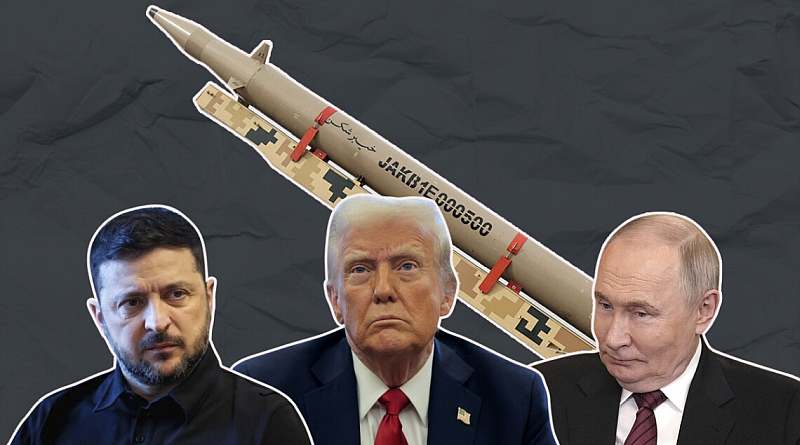
Collage: Slovo i Dilo
