
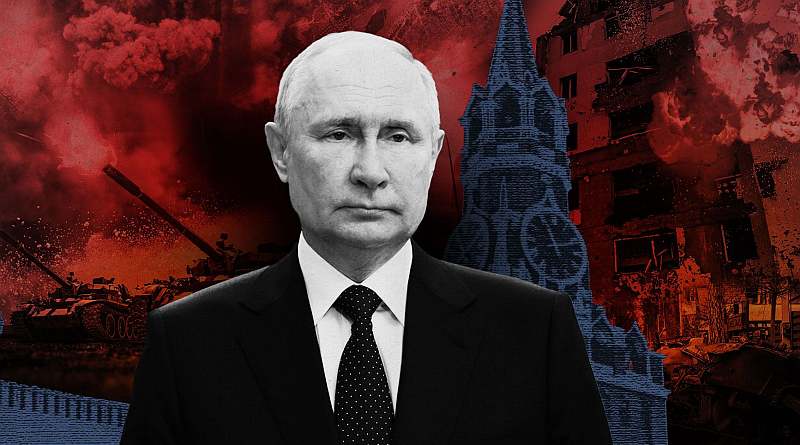
Russia is retreating, but we should not foster great hopes.
On Thursday, June 11, the duration of Russia’s “special military operation” in Ukraine will reach 1,568 days—the same length as the First World War. Despite Vladimir Putin’s statements (“I think the matter is coming to an end”), the invasion will easily cross this grim milestone.
However, Putin secretly acknowledges that Russia is now in trouble:
- militarily,
- economically,
- diplomatically,
- politically,
- psychologically.
An example of the latter is Volodymyr Zelensky’s brilliant trolling around the restrained parade for Victory Day on May 9, when he gave Russia “permission” to hold the celebration on Red Square.
Brutal and arrogant people, like Putin, hate ridicule, especially when there’s a grain of truth in it. The annual celebration of victory over Nazi Germany is one of the few days when the whereabouts of the Russian leader are completely predictable, making it an attractive target for a Ukrainian drone or missile. Even if the attack was unsuccessful, it would deliver a serious blow to Russia’s prestige. A large-scale prisoner exchange and a PR victory amid temporary truce became a good result for Ukraine.
The balance of power still favors Kyiv. On the battlefield, Ukraine innovates faster than Russia. It has compensated for the lack of human resources with highly effective drone warfare and is eliminating five Russian soldiers for every Ukrainian. Ukraine is also winning the “deep battle,” striking at long distances, which significantly harms the Russian economy and war machine.
Moreover, between the two leaders, there is also a colossal contrast. Putin hides in bunkers and celebrates his country’s most important holiday with North Korean soldiers and the President of Laos. Zelensky travels freely around his country and is an honored guest at global summits.
Given all this, one wants to be optimistic. Russia’s military failures combined with economic problems, social tension, and public humiliation invite comparisons to the collapse of Germany in 1918 or Tsarist Russia at the beginning of 1917. Even without considering all this, it is obvious that the war will not end on Russia’s terms. At some stage—perhaps quite soon—Putin may be forced to begin serious negotiations and make concessions rather than demand them. Or the war could become deadlocked, effectively ending as a frozen conflict: a terrible option for Ukrainians under Russian occupation but still far from Russia’s initial war goals. If Putin thought that flattering or otherwise influencing Donald Trump would make the USA abandon Ukraine, his investments failed.
But all this does not provide grounds for comfort. Regardless of the outcome, Ukraine will rely heavily on the West in the coming years, and Russia will never grant it this. Nothing will bring back the dead, comfort those who have lost loved ones, or heal the wounded on both sides. If Europeans failed to provide Ukraine with the necessary support during the war, then what are the chances they will ensure the economic aid, security guarantees, and political integration needed after the cessation of hostilities? The gap between European expectations of Ukraine and Ukrainian expectations of Europe is enormous. The goals of EU membership progress slowly. Involved experts gloomily speak of a “five-year plan”—an allusion to the Russian expression “in five years,” meaning empty promises. Extraordinary political will is needed to bridge this gap. Do you see it? I do not.
Post-war Russia will also not become an easy neighbor overnight. At home, it will have to deal with disgruntled war veterans and settle old scores. Abroad, it will still need enemies, primarily European countries, which it already blames for Ukrainians’ successful resistance. The First World War ended with an armistice and great hopes. Remember what happened next.
Collage: Channel 24
