

Let’s sort this out, because yesterday’s post about the command’s desire to bet on cheaper drone alternatives has significantly stirred the tactical reconnaissance sector. And I might as well give an expert opinion on this.
Because if I understand drones, I can confidently call myself an expert in tactical reconnaissance. Yes, with such a loud word. Four years in the 59th brigade in positions from junior sergeant to senior sergeant, consciously not moving to officer. Why?
Because I liked my job. I love being with pilots and solving tasks. And after four years of work in the Donetsk region, after building a couple of successful wing units, you become an expert.
So.
Yesterday’s post about switching to cheaper (partially) reconnaissance means to reduce the losses from the shooting down of expensive reconnaissance boards stirred up this direction. But I can immediately say, it’s not quite as written. The issue of reducing the cost of reconnaissance functions by redirecting to cheaper boards is just one of the steps involved in solving a rather complex issue. And the issue is indeed complex, multilayered, and costs Ukraine millions of dollars. Think, in a month? In a day!
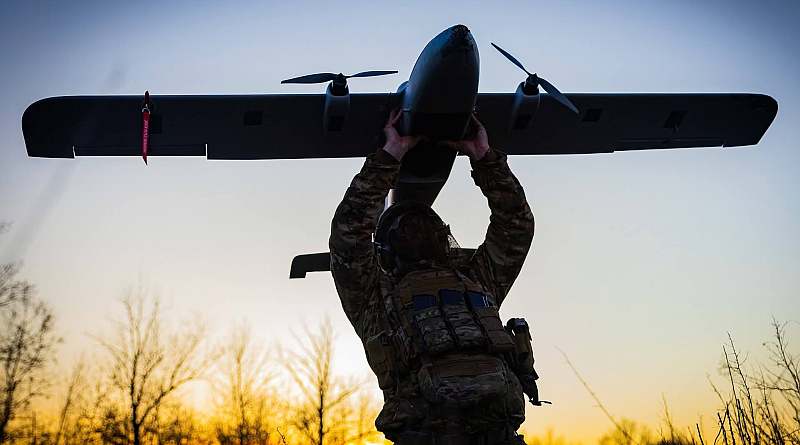
Because reconnaissance wings are expensive. That’s from $25,000 to $150,000 per board (not mentioning the cost of photo flights, which is a separate topic). And they get shot down by the dozens.
So reducing this function’s cost for the army is understandable. But, as they say, you need to understand the nuances.
Why a reconnaissance drone is expensive.
Every drone is a “Lego,” where the necessary modules are assembled to perform the required function. In the case of a reconnaissance drone, there are mandatory modules of appropriate quality.
1. Camera (day and night). If the wing is for low-altitude flights, then it’s a day camera with an optical zoom of 10-20. If it’s a high-altitude drone, then it’s 30+. The quality of the “head” (as wingmen call it) must be sufficient to conduct reconnaissance in conditions of modern equipment and position camouflage. The thermal imager must also be of appropriate quality. If the head is dual (day/thermal), it provides some tactical advantages. And I have not seen quality “heads” on wings that would come cheap.
2. Battery. In modern conditions, you need a battery that provides 3+ hours in the air. This is the usual calculation; the wingman’s position should be 15-20 km from the front line, otherwise, you won’t be able to take off consistently with today’s FPV intensity. Even 15-20 km from the front line, FPVs are constantly chasing wingmen in the fields, hunting pilots because they saw a landing. You need to consider wind, altitude gain, the need to “hold the aircraft for 20 minutes over the field because FPVs are flying,” and other force majeure, just to take off, gain altitude, reach the front line, and return the aircraft – that’s an hour of flight time. So, if you have a weak battery, for example, for two hours, you use an hour to fly there and back, leaving an hour to conduct reconnaissance from the front line. You have half an hour left for operations in the 2-3 echelon. If you run into electronic warfare at this time, you might not return the aircraft at all. Also, a powerful battery enables breakthroughs in stronger winds. And that’s important. However, large batteries today are also not cheap…
3. Communication. It’s clear, you’re flying in an active electronic warfare zone, and your entire value lies in streaming to the headquarters. How you deliver the image affects the effectiveness of real-time reconnaissance and the organization of artillery correction functions, target following while awaiting a strike drone, deep pursuit of an important target to determine its staging area, and much more that a photo flight cannot provide. A high-quality modern communication module with a wide range (preferably in the S-band) costs from $6,000 to $15,000.
So, what I wrote – these are the three pillars on which the reconnaissance drone’s function is built. Reducing the cost of each of these modules to the level where they no longer meet their intended function reduces the effectiveness of reconnaissance. All other functions (beacons, optical navigation systems, diverters, etc.) are useful additional functions, but the main ones are the aforementioned.
And they shouldn’t be super expensive, but should have a level that ensures the stable performance of reconnaissance functions.
And as you can see, it is quite an expensive tool that can be shot down by a simple FPV for $400. And they do shoot them down because the reconnaissance wing is slow and energy-efficient, unable to escape from FPVs. Even the “diverter” only slightly increases the chance of survival. That’s why the modern front of tactical reconnaissance is a complex place where we spend millions every day. And it’s normal that Brave1 wants to optimize this function. But unfortunately, the issue is not only in cost reduction. I’ll say more; the main loss of aircraft is not related to their cost or technical characteristics.
And that’s what we’ll analyze.
A significant blow to tactical reconnaissance in 2023-2024 was dealt (strangely enough to admit) by the implementation of “Delta.” And the issue is not in “Delta” as software; it’s an excellent product. The problem lies in forming the system and systematizing processes.
And every system kills individual approaches.
So when the “wingmen” developed in 2022-2023, it was creativity. But with the implementation of “Delta”, managing the wingmen via “Tower” streams in many brigades was given to… officers. In very few brigades, wingmen rose to officer positions and began corresponding management according to their experience. And while in 2024 it was kind of managed on autopilot and inertia, in 2025 “Rubicon” came, and everything fell apart. Unfortunately, from that moment, no study on the function of 2nd-3rd echelon tactical reconnaissance emerged. The function was already under the officers’ control, and explaining that something is not being done correctly from the position of a squad leader or crew commander to the person managing the wings at the battalion/brigade level, have you ever tried? Give it a try. What do you know, sergeant, become an officer and get smart!
Unfortunately, such a situation is in many brigades. Only higher command based on agreed criteria can communicate to brigade leadership that its officer staff is incompetently managing. And the higher command doesn’t even know what to do about it, there are no criteria, and they haven’t been developed in this time. So everyone orders wings and sends them off somewhere.
There are brigades where the officer (captain/major/lieutenant colonel) closely communicates with the crew commanders and plans work, but mostly it’s a rarity, and just an incompetent person, who doesn’t even know what differentiates one board from another (for them it’s like Mavic and Autel – what’s the difference, plus or minus Heidran and Shark-D, the same), doesn’t know in which echelon it’s effective, what its RCS is, what wind limitations the board has, and doesn’t even understand how long and under what wind conditions the board can stay airborne, – gives tasks.
Such an attitude also killed the wing crew’s motivation. Well, they gave me a stupid task, well, I got fed up with opposing stupidity. So I flew as they said, lost the board, and what complaints are there against me, it was the superior officer’s order, I’m not to blame. And it forms collective irresponsibility costing millions of dollars.
On the other hand, brigade commanders’ desire to put “their person” is understandable. But why in 2026 do we not have courses that can enlighten this person with basic foundations – that’s a big question.
And the tasks given to the wingmen are mostly like this:
Officer: Okay, fly over here, we need to scout there (points to an area closed by tactical radars, where a huge amount of boards were lost, which wingmen are used to bypassing and surveying from behind).
Crew Commander: I’ll get shot down there.
Officer: Well, maybe you’ll get shot down, maybe not. We need to scout.
Crew Commander: Okay (but if I get shot down, then I won’t be able to scout at all, he thinks. And the area needs to be scouted, but not with the wing that’s on duty, and not like this, but he answers the officer), executing🫡.
The board enters the area and gets shot down.
Officer: Hmm, unlucky. Okay, launch the loitering munition and fly over here to logistics without illumination.
Commander of another crew: Without illumination, we can’t efficiently search for a target in this area.
Officer: Work, we need to hit logistics.
A loitering munition worth 30-40 thousand dollars takes off, enters the designated area, flies along the specified artery, tries to look for something, and after the next round, the enemy’s anti-aircraft crew finds it and shoots it down.
Crew commander of the pilots: Well, the task determines the result. I’ll contact the reconnaissance crew commander directly, we’ll find something and strike, don’t worry.
An officer, who wasted over 100,000 dollars in two hours without any sense, goes to drink coffee, planning to return to his duties in 20 minutes. This happens a lot throughout the army.
Why?
Because there are no evaluation criteria. The army system itself allows for millions to be wasted without accountability. Millions that could be spent more efficiently. It’s not the case in every brigade, I often praised the work of the National Guard’s wing crews, the 414th brigade, I know some good officers in the 3rd, there are skilled people in this field. But unfortunately, not in every brigade.
If you translate the above from “winged to mechanized,” it would be like this:
Officer: Take a BMP company and assault the position.
Company Commander: They’ll get wiped out.
Officer: So what, not assault?
The unit moves, crashes against the wall.
Officer: Hmm, that didn’t go well. Okay, now take the tanks, we need to move the infantry to position.
Company Commander: Maybe we should’ve done it the other way around, these are intended for different purposes, perhaps we should’ve used tanks for the assault and transported the infantry with the BMP?
Officer: What’s the difference, both have tracks and guns, both are armored, don’t trouble me, just execute.
Well, that’s how “winged” tasks are “heard” from senior officers. But they execute because they indeed know the differences of the vehicles and nuances.
So maybe tactical reconnaissance isn’t needed? They get shot down anyway.
But it doesn’t work that way. Reconnaissance of 2nd-3rd echelon provides targets and operational awareness. If you work without reconnaissance, the loss of your strike assets increases significantly, and quality decreases. Strangely enough, to hit something, you need a target bank, and these need to be reconnoitered first. If the brigade wants to work effectively on the front, detect attacks, filter enemy artillery and pilots, it must have operational awareness in the 1st-3rd echelon. That’s the base.
So how do we get out of this situation?
Increase effective reconnaissance in the 2nd-3rd echelon, providing targets to strike assets, and reduce the losses of scarce and costly reconnaissance means?
This is a complex issue.
Firstly, there must be evaluation criteria for coordinators’ work. If people don’t fit the roles, they shouldn’t be leading wing companies that have millions of dollars invested. And their units shouldn’t receive expensive wings. As they say, if you can’t handle it, don’t try. And providing cheap means where they can’t be used properly is at least some solution. Because right now, such people easily order and receive UAVs with GCS for millions of dollars.
As a result, two brigades can be in one sector. In one, they mostly fly 15 km from the LBS, lose vehicles in packs, and for the state, one hour in the air costs $20000 (if divided by the total flight hours and the cost of downed means), and there’s a massive waste of strike means. Next to it stands another brigade, where one hour in the air costs $3000, and the strike means work accordingly. And everything’s fine, no questions asked. Need more means for a couple million bucks? Take it, we don’t mind.
This needs to change.
Secondly, there should be appropriate training and learning of the correct mission constructions, allocation of resources according to their specifications, which should reduce the number of losses, and the exchange of experience between the wingmen and anti-aircraft operators so that the wingmen understand the difficulties and “blind spots” of the anti-aircraft operators that can be used.
Thirdly, part of the resources in the army needs to be overhauled because, for example, “DeViro” has a device that can work effectively in the 2nd-3rd echelon area, but it is not codified, and the UCC has two interesting devices also for these tasks, one has already demonstrated its effectiveness, and the other will soon appear. But for them to appear at the front in the appropriate quantity and quickly, state support is still needed, and ours is not very fast…
There is some progress in this direction, but it is still very slow, and it costs us dearly. In addition, there are already reconnaissance copters that can fly further than the “Mavics,” covering almost the entire first echelon, and they can be used more effectively than wings in such a sector. This also needs to be expanded.
This is an overview of the problem.
Now, the last question. Who are you to criticize officers?
I am a person who has established the work of the unit in the line where only in the winter-spring months from 01.01.2026 to 01.04.2026 (that is, in the period when the wings did not fly at all for many days) officially recorded 313 wings shot down!!! And that’s not all, I am more than sure there are more, they were just not recorded in Delta. For several months from the end of 2025, we studied the area, experimented, changed the means for pilots, upgraded them, searched for routes and algorithms for their passage, and my unit performs the assigned function — it is capable of conducting reconnaissance in the 1st-3rd echelon under appropriate weather conditions. So any officer can take the data from 2 UAV “Inquisition” 59th mechanized brigade, take the cost and number of lost resources, the distances we fly, and compare this data with other units on the line. I am confident in my people and the system built. It works.
And no, this is not criticism of officers, because I know too many competent officers to condemn them all. Many of my acquaintances became officers, passing the path from soldier to officer, and even to commander.
This is specifically about the cohort we are discussing, who are the reason for increasing losses of reconnaissance aircraft.
The question remains how to make the above-mentioned system work not in several battalions and brigades, but across the whole line.
But this is a question for higher leadership.
Photo: 22nd Separate Mechanized Brigade
