

Glory to Ukraine!
Glory to the defenders of Ukraine and the entire modern civilization!
I promised that the next issue would be on Saturday, but there is breaking news. Therefore, I found the opportunity to make an unscheduled news release.
- On Tuesday morning, Trump threatened to completely destroy Iranian civilization, and on Tuesday evening announced a ceasefire
- An article in The New York Times about what happened behind the scenes of Trump’s decision on war with Iran
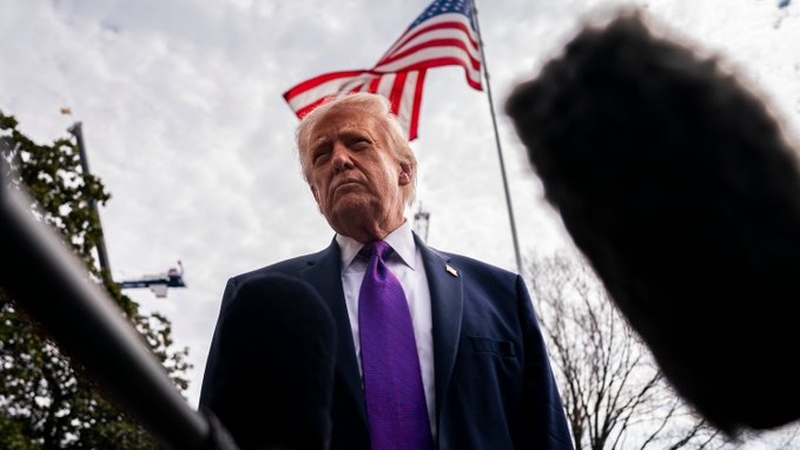
▶ For two and a half days – from Sunday morning to Tuesday afternoon, the 47th president threatened to destroy Iran, all its power plants and bridges, destroy Iranian civilization, and on Tuesday evening what is called “Trump always chickens out” happened – the 47th president announced a ceasefire. Moreover, the ceasefire was on Iranian terms – Trump wrote that he agreed with the 10-point Iranian proposal conveyed through Pakistan as a mediator. These proposals include opening the Strait of Hormuz for shipping under the control of the Iranian armed forces. That is, Trump agreed that the Strait of Hormuz, which was free for international shipping until February 28, will now be under Iran’s control.
▶ On Tuesday, the New York Times published a very interesting article by two of its journalists, who shared crucial information gathered firsthand from participants about how Trump decided to go to war with Iran. Here is the full translation of the article.
HOW TRUMP TOOK THE US TO WAR WITH IRAN: @jonathanvswan and report for our forthcoming book, out June 23 with excerpt here https://t.co/BfsdoMJWSS
— Maggie Haberman (@maggieNYT) April 7, 2026
“Maggie Haberman and Jonathan Swan. New York Times, April 7, 2026
6 Key Takeaways from Trump’s Decision to Start a War with Iran
Two and a half weeks before the United States began a major military campaign against Iran, a close circle of advisors gathered in the White House Situation Room for a series of key meetings. Previously undisclosed details from that period—drawn from materials collected for our forthcoming book, “Regime Change: Inside the Imperial Presidency of Donald Trump”—reveal how President Trump’s closeness with Israeli Prime Minister Benjamin Netanyahu, and the lack of consistent opposition from all but one member of the president’s inner circle, set the United States on a course for war.
Below are six key takeaways based on this material.
Netanyahu presented detailed arguments for starting a war to Trump and his team in the White House Situation Room.
Sitting across from Mr. Trump in the Situation Room—a space rarely used for personal meetings with foreign leaders—on February 11, Mr. Netanyahu gave an hour-long presentation to the president and his top aides. He argued that Iran was “ripe” for regime change and that a joint American-Israeli campaign could lead to the fall of the Islamic Republic. At one point, he showed a video compilation of faces that could potentially lead Iran in case the theocratic government collapsed, including Reza Pahlavi, the exiled son of the last Shah of Iran.
The Israeli leader and his advisors painted a picture of what they presented as an almost inevitable victory: the destruction of Iran’s missile program within weeks, keeping the Strait of Hormuz open, and minimal retaliation against American interests. Mossad, Israel’s intelligence agency, could help provoke an uprising within Iran to complete the task.
Mr. Trump’s response was immediate and seemed approving to most in the room. “Sounds good to me,” he told the Prime Minister.
U.S. intelligence officials called Netanyahu’s regime change scenarios a “farce.”
American analysts worked through the night in an emergency review of the materials presented by Mr. Netanyahu. Their conclusions, announced the next day at another Situation Room meeting, were perfectly clear.
U.S. intelligence concluded that the first two objectives laid out in the Israeli plan—removing the Ayatollah and undermining Iran’s ability to threaten its neighbors—were quite achievable. However, the other two goals presented by Mr. Netanyahu and his team—a popular uprising within Iran and replacing the Islamic government with a new secular leader—were not. CIA Director John Ratcliffe described these regime change scenarios in one word: “farce.” Secretary of State Marco Rubio translated it as: “In other words—it’s crap.”
Mr. Trump noted this assessment—and then immediately dismissed it. Regime change, he declared, would be “their problem.” His interest in removing Iran’s top leadership and breaking its military remained unwavering.
Vice President J.D. Vance was the staunchest opponent of the war—and the only one who argued against it uncompromisingly.
Among all the members of Mr. Trump’s inner circle, it was Mr. Vance who made the greatest effort to stop the march toward war. He built his political career on opposing precisely this kind of military adventurism and told colleagues that a war with Iran for regime change would be catastrophic.
In the presence of the president and his other advisors, Mr. Vance warned that this conflict could spark regional chaos and lead to countless casualties, dismantle the president’s political coalition, and be seen as a betrayal by voters who supported the promise of not starting new wars. He particularly noted the depletion of U.S. ammunition reserves and the risk of an excessive and unpredictable retaliation, given that the regime’s survival was at stake. Moreover, he warned of the threat to the Strait of Hormuz and the high likelihood of skyrocketing gas prices.
He himself advocated for refraining from striking altogether. However, understanding that Mr. Trump would likely still opt for action, Mr. Vance tried to sway him toward more limited options. When this attempt failed, he insisted on employing overwhelming force to end the conflict as quickly as possible. At the final meeting on February 26, his appeal to the president was straightforward: “You know I think this is a bad idea, but if you’ve decided to act—I’ll support you.”
Some of Trump’s advisers privately expressed serious concerns but ultimately bowed to the president’s will.
Opinions within the president’s inner circle varied widely, but they had one common trait: no one, except Mr. Vance, presented convincing arguments to make Trump change his decision.
The most enthusiasm was shown by Defense Secretary Pete Hegseth. “Sooner or later, we’re going to have to deal with the Iranians, so why not do it right now?” he said to those gathered on February 26th, a day before Trump gave the final order. Mr. Rubio’s position was more ambiguous: he preferred to continue the “maximum pressure” policy rather than a full-scale war, but he did not dissuade the president from his plans. Susie Wiles, the White House Chief of Staff, feared that the United States would become embroiled in a Middle Eastern conflict on the eve of the midterm congressional elections; however, she did not find it appropriate to voice her doubts about the military solution in the presence of the president and a wide audience.
General Dan Kane, Chairman of the Joint Chiefs of Staff, was seriously concerned about the war and persistently pointed out the risks: depletion of weapon supplies, closure of the Strait of Hormuz, difficulty in predicting Iran’s counteractions. However, he was so cautious, avoiding taking any clear stance – constantly repeating that it was not his place to tell the president what to do – that some might have thought he was advocating all viewpoints at once. Mr. Trump, in turn, often seemed to hear only what he wanted to hear.
Trump believed it would be a quick war – just like in Venezuela.
The president’s conviction that the conflict with Iran would be brief and decisive was deeply ingrained and almost impervious to facts indicating otherwise. His confidence was bolstered by Iran’s restrained response to the strikes he ordered on Iranian nuclear sites in June, as well as the striking Special Forces raid on January 3rd, during which Venezuelan leader Nicolás Maduro was captured from the grounds of his residence – an operation that did not cost the American side a single life.
When advisers suggested that Iran might close the Strait of Hormuz – a chokepoint through which massive amounts of the world’s oil and gas pass – Mr. Trump dismissed this likelihood, believing the regime would capitulate before it came to that. When told that the military campaign would lead to a significant depletion of American weapons supplies – including interceptor missiles, which were already at their limit after years of supporting Ukraine and Israel – Mr. Trump apparently weighed this warning against another, more appealing fact: the United States had an almost unlimited supply of cheap precision-guided bombs.
When commentator and opponent of military intervention Tucker Carlson privately asked Mr. Trump where he got such confidence that everything would be alright, the president replied, “Because it always is.”
For Trump, it was a decision made on an instinctual level, made possible by the “echo chamber” that did not exist during his first presidential term.
Mr. Trump’s decision to drag the country into war wasn’t dictated by intelligence reports or a strategic consensus among his advisors—which, in fact, didn’t exist. It was driven by instinct—the very instinct that, as his team repeatedly observed, consistently led to truly incredible results.
Unlike the team from his first term—many members of which considered him a danger requiring containment or opposition—during his second term, Mr. Trump was surrounded by advisors who saw him as a great historical figure. After his incredible comeback in 2024—having survived charges brought against him and assassination attempts, and after ordering a flawless operation to capture Mr. Maduro in Venezuela—Trump’s entourage developed an almost superstitious belief in his destiny and instincts, as well as in his ability to create new realities through sheer willpower. In making this decision, which involved enormous stakes and high risks, nearly everyone submitted to the president’s intuition.
Surrounded by people eager to fulfill Mr. Trump’s wishes, and considering how much was going in his favor at that moment, he faced virtually no obstacles on the path from instinctive impulse to action.
The countdown to the end of the story titled “Fear: Trump in the White House” © (title of Bob Woodward’s book, published in 2018) is 1019 days.
The next news release will be on Saturday, April 11th, in the evening, U.S. time.
Thank you to everyone who read. Take care of yourself and your loved ones. Take care of each other, help each other. Health to all.
Ultimately, what happens in the world depends on us. Whether we fight evil, do good, remain observers, passively wait and believe that someone somewhere will decide for us, or fight evil and do everything possible for good to prevail.
We must not allow evil to triumph. The triumph of evil would mean the end of the world we live in. We cannot allow this. Especially now.
Ukrainian friends, I embrace and love you all. Please take care of each other, I earnestly ask you.
Ukraine is and always will be.
And evil will be defeated and punished. And it inevitably will be.
