
Anastasia Zanuda, BBC News Ukraine
On the first day of spring, President Zelensky stated that Ukrainians can confidently say they have endured the “most challenging winter of all war years,” but “maintained the energy system.”
The energy workers, whose round-the-clock efforts made this possible, became undisputed heroes for Ukrainians and global media, and some received state awards.
This winter differed from previous ones, even pre-war, with strong and prolonged frosts, unlike the “European” temperatures experienced over the past fifteen years.
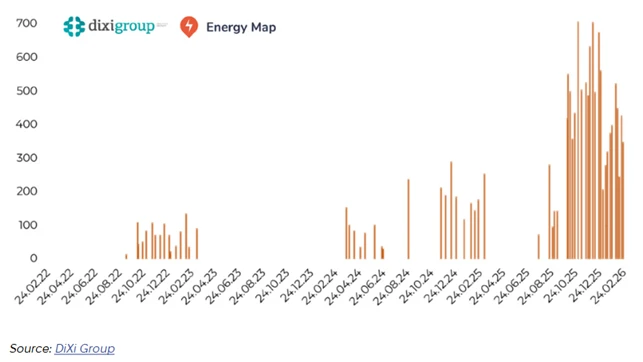
The Russians used these frosts to intensify massive strikes, during which the number of vehicles exceeded 700 units. They targeted not only electricity facilities, as in previous wartime winters, but also Ukrainian gas extraction, gas infrastructure, and the heating systems of major cities, including Kyiv.
In January 2026, the electricity deficit in Ukraine, which was an exporter before the full-scale invasion, was about 4.5 GW, reaching 5-6 GW on peak frosty days – roughly equivalent to three cities like Kyiv, where this winter, due to extensive Russian shelling, about 6,000 households – half the capital – were left without heat.
The critical shortage of electricity triggered a domino effect – shutting down water supply, public transport, and other critical services for the population. It also dramatically changed conditions for businesses, both large and small.
“Economy on generators” became another testament to the resilience of Ukrainians but had an adverse impact on the country’s economic indicators, which needs money for resistance as much as weapons.
In January alone, according to Prime Minister Yulia Svyrydenko, the Ukrainian budget lost about 12 billion UAH due to the electricity shortage as a result of Russian strikes.
What lessons can be learned from this winter, what will summer be like – traditionally another challenging season for energy, and what can be prepared for the next winter?
Energy as a strategic target
According to Energy Minister Denys Shmyhal, since the beginning of the latest heating season, the Russians have damaged 9 GW of Ukrainian generation – roughly what all the nuclear blocks currently controlled by Ukraine can produce. Overall, since the full-scale invasion, Russia has attacked Ukrainian energy over 5,900 times.
According to estimates by DiXi Group analysts, at least 60 Russian attacks on energy infrastructure were massive. During these strikes, about 12,700 strike UAVs and 2,900 missiles of various types were used – from cruise, which are most frequently used, to ballistic, which are the most challenging to intercept for air defense systems.
Since the beginning of the war, Ukrainian energy has remained one of the strategic targets of Russian attacks, but the tactics have changed. The first targets after the invasion were oil depots and refineries. However, since the autumn of 2022, Russia has switched to systematic massive missile and drone attacks on the energy system to undermine its stability and integrity – starting from the border Kharkiv and Zmiiv thermal power plants and further across the entire territory of Ukraine up to the western border. At that time, Russia mainly targeted thermal and hydro generation facilities, which allowed for balancing the energy system during peak demand, as well as substations and other elements of the main networks.
In November 2022, the first and so far only true blackout – a systemic accident – occurred in the Ukrainian energy system. Since then, this word has come to be used in Ukraine to refer to any power outage. However, energy workers emphasize that this is incorrect and in certain ways undermines their efforts aimed at ensuring that the Ukrainian energy system does not experience a new blackout.
In 2024, systematic strikes on gas infrastructure were added to the attacks on electric power facilities – starting with surface infrastructure of storage facilities in the west of Ukraine, and later on gas extraction in the east of the country.
In addition to being the main energy source for heating for the population, the gas sector is also the main source of tax revenues to the state budget from the energy sector, so the strikes might have been an attempt to undermine the country’s financial stability, according to the Dixi Group.
In 2025, attempts began to harm nuclear energy, which currently provides the lion’s share of Ukraine’s electricity. Formally, the nuclear power plants themselves did not suffer direct damage, but during several attacks, energy workers were forced to reduce the load on the units or shut them down due to the activation of emergency protection when Russia struck substations that ensure the output of power from the nuclear power plants to the grid.
The systematic nature of Russian attacks on Ukrainian energy is also confirmed by strikes on infrastructure that ensures the import of electricity from Europe – precisely when these supplies were critical for balancing the Ukrainian system.
Since 2025, the scale and intensity of massive attacks have increased significantly. If during the 2022-2024 bombings Russia used about 2,800 missiles and drones, by 2025 – early 2026, this number had risen to 12,800.
Thus, Russian attacks not only expanded in means, targets, and complexity, but also energy security for Ukraine shifted from the task of simply maintaining a balance in the energy system to the need to maintain critical infrastructure and rapidly restore the system – sometimes even during subsequent bombings, as well as under conditions of equipment shortages.
In fact, as noted by the General Manager in the field of security and resilience at DiXi Group, Olena Lapenko, in the case of Ukraine, it is not about recovery after a one-time catastrophe, but about a system that simultaneously deteriorates and recovers during constant attacks.
Kyiv: A Special Case
A characteristic feature of this winter was the increased pressure on the capital of Ukraine. Only in January 2026, during the strongest frosts, Russia conducted four massive shellings primarily focused on Kyiv and the region. Analysts suspected that in addition to the obvious goals of depriving the capital’s residents of light and heat, it was also an attempt at psychological influence and destabilizing the situation in the country by creating unbearable living conditions.
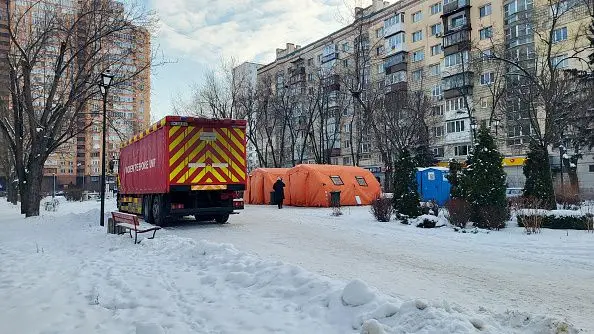
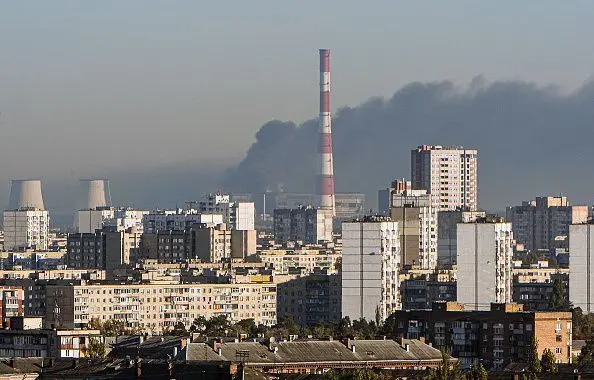
According to calculations by DiXi Group, the energy supply deficit in the country’s capital in January-February 2026 was 35-40%. This resulted from strikes on the “big ring” of substations around Kyiv and on three thermal power plants (TPP-5, TPP-6, and Darnytsia TPP), which for decades had provided light and heat to Kyiv residents. The most difficult situation arose on the left bank of the capital: in the Desnianskyi, Dniprovskyi, and Darnytskyi districts.
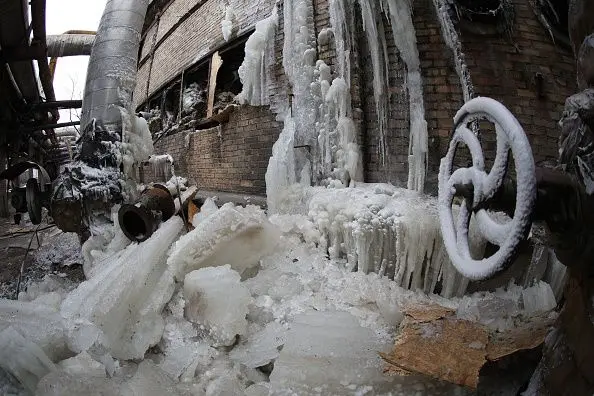
The lack of heating and light in Kyiv also highlighted the political confrontation between President Volodymyr Zelensky and Kyiv Mayor Vitaliy Klitschko. The President accused the Kyiv authorities of inaction and failure to prepare for winter, while the Mayor blamed the central authorities for blocking the capital’s initiatives.
However, in fact, other major Ukrainian cities such as Kharkiv and Dnipro, which also suffer systematic massive strikes, endured this winter somewhat better than the capital.
Lessons from the Harshest Winter
“We must finally understand that we can no longer depend on large generation facilities because they are a 100% target drawn on the ground,” says Maria Tsaturian, analyst at Ukraine Facility Platform.
She notes that if during the first wartime winter, the Russians used carpet bombing tactics mainly on large generation facilities—thermal and hydroelectric power stations, and also attacked large high-voltage substations of “Ukrenergo,” which are key transport hubs for electricity transmission in Ukraine—this winter they used a tactic that energy experts call the scorched earth tactic.
“This involves slicing away the energy system, region by region, by shelling all layers of the energy infrastructure in that region—TPPs, distribution system operator substations, gas distribution infrastructure. The Russians combine this tactic with strikes on thermal and hydroelectric power stations, high-voltage substations of ‘Ukrenergo,’ and attacks on gas storage and extraction,” explains Tsaturian.
Despite extremely massive attacks, Ukraine did not experience a blackout (system failure) or a split, meaning the division of the energy system into separate islands, which Russia aimed for, says Volodymyr Omelchenko, Director of Energy Programs at the Razumkov Center. However, after Russia destroyed about 80% of the thermal power plants and a significant number of combined heat and power plants, it became clear that the country cannot protect its large power stations and CHP plants, which produce both heat and electricity.
“There is physically no way to protect them, as these are large objects and complex from the air defense perspective, especially when there is a lack of appropriate means,” Omelchenko explains.
Furthermore, it became clear to everyone that a significant dependence in major cities on a single CHP plant is a “huge minus, because when this object is destroyed, hundreds of thousands of people are left without heat and there is no alternative,” says the expert.
This winter also showed that generators, stocked not only by businesses but also by some households, are only a solution in critical situations—they cannot be used continuously, as their efficiency decreases with extended operation time and lower temperatures (down to 70% at temperatures below 10 degrees Celsius)—when the need for them is greatest. Not to mention that diesel-powered light is significantly more expensive than from the grid.
That’s why, as former “Ukrenergo” head Volodymyr Kudrytskyi stated on television, generators should primarily be used as an emergency power source. According to him, the only real way to overcome the deficit is deploying new generation.
“And it is absolutely clear that these power stations cannot be large and concentrated in one location, for the enemy to need only two or three missiles to destroy a significant part of our capacity,” Kudrytskyi explained.
According to Dixi Group experts, this winter also showed that the centralized heating system poses a constant risk. In systems built around large power stations and long transmission corridors, there are few very important nodes, the damage to which leads to disproportionately serious disruptions and supply distortion at the regional level—even when generating capacities remain available in other parts of the system, the experts explain.
Hence another lesson: the unevenness inherent in the energy system architecture, where a surplus of current forms in the western regions, and there’s a chronic deficit in the center and south of the country, needs to be overcome—precisely why one of the targets of Russian strikes this winter was to divide the Ukrainian energy system into pieces easily destroyed separately.
Nuclear power plants, which have now become the main producers of energy, are inherently capable of maintaining stable, “base” generation. Therefore, the Russians understandably targeted so-called balancing or maneuverable generation (TPPs, HPPs) from the start, as the system’s stability depends not only on the total amount it can produce but also on how quickly it can react to increases or decreases in electricity demand and quickly ramp up or “shed” capacity.
When CHPs are hit, which produce not only electricity but also heat, the situation – especially for residents of large cities – drastically worsens. Then the only way to balance the system is to disconnect consumers.
The practical conclusion, according to DiXi Group, is not to abandon large-scale generation but to supplement it with distributed generation for critical loads, as well as with engineering solutions that could be deployed “modularly.” Such generation would solve several tasks at once: restoring flexibility for system balance and simultaneously complicating future attacks on the energy system. At the same time, as DiXi experts note, decentralized generation cannot fully replace large-scale generation.
Moreover, as this winter showed, frost is not just a seasonal factor; it amplifies negative consequences to such an extent that they become irreversible (for example, in the form of ruptured heating radiators if water is not drained from them in time). Frost also narrows the “window of opportunity” for any measures to restore the system. Therefore, when rebuilding, this factor should be embedded in projects not as “background” but as something that can become decisive.
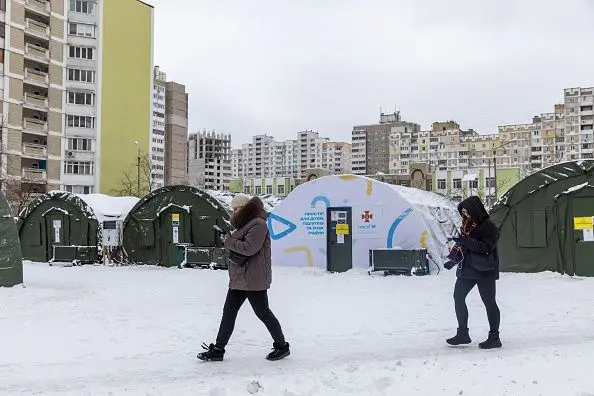
Another non-obvious but important lesson was communication. This winter showed that where there was timely, clear, and understandable information about the reasons for outages and the timeframe for restoring light and heat supply, there was less panic, more readiness to endure restrictions, and peak consumption was more responsible.
Overall, as Lana Zerkal, a member of the coordination council of the Ukraine Facility Platform, wrote on Facebook, “in the energy sector, we have reached the limits of our own weaknesses, where familiar statements, patchwork repair plans, sporadic equipment supplies, and megalomaniac projects, like the purchase of Bulgarian (Russian) nuclear reactors, have finally shown: this does not work. The annual restoration of the thermal power plants destroyed for the umpteenth time only consumes resources and reassures the leadership of numerous government headquarters with recovery percentages.”
Summer “on schedule”
In parallel with solving large-scale strategic energy issues and preparing for winter, the next challenge for the energy sector and Ukrainians will be the summer.
“It’s a bit easier in the summer in terms of not needing heating. But summer is the period when our nuclear units are under repair,” says Maria Tsaturyan.
If it is a hot summer, and the Russians continue shelling energy facilities, a deficit will again form in the system. To balance it, the operator will disconnect consumers.
“Summer will objectively be on schedule,” says Tsaturyan.
However, as Volodymyr Omelchenko explains, planned repairs and nuclear fuel reloading at nuclear power plants, which currently sustain the entire energy system, are also very important and cannot be avoided.
“During periods without intense heat, we will not have major electricity issues during the day because of solar energy. But in the evening, there may be problems, and then disconnection schedules will be applied during peak evening demand when solar panels no longer work,” the expert explains.
Obviously foreseeing this, and taking advantage of an unusually warm March, energy workers have already started planned work on nuclear power plants—two weeks ahead of schedule.
What the government plans to do
At the NSDC meeting on March 3, the president and government officials approved “energy resilience plans” at the regional and city levels—except for Kyiv, which was given additional time to prepare documents. Thus, responsibility for winter preparation will fall on the regions.
After this meeting, Minister of Energy Denis Shmyhal stated that his department will focus on restoring generation destroyed by the Russians, securing the transportation of electricity and gas, and creating a “threefold” stock of energy equipment.
“We are working to create a threefold stockpile of equipment—we have set this standard, a threefold stock of what was destroyed this winter. Everything necessary will be stored in Ukraine and beyond,” the official said.
According to Denis Shmyhal, by next winter, the government plans to restore 4 GW and also has an “ambitious goal” of developing an additional 1.5 GW in distributed generation. Meanwhile, the Minister of Energy says the “new energy security architecture” will not only involve developing distributed generation but also “protecting critical nodes” and creating strategic reserves.
For all this, the government plans to attract 5 billion euros from international partners. Additionally, 37.4 billion UAH will be allocated from the budget for the protection of energy facilities.
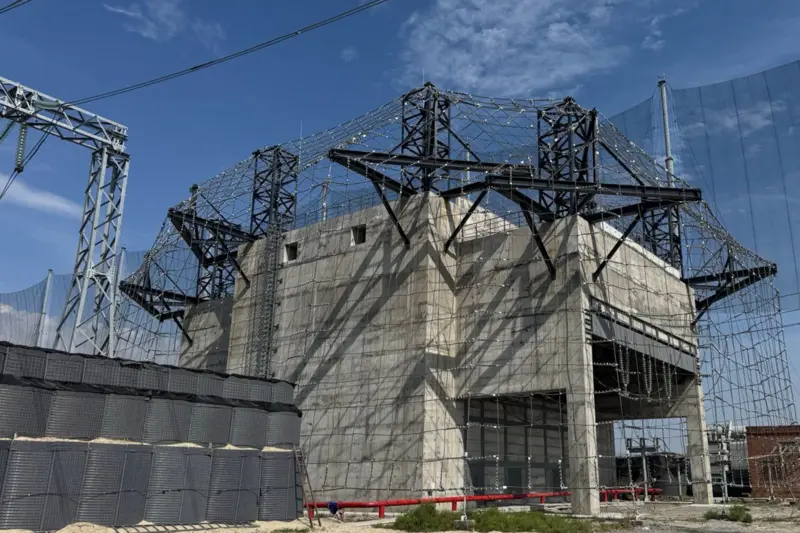
The government is also working on expanding electricity import capabilities from Europe – from the current 2.45 GW to 3.5 GW, but this is a task for at least two years.
Another task is to restore gas reserves in storage to at least 13 billion cubic meters. Thanks to warm weather, gas injection into storage began a month earlier this year than last – essentially, from the start of March. However, with rising gas prices on global markets due to the war against Iran, this task may prove even more challenging than it seemed at the end of winter.
Last year, after Russian strikes on gas production, Ukraine was forced to resume gas imports, although it had refused to do so in previous years. The cold January and February forced an increase in gas consumption by a third compared to the previous winter. At the same time, gas tariffs for the population remain unchanged during the war.
An additional focus is the search and acquisition of equipment for rapid repairs of old generation facilities – primarily from decommissioned and retired European TPPs and CHPs.
Energy teams have already visited Latvia, Austria, and Germany in search of retired equipment that can be used in Ukraine. It is expected that equipment will also be provided by Finland, Croatia, and France.
What should be done first
First and foremost, by next winter, all critical infrastructure needs to be protected and “powered,” says Volodymyr Omelchenko, clarifying that it’s not just about physical protection and air defense:
“Water facilities and heating systems need to be provided with backup power generation.”
Other experts echo this sentiment. However obvious it may seem, after four years of war, it turned out that this wasn’t done even in the capital, Kyiv.
Furthermore, there is consensus that the recovery and protection of the energy sector should be managed by professionals, not politicians. According to Omelchenko, preparation for the next winter and overall control of the energy situation should be handled not by local authorities prompted by the central ones, nor by “dozens of heating season preparation headquarters,” but by the Ministry of Energy in cooperation with the military.
“There must be a professional discussion among energy experts, project institutes, and military personnel. They need to answer the question: is it possible to restore the destroyed thermal generation in such a short time while simultaneously protecting it physically and with air defense? This will determine the next steps,” says Omelchenko.
If the experts believe it is possible, then the main focus should be on restoring large facilities. If this is not feasible, focus should be on decentralized generation – modular mobile boiler houses, cogeneration plants, heat pumps, and building thermal modernization, as they consume half as much thermal energy.
Ultimately, a combined approach will be found, the expert believes, because the existing deficit cannot be eliminated solely through decentralized generation in such a short time. However, investing in the full restoration of large thermal power plants, only for them to be destroyed again by the Russians, makes no sense either.
If there was a clear professional plan, rather than political statements, finding money wouldn’t be a problem, says Omelchenko. Besides the funds from Western partners, restoration – especially of cogeneration plants and boiler houses – could involve private investors. But for this to happen, they need to “see a mechanism for getting their money back,” says the expert:
“And right now, businesses do not see this, especially in the heating supply system, as our heating supply is subsidized, and the cost of thermal energy is not covered by the tariff and the cost of natural gas, which is already expensive and may become more costly.”
Will Decentralized Generation Save
Decentralized or distributed generation is the energy equivalent of military dispersion tactics. The idea is not to tie everything to one large energy producer but to distribute the load among hundreds of significantly smaller capacity facilities operating on various energy sources – from gas and fuel oil to wind, sun, and biogas.
Therefore, it’s no surprise that it began to be discussed at the start of 2023 – after the first wartime winter. In July 2024, after another wave of massive strikes on energy infrastructure, President Zelensky announced plans to build and commission a thousand megawatts of new maneuverable generation by the end of that year. This idea was called the “Zelensky Gigawatt.” However, there is not even a consensus now on whether this task has been accomplished.
There is also debate over whether thousands of decentralized generation units can replace the large maneuverable capacities that were, for example, in Ukrainian thermal power plants, or whether large cities can completely abandon large thermal power stations.
For instance, former Energy Minister Ivan Plachkov believes that cogeneration can be effective for specific facilities or small settlements, but for metropolises, it is not a systematic solution.
In an interview with “Glavkom,” the former official expressed the opinion that Kyiv virtually has no real alternative to large thermal power plants, and cogeneration units “cannot provide even 10% of the capital’s needs.”
Plachkov also does not see standalone boiler houses as a solution for the capital, because, according to him, this would lead to an increase in the cost of heat by at least one and a half times. Comparing the situation in the capital with another million-plus city – Kharkiv, cited as an example of a successful transition from large to small generation, the ex-minister stated:
“If in Kyiv the thermal power plants provided heat for about 60% of the city, in Kharkiv it was centrally around 30%. And in Kyiv, the tariffs for heat and hot water were the lowest: three to four, sometimes five times less than in other cities.”
Overall, according to Plachkov, centralized heating remains economically and environmentally feasible for large cities:
“Building distributed generation instead of restoring CHP will be three to four times more expensive”.
Maria Tsaturyan also states that Ukraine cannot currently completely abandon the restoration of large TPPs and HPPs. However, she notes, “such a restoration tactic leads to us essentially taking donor funds and burying them in new targets, meaning we restore – the Russians strike”.
Therefore, she says, “generation needs to be decentralized”. But despite discussions on this for several years, “there is still no strategy on how this decentralized generation should be developed around communities”.
The funds from international partners that could go towards implementing these energy projects are concentrated in the public investment system and locked in the DREAM system, which regions cannot access. Regulatory distortions in the electricity market and often manual regulation of the industry, as well as the enormous debt noose on the market, deter private businesses that could and would like to invest in decentralized generation – not only for their own needs but also for the benefit of the country.
For now, businesses are building generation, but for themselves, as a reserve, without connecting to the grid, Tsaturyan explains:
“For example, if I have a factory, I produce something, and I build a gas piston unit or some wind turbine with a battery (energy storage. – Ed.). And I use this generation when I have no power, but I’m not connected to the grid. So, for us as household consumers, the fact that the neighboring factory has some generation means nothing because it’s not connected to the energy system”.
This happens because businesses received mixed signals from the Ukrainian authorities. They did not encourage serious consideration of opportunities in distributed generation, as businesses need to calculate how much to invest in a project, when they will get their money back, how protected these investments are, and how interesting this market is to them at all, says Tsaturyan.
The expert believes that private businesses would effectively handle the development of decentralized generation if the authorities fulfilled their task – creating conditions for it:
“We must face the truth: the ability to build lies with private businesses. They have the technologies, understanding, knowledge, the capacity to attract highly qualified specialists and finance. Let’s create conditions for them with the understanding that the main recipients are communities – cities, towns”, says Tsaturyan.
She believes that with the creation of “coordination centers that are supposed to coordinate the work of other coordination centers,” and by making statements that local authorities bear full responsibility, decentralized generation does not get built—”it cannot be constructed in a centralized way with directives from above.”
Meanwhile, the representative of the Ukraine Facility Platform emphasizes that the most limited resource in this situation is not even the lack of funds or people—”we have a very limited resource in terms of time.”
Lack of time and strategy
One of the quick solutions that “can be done now,” according to Tsaturyan, could be the integration of water utilities and heating companies into the network, which are currently not being used at full capacity.
“The country already has legislation that provides the opportunity to connect some electrical installation to this unused connection, make the heating or water utility an active consumer, and use this generation for its own needs and supply to the grid,” says the expert, and emphasizes:
“This is allowed by law, there are conditions for this, they just need to be analyzed and offered to private business.”
On the other hand, the practice of preparing only “for the next heating season” has also been exhausted, and it is “finally time for the state to look at the perspective of 3-5 years,” says Mariya Tsaturyan.
“Well, we’ll endure another winter, and then another one—how much longer can the energy system, energy specialists, and people endure such winters. But surely, it’s not a very far-sighted strategy to rely on the resilience that was once built into the system, and which the Russians continue to destroy.”
Cover photo: DTEK
