
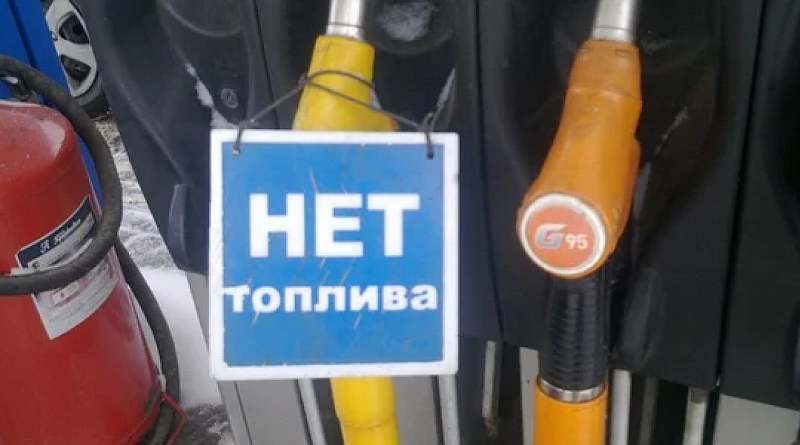
Crimea was the first to start suffocating. Feeling the fuel hunger, the occupying group and the locals rushed to suck diesel from Kuban, but it turned out to be empty there as well.
A deficit is something that doesn’t depend on propaganda. No matter how much Peskov says with his lips that “the fuel deficit in Crimea is caused by the unjustified hysteria of the population,” there is still no more fuel.
The limit of 20 liters per person per week instantly triggers the vacuum mechanism — the black market, buying fuel from law enforcement for cash, and “gasoline tours” to Kuban.
When tens of thousands of cars shuttle to Crimea and back, it creates immense pressure on gas stations and regional networks. Kuban is the main logistics hub for supplying the occupying group in Crimea, Kherson, and Zaporizhia regions.
This crisis is now greatly intensified by the total deficit of “barrels” for storage in the region: only the Tuapse refinery has lost 60% of its tank park, and at the oil depots in Feodosia, it’s complete chaos.
Three hundred burned trucks on the so-called “Novorossiya” highway, damaged cargo ships in the Azov, burnt-out mainline locomotives, and fresh holes in the Chonhar bridge — it’s not yet total isolation of the theater of military operations, but it’s a full blockade.
Ahead is the height of the summer campaign, millions of tourists on the M-4 due to closed airports, and the battle for the harvest.
This time, the scorching of the South will be much deeper than last year.

Non-resort moods: Crimea is sliding into a systemic crisis.
The development of the situation on the Crimean peninsula indicates a rapid degradation of the socio-economic and humanitarian situation. What was initially positioned by local administrations as “temporary logistical difficulties” has turned into a deep systemic supply crisis.
The peninsula has effectively found itself under conditions of a commodity and fuel blockade, caused by the intensification of military actions and the vulnerability of transport arteries that connect this occupied territory with the Russian Federation.
The most vivid marker of the catastrophe is the tourism collapse, for example, in Sevastopol, the level of booking cancellations in hotels and guest houses has reached an unprecedented 79%! The region is rapidly losing vacationers, turning from a resort area into a high-risk zone.
The fuel collapse instantly detonated along the entire supply chain, provoking an acute shortage of food products in retail networks. The complete distrust of the population toward reassuring statements from regional leadership and the obvious lack of effective anti-crisis measures led to panic sentiments. Residents of the peninsula began mass purchasing of food and essential goods.
The result of the heightened demand was completely empty store shelves. Social media is overflowing with video evidence of the real product deficit, which only further fuels panic and paralyzes internal trade.
Massive supply disruptions forced major retail chains to switch to rationed distribution: strict limits on the sale of socially significant goods were introduced in stores. The restrictions affected basic food items: sugar, rice and buckwheat, salt and flour, vegetable oil, and pasta. This directly indicates the depletion of warehouse stocks and the impossibility of their prompt replenishment.
Amid empty shelves in Crimea, an uncontrolled rise in prices for food and basic services began. According to independent experts, the price destabilization has a destructive impact on all socio-economic processes. Uncontrolled inflation amid fuel shortages intensifies social tension to critical levels.
The local administration proved absolutely incapable of curbing the panic, stopping the price growth, or offering alternative supply options. The shift to Soviet-style product distribution practices on the principle of “three items per person” clearly confirms the deep degradation of the government management system. Russian officials on the peninsula demonstrated complete incompetence in conditions of isolation.
The crisis acquired particular acuteness in the energy sector. The announced introduction by Sevastopol Governor Mikhail Razvozhayev of a weekly limit of no more than 20 liters of fuel per vehicle and the cancellation of previously purchased commercial vouchers de facto confirmed the transition to strict administrative resource allocation.
The authorities’ attempt to implement fuel issuance exclusively via QR codes through the “Max” messenger ended in complete failure on the very first day: due to strict daily limits, codes in the program ran out almost instantly.
The further shortage will inevitably lead to the flourishing of criminal speculative schemes and mass sales of fake vouchers and counterfeit QR codes. Authorities’ statements about limited fuel sales at only three gas stations in Sevastopol, and only one brand at that, are met with bitter sarcasm by residents. The local community ironically suggests that the administration is thus “pampering” motorists.
The current crisis has exposed a deep imbalance between the Russian federal center and the annexed territories. While Moscow continues to exist in a mode of excessive consumption, Crimea is rapidly plunging into a state of isolation.
The infrastructure’s vulnerability to military factors and management chaos have turned the peninsula into a depressive and dangerous region, unsuitable for either tourism or stable living.
