
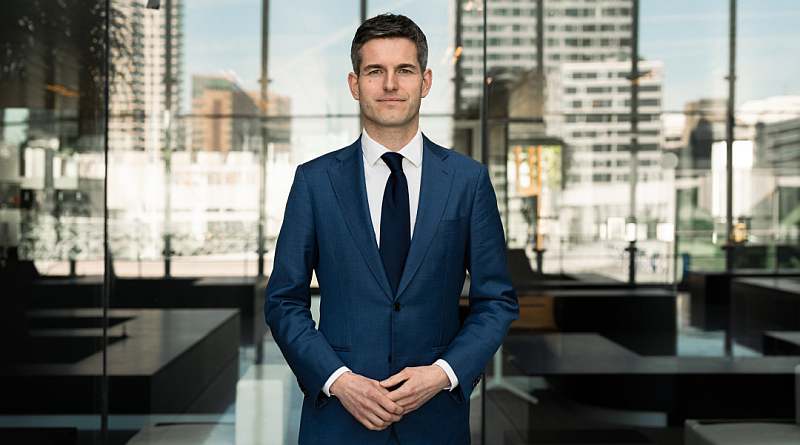
Iryna Drabok, The Hague / Ukrinform
The Netherlands remains one of Ukraine’s most important partners in resisting Russian aggression. The country provides military, financial, and humanitarian aid, supports sanctions against Russia, and actively advocates for achieving a just peace. The Dutch side has repeatedly emphasized that support for Ukraine will continue for as long as necessary. In particular, the Netherlands plans to provide Ukraine with more than 3 billion euros in military aid in 2027-2029 and about 400 million euros for other areas of support.
The new Dutch government took the oath on February 23 and officially began work. Just a few days after the appointment, the country’s Foreign Minister Tom Berendsen made his first visit to Ukraine. He assured that Ukraine can continue to count on comprehensive support. According to him, the Netherlands not only demonstrates solidarity but also seeks ongoing dialogue with the Ukrainian side to better understand current needs and determine where help can be most effective.
At the end of March, during debates in the Dutch parliament, Tom Berendsen emphasized that the Netherlands will continue to support Ukraine and will work with partners to maintain unity and public support for this assistance. The minister paid special attention to the issue of using frozen Russian assets, stressing that the government supports their use to aid Ukraine, although there is not yet full consensus in the EU on this. Berendsen also clearly stated that his country supports Ukraine’s accession to the European Union.
The Netherlands’ Foreign Minister Tom Berendsen has just returned from the United States.
Did he speak in Washington about supporting Ukraine, what does the recent awarding of the “Four Freedoms” prize to President Zelensky and the Ukrainian people mean, what is the new Dutch government’s position on our country’s membership in the EU and NATO—these and other topics were covered in an exclusive interview with the Ukrinform correspondent in The Hague.
UKRAINE MUST REMAIN IN FOCUS
– First of all, thank you for finding the time for this interview. You have a very busy schedule. You have just returned from the United States. King Willem-Alexander of the Netherlands, Queen Maxima, and Dutch Prime Minister Rob Jetten met with US President Donald Trump in Washington. You specifically had a meeting with US Secretary of State Marco Rubio. Can you tell us about the visit? Who did you meet? What important issues were discussed?
– Our transatlantic relations with the USA are very important for security and well-being. This visit highlighted the strong relations and provided a valuable opportunity to discuss a range of issues of mutual interest in person with our American partners.
Indeed, the king and queen, as well as Prime Minister Jetten spoke with President Donald Trump. I had a constructive and productive meeting with Secretary of State Marco Rubio, during which we discussed key issues such as Ukraine, cooperation within NATO, Iran, and the Strait of Hormuz. I also met with representatives of the Republican and Democratic parties in the House of Representatives for a meaningful exchange of views on the transatlantic alliance and our shared strategic priorities.
– What was discussed during the visit to the USA in the context of supporting Ukraine? What is the current situation with the supply of weapons to Kyiv, and what role do the Netherlands and Europe play today in military assistance to Ukraine and the procurement of weapons?
– The Dutch government emphasizes in all its international diplomatic contacts that it is extremely important to continue supporting Ukraine, especially militarily, and to increase pressure on Russia. So, of course, this issue was also part of our negotiations in Washington.
During my meeting with Secretary Rubio, I stressed the need to keep Ukraine in focus and that the EU and the USA should continue to cooperate closely to support Ukraine and work towards achieving a lasting peace agreement.
– Last week, President of Ukraine Volodymyr Zelensky arrived in the Netherlands. The President of Ukraine and the people of Ukraine became laureates of the international “Four Freedoms” award. The award was given for courage and dedication in defending democratic values. The award ceremony took place on April 16 in the city of Middelburg. Did you have a meeting with Volodymyr Zelensky? If so, what did you discuss? Did you congratulate him on receiving the award?
– Due to debates in parliament, I unfortunately could not meet President Volodymyr Zelensky that day and personally congratulate him, but our king and prime minister did have a meeting with him.
The basis of this award is the struggle for freedom, a struggle that your president has symbolized for more than four years of Russian aggression. Our Prime Minister Rob Jetten presented President Zelensky with the “Four Freedoms” award. This is truly deserved recognition of the courage and resilience of the president and the Ukrainian people in the fight for freedom and democracy.
THE DUTCH GOVERNMENT RECOGNIZES THE GEOPOLITICAL NECESSITY OF UKRAINE’S EU MEMBERSHIP
– Just a few days after the appointment of the new government, you made your first visit to Ukraine as the Minister of Foreign Affairs of the Netherlands. Could you tell us about this visit? What issues were discussed and what results were achieved? Which Ukrainian cities did you visit? What impressed you the most?
– I visited Kyiv in February. These were, in fact, my first weekends in office. Upon arrival, I was deeply impressed by the resilience of every Ukrainian I met during this visit. I met with Minister Sybiha, and together we discussed the importance of a strong Ukraine on the battlefield, at the negotiation table, and in shaping its own future. We also talked about issues of accountability through mechanisms such as the Special Tribunal on the Crime of Aggression, the Register of Damages, the International Claims Commission, and efforts to locate and return abducted children. And, of course, I reaffirmed the unwavering military, political, financial, and humanitarian support from the Netherlands, as well as our commitment to supporting Ukraine on its path to the EU.
– At the end of March, the annual “Lviv Conference” took place in the Netherlands, held for the second time after the first event in Lviv last year. This year, the event was held in your hometown Breda. You opened the conference. How do you assess this event and the deepening of bilateral cooperation? Which directions are currently priorities?
– It was a pleasure to host the Ukrainian delegation in my hometown. This year we decided to build on the foundation laid last year, deepening the topics we explored together and strengthening the relationships formed between our public officials.
The topics we focused on include the rule of law, energy, agriculture, and social issues. We organized this conference to strengthen our bilateral ties with Ukraine and support its path of reforms for EU membership. The Dutch government emphasizes that Ukraine’s future lies in the European Union, and we are eager to assist in this.
In addition to focusing on Ukraine’s urgent needs in fighting Russia’s aggression, it’s equally important that we continue to look forward to Ukraine’s future after the war, with European integration and reconstruction as part of it. This is what we are discussing here at the Lviv Conference.
It was also very positive that companies from Ukraine and the Netherlands were present. The business forum was a great addition to the conference. We are doing this by offering our expertise in the areas I mentioned earlier, helping Ukraine take significant steps forward on its path to joining the EU.
At the same time, we remain firmly committed to adhering to the standards required for EU membership, as a strong and united EU benefits all of us. However, adhering to these standards does not mean we cannot extend a helping hand. As I have said before, the “Lviv Conference” is a celebration of the deep and strong bilateral relations between our two countries.
– Do you support accelerating the negotiations on Ukraine’s accession to the EU?
– Ukraine’s future is in the EU, and this prospect is of immense importance to the Ukrainian people. Our government adheres to a realistic approach to expansion, recognizing its geopolitical necessity. This is not contrary to the merit-based principle which we adhere to. It is time to officially open negotiation cluster 1, followed by the remaining five, according to the established methodology.
The accession process is thoughtful and thorough. It is based on the Copenhagen criteria and the implementation of reforms in the areas of the rule of law and the fight against corruption. To become a full member, a country must share the Union’s values and meet all membership conditions at the time of accession. This is the fundamental position of the new government of the Netherlands.
It is important to find ways to maintain the momentum of the accession process, including by putting pressure on countries that create bilateral blockages and through gradual integration. It is crucial that this process is both realistic and achievable, which is why we support Ukraine wherever we can.
UKRAINE IS ON AN IRREVERSIBLE PATH TO NATO MEMBERSHIP
– What reforms do you consider key for Ukraine’s progress towards EU membership?
– Reforms in the field of the rule of law and the fight against corruption are paramount. There can be no concessions here. It is important that Ukraine’s anti-corruption institutions continue to strengthen.
In its latest EU enlargement report, the Commission concluded that Ukraine has made progress in all areas. At the same time, the report notes that while anti-corruption agencies are showing better and better results, their effectiveness is still being undermined. Therefore, the Commission provides clear recommendations in this regard, recommendations that we, as the Netherlands, fully support.
In addition, Ukraine, together with the European Commission, has developed a ten-point plan for implementing reforms in the rule of law and anti-corruption measures. This is a plan we fully support. The “Lviv Conference” is the perfect platform to point out the necessary further reforms to Ukraine while extending a helping hand for their implementation.
– What is your position on the use of frozen Russian assets for the reconstruction of Ukraine?
– The war in Ukraine concerns the security of the whole of Europe. That is why the new government of the Netherlands continues to provide military and financial support on a long-term basis and also seeks to further explore the possibility of using frozen Russian assets.
– How do you assess the prospects of Ukraine’s future NATO membership?
– Ukraine is on an irreversible path to NATO membership. We support this course wherever possible. At the same time, this requires consensus among all allies, and it is apparent that such a consensus is not yet in place. Meanwhile, the Dutch government considers it even more important to support Ukraine as best as possible in meeting the necessary conditions. The Netherlands offers help where it can.
– What would you like to say to Ukrainians – both those who are fighting and those who have taken refuge in the Netherlands?
– The courage and resilience of the Ukrainian people inspire deep respect and admiration in me. For over four years you have remained steadfast, resisting and never ceasing in your efforts to unite other European countries around your cause. It is truly impressive. My heart goes out to all those who have lost loved ones, and my thoughts are with Ukrainians who are forced to live under Russian occupation in the temporarily occupied territories. Their strength in the face of such trials does not go unnoticed.
The visit to Ukraine in February left a deep impression on me. The stories I heard—about loss, survival, and the unwavering will to continue living—moved me more than I expected. This spirit extends far beyond Ukraine and resonates in the hearts of people all over Europe.
Know that the Netherlands stands with you—steadfastly and sincerely. What you are fighting for has a much broader significance. You are defending the values and security of our entire continent.
Photo: Ministry of Foreign Affairs of the Netherlands
