
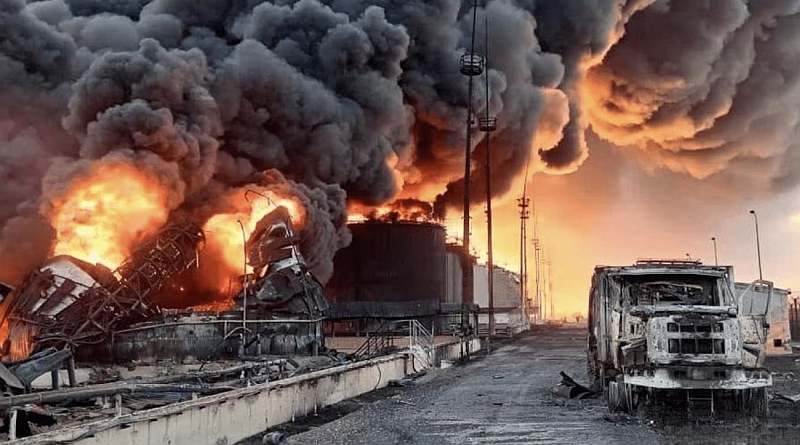

This can be called an analysis of yesterday’s explosion in Russia. Baltic, because the gestalt with the Port of Vysotsk has finally been closed. But let’s go in order.
Yesterday morning proved: the geography of our diplomacy has expanded to critical limits for the enemy. While Russian air defense tries to guess where it will hit next, let’s look at the language of numbers. And the numbers are very eloquent today.
Baltic: Closing the “quiet harbors”
The main news is the Port of Vysotsk (Lukoil-II CPC). This was the last relatively calm point in the Baltic.
Why is this important? Because this is Lukoil’s private terminal with a capacity of up to 12 million tons per year. While Primorsk, Ust-Luga, and St. Petersburg were already “accustomed” to smoke, Vysotsk remained the main window for exporting diesel and fuel oil. Yesterday, this window was somewhat ventilated by our SBS, GUR, and SSO DeepStrike specialists’ drones.
Statistics are stubborn. The information found in open sources shows us an interesting picture of tanker loading in Baltic ports since April 1:
Ust-Luga: only 8 tankers (constant interruptions).
Vysotsk: managed to dispatch 4 vessels and now pauses since yesterday.
But Primorsk surprised, as it managed to load 24 tankers since the beginning of the month! This means that Primorsk is currently working for itself and other ports that are on pause. This is the main port still pumping oil on an industrial scale. If we want to completely turn off the light in the Baltic oil harbor of the Russian Federation, Primorsk should become the next priority. And that’s why there were strikes on refineries and pumping stations leading to Primorsk. We cannot completely stop the port’s operation but hinder the oil pumping to it. It all makes sense. That’s why we’ll soon see strikes on it.
Samara hub: This is no longer a single hit on some reservoir.
| Yesterday, there were hits on two related refineries – Novokuybyshev and Syzran. These are not just factories, they are the backbone of logistics in central Russia. That’s why I show Syzran on video, it will burn beautifully, like in Tuapse – for several days.
The total capacity of these refineries is approximately 17.3 million tons per year (8.8 and 8.5 respectively). The likely target is the primary processing units AVT-6, not just tanks. This is unique equipment the height of a 15-story building. Without them, the plant turns into a pile of scrap metal because sanctions do not allow quickly buying or manufacturing similar columns. These columns are almost at the beginning of the entire plant’s technological process. Military aspect: These refineries are the main suppliers of aviation fuel and diesel for Russian Groupings Center and South. Less fuel in Samara can affect not only the military but also the agricultural sector. Tractors in the field also need to be refueled. |
The fertilizers were discussed in previous posts. We are also working there.
Summary of mid-April (as of 18.04)
Summarizing all strikes on terminals and plants, we have the following picture:
1. Export on the Baltic: Dropped by ~35-40%. Ports stop not permanently, but each stop for 4-5 days is millions of dollars in losses and disrupted tanker schedules.
2. Total oil product export: Since April 1, overall Russian volumes have fallen by ~15% due to disabling refineries and ports on the Black Sea and Baltic.
3. We are still far from a full effect of thrombosis in their system, but today’s strikes show we are moving in the right direction. Overall, the picture emerges that strikes on oil depots (such as Tikhoretsk), ports, and pumping stations are creating blockages in the pipeline system. Roosters extract oil while finding a place for it becomes increasingly difficult.
Conclusions
The Port of Vysotsk was an important point on the Baltic list. Now only one major object remains there – Primorsk. Statistics show that it is currently keeping their export afloat at some positive level.
Strikes on refineries increase the negative impact on the system, but it still doesn’t collapse. Dispersing air defense means, constant repair costs, and idle factories with ports – that’s the main task being effectively executed right now, adding more cards to our negotiations.
Illustrative photo from open sources
