
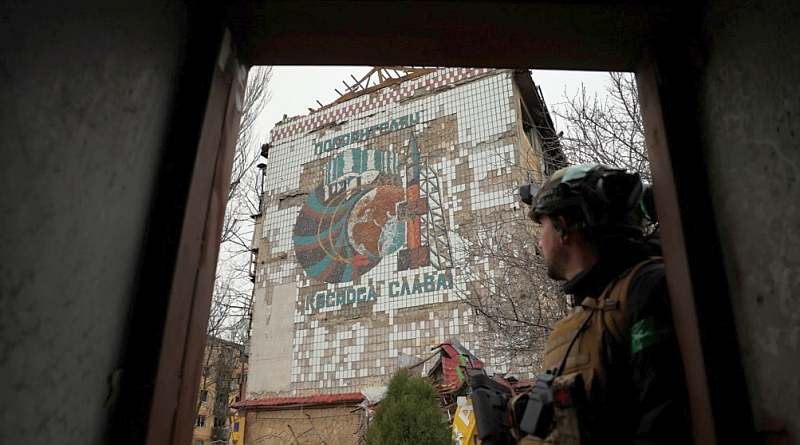
Svitlana Kuzmenko, Donbas.Realii / Radio Liberty
Summary
- How has the role of Kostyantynivka changed after more than a year of fighting?
- How has holding the city affected Russia’s plans to capture the entire Donbas?
- How much longer will the Defense Forces be able to hold Kostyantynivka – and what could be the consequences of its loss?
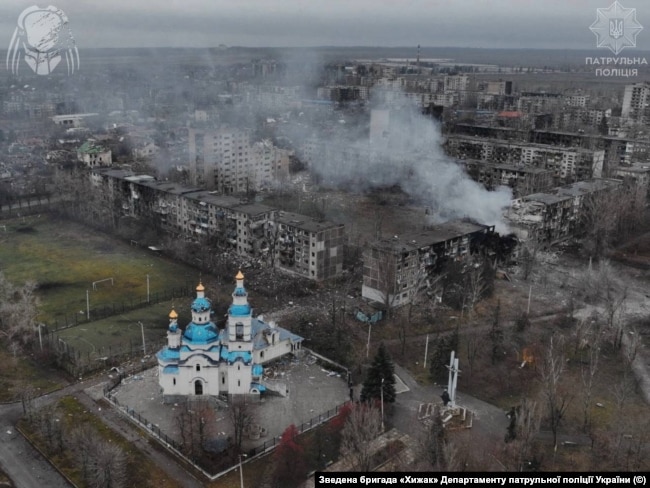
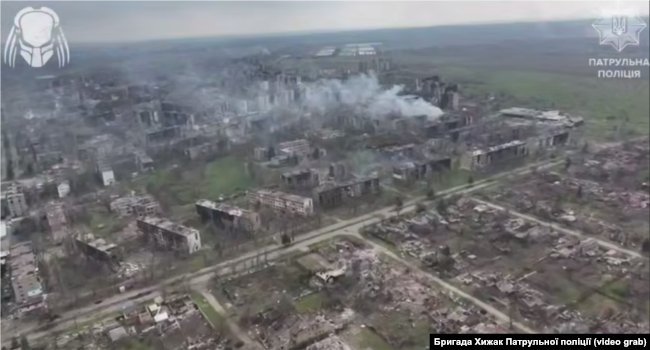
In a little over a year of fighting, Russia has almost completely destroyed Kostyantynivka, but has not captured it – despite Russian President Vladimir Putin’s statement about the occupation of the city back in early July 2026. According to various estimates, Russian forces control from a few percent to half of the city, with most of its territory being a “gray zone.” Even some Russian near-war media outlets deny the full capture of Kostyantynivka.
However, the situation for the defenders of the city is truly difficult. Russian assault troops systematically infiltrate Kostyantynivka en masse, drones are active in the “small sky,” and aviation is erasing structures with bombs in the “large sky.”
Observers and analysts do not have a unified opinion on the current significance of the city in the war, which the American Institute for the Study of War (ISW) considers part of the Donbas “fortress belt.” But the battle for Kostyantynivka continues – and its duration and outcome cannot be considered determined at present.
Kostyantynivka: “The enemy failed to fulfill its main task”
The fighting for Kostyantynivka in the Donetsk region – an industrial city with over 67,000 residents before Russia’s full-scale invasion – has been going on for a little over a year.
The first Russian infantrymen were spotted in the city at the end of October 2025 – at the initial stage, Russia used infiltration tactics here, which had already been tested in Pokrovsk and its satellite city of Myrnohrad.
Read more about this tactic in the Pokrovsk example in the article Infiltration into Pokrovsk: How to Prevent the Kremlin’s Successes?
In June 2026, urban combat began in Kostyantynivka, and on July 3, Putin declared that the city was “under Russian control.” However, neither then nor now is this statement true—numerous objective control data, analysis from OSINT, and testimonies from Ukrainian military personnel indicate that the battles continue.
The General Staff of the Armed Forces of Ukraine does not comment on the situation in this direction, which is a usual communication approach regarding the front-line situation. The agency regularly reports attacks by the Russian army on the flanks of Kostyantynivka’s defense, with this direction consistently being among the top three hottest spots.
Various projects and analysts give different assessments of the situation in the city as of late October to early November:
- French OSINT analyst Clément Molin says that “the Russians have an advantage over approximately 50% of the city’s territory (although this does not mean firm control or established logistics), while Ukrainians have an advantage over about 15%, and the remaining 35% remains disputed territory.”
- The Institute for the Study of War (ISW) states that the Russian army “advanced” over approximately 36% of Kostyantynivka’s territory, and on another 39% “advanced or infiltrated,” accordingly, the Defense Forces continue to control about 24%;
- The Ukrainian project DeepState on its map designates 5-6% as captured, the “gray zone” occupies up to 80%, and the rest of the city’s territory is without color—meaning there is no stable presence of Russian assault troops.
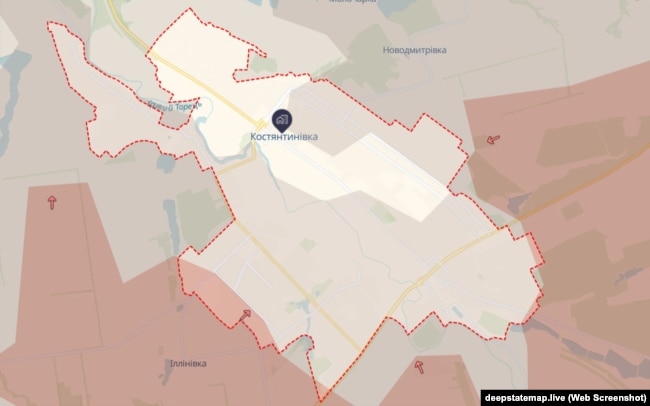
Even some Russian war-related bloggers write that Russia has not fully captured Kostyantynivka. For example, the Telegram channel “Slivochny Kapriz” indicates that as of November 5 (half a year after Putin’s declaration of capture), “positional combat operations” are taking place in the city. Parts of the city in the northwest are marked on its map as not under Russian army control.
When urban combat began in June, some experts did not exclude that defenders might soon have to withdraw from the city. There were reasons for such forecasts:
- Russian military forces continuously infiltrated, trying to hide and not reveal themselves until their UAV operators arrived. Thus, the enemy gradually increased their presence, including the drone component;
- At the same time, the enemy attempted to disrupt the logistics of the Ukrainian garrison in the city with drones;
- Also, aviation destroyed buildings with KABs, and thus the defenders’ positions.
More on how it happened in the article “The Dam in the Stage of Cracks.” What is Happening in Kostiantynivka – Against the Background of “Turning” Assessments
However, now in November, the battle for Kostiantynivka is still ongoing – although the situation for its defenders is truly difficult.
“The enemy managed to achieve some tactical results in certain areas, but failed to accomplish its main task – to completely capture the entire city of Kostiantynivka with the main forces of its forward units and subdivisions. The fighting in the city continues, although significant numbers of assault and small infantry groups of the enemy are present in it”, writes in the October 17th review of the direction by the “Information Resistance” group observer Kostyantyn Mashovets.
“Currently, the main forces of the Russian forward units are still on the outskirts of Kostiantynivka”, he notes.
According to Mashovets, the Ukrainian Armed Forces continue to hold several districts of Kostiantynivka in the northern and central parts of the city under control. Meanwhile, Russian assault groups are quite massively recorded in the western, southern, and northeastern parts of the city, and their numbers are gradually increasing.
The command of the Russian army is making significant and targeted efforts to make the realities on the ground correspond to Putin’s claim of allegedly capturing the city.
Kostiantynivka Now: The Russian Army Attacks, the Ukrainian Armed Forces Counterattacks
In early November, ISW analysts wrote in their reports about:
- failed attempts by Russian forces to “advance” towards Kostyantynivka (reports from November 3, November 7 and November 8).
- about the possible entrenchment of Russian forces in positions in the northwestern part of the city itself (report from November 4); on the same day, DeepState reported enemy advancement in Kostyantynivka from this direction (the project marked an increase in the “red zone” in the southwest, from the village of Illinivka).
- that Russian forces “recently entrenched positions west of Kostyantynivka and conducted infiltration missions in the city itself” (report from November 10).
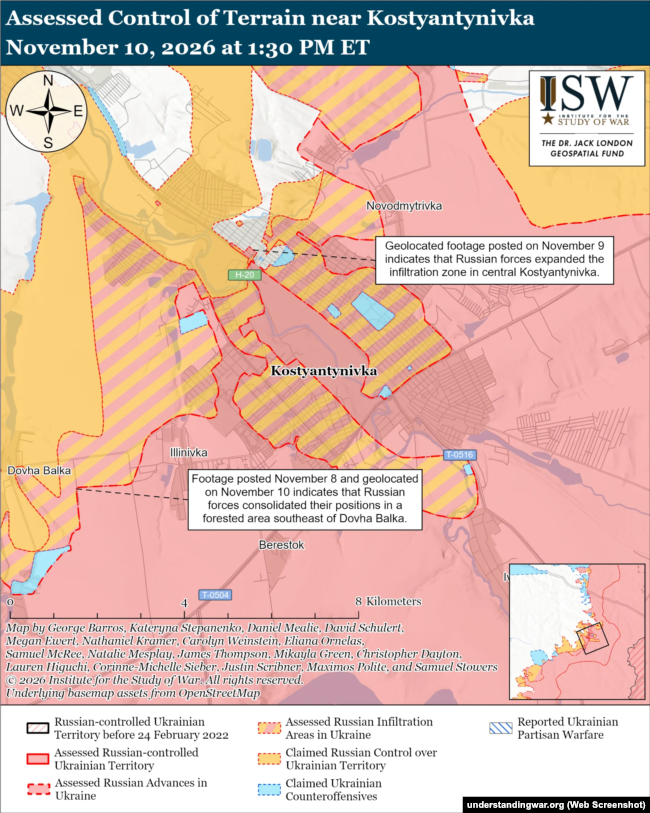
“It can certainly be stated that the Russian offensive continues. Yes, quite slowly – over two months of persistent and rather ‘costly’ battles for themselves, they managed to advance a maximum of 7.5–8 km deep into the defense of the Armed Forces of Ukraine. However, it should be understood that this happened in one of the key directions of the entire Slovyansk-Kramatorsk offensive operation of the enemy – the Kostyantynivka direction,” notes Kostyantyn Mashovets.
According to the Institute for the Study of War, this is a “belt of fortresses” – fortified cities along the N20 route, with Kostyantynivka as the southernmost stronghold and Slovyansk as the northernmost. They, along with Dobropillya to the west, are the last major cities in Donbas under Ukrainian control.
But the city’s defenders are also acting actively, trying to hold back the enemy.
“Ukrainian forces have also begun counterattacking southwest and south of Druzhkivka – at least since the end of September and throughout October 2026, likely to prevent any attempts by Russian forces to reach Druzhkivka from the southwest,” noted the ISW.
On November 3, the Ukrainian serviceman with the call sign “Muchnoy” reported on his Telegram channel that Ukrainian defenders “continue to work on the enemy’s flanks” in the Kostiantynivka direction. According to him, the situation in Novoselivka (a private sector on the northwestern outskirts of the city) remains dynamic.
“Recently, there have been new strikes on enemy forces. Judging by the available footage, several enemy positions located in this area were hit at once,” he notes. – “This indicates that the presence of enemy units at the respective lines does not go unnoticed by our forces, and identified positions receive fire strikes.”
“Muchnoy” adds that Ukrainian troops “continue to act from the flanks, conduct attacks, and create additional obstacles for the enemy to secure their positions.”
What is Russia’s plan? And how might the Defense Forces act?
“Russian troops are evidently trying to infiltrate from Kostiantynivka directly to Oleksiyevo-Druzhkivka without completing the capture of Kostiantynivka and without aligning the front line south of Oleksiyevo-Druzhkivka,” ISW believes.
The reason for this could be haste—the prolonged defense of Kostiantynivka, as well as the Ukrainian operation “Vivaldi,” which allowed the cutting of the Russian troops’ “claw” in the Lyman direction (north of Lyman), delaying the aggressor’s plans.
“Given that the battles for Kostiantynivka in the neighboring direction have already dragged on ‘beyond all plans and schedules,’ it becomes clear that forming the southern facet (flank) of the operational encirclement of the Slovyansk-Kramatorsk agglomeration, so to speak, is somewhat delayed,” – points out Kostyantyn Mashovets of the “Information Resistance” group.
And, according to Mykola Melnyk, a veteran of the Russo-Ukrainian war and an expert of the Leviathan analytical group, Russia “does not have sufficient forces and means for a significant breakthrough.”
“The Defense Forces, despite the Russian advantage in virtually everything—manpower, equipment, UAVs—are successfully countering the Russians,” he noted on Radio Donbas Realii.
Moreover, Kostyantyn Mashovets considers it “quite possible” that at least in one direction, the AFU might counterattack, following the example of Lyman. In such a case, he predicts, “all this Slovyansk-Kramatorsk venture by the Russian General Staff clearly risks ending unsuccessfully, possibly even before the New Year.”
“In my opinion, to hold this agglomeration, the Armed Forces of Ukraine will inevitably need to conduct their own active operations, at least in one of the three directions (Dobropillya, Kostyantynivka-Kramatorsk, or Slovyansk)”, believes the military observer.
However, he notes that the enemy, for its part, is striving to “completely eliminate the Kostyantynivskyi defense area of the Ukrainian Armed Forces in the shortest possible time” and bring the main forces of their advance units to the near approaches to Druzhkivka and Kramatorsk, while “clearly aiming to do this simultaneously.”
“It has become quite evident that there is a trend towards the further deterioration of the situation for the forward Ukrainian units engaging in combat in the Kostyantynivskyi defense area of the Armed Forces of Ukraine… In essence, the enemy has currently focused on the final elimination of the Kostyantynivskyi defense area of the Ukrainian Armed Forces and has sufficiently approached achieving this goal”, states Mashovets.
The Battle for Kostyantynivka: What Will Determine the Outcome?
Kostyantyn Mashovets predicts that the duration of the battles for Kostyantynivka is likely to be crucial for both the Kostyantynivka and neighboring Kramatorsk directions.
“It is evident that the forces concentrated on the left flank of the operational zone of the Russian ‘South’ military grouping, without definitively taking Kostyantynivka, will not be able to advance on a sufficiently wide front from the south and southeast towards Druzhkivka and Kramatorsk”, he explains.
In his assessment, if Russia cannot take Kostyantynivka in the near future, it will not be able to simultaneously break through to Druzhkivka and Kramatorsk from the east and southwest. Thus, the classic aggressor tactic of encircling Ukrainian cities will fail.
“It is notable that they understand this, and are already trying to avoid such a scenario by sharply activating the right flank of their ‘Center’ military grouping in the Druzhkivka direction”, he notes.
Mykola Melnyk also points out the role of Kostyantynivka for this section of the front—in contrast to some evaluations (such as the one presented in an article by American CNN), which claim that the city has lost its operational significance for the Defense Forces.
“Kostyantynivka is a place where the Russians are losing their personnel, resources, and reserves. Therefore, as a deterrent factor, Kostyantynivka is necessary,” he argues. – “As of now, Kostyantynivka is simply the southern flank of Druzhkivka’s defense. Because everyone knows that as soon as the enemy establishes control over Kostyantynivka, they will continue their movement towards Druzhkivka. We cannot say that Kostyantynivka has no operational significance.”
Meanwhile, the expert notes, it is also important not to hold onto the city if it loses such significance.
“The question is whether to continue the practice of ‘holding on by any means to every piece of land’ without any tactical necessity… As far as I have heard, such practices are slowly but surely becoming a thing of the past”, says Mykola Melnyk.
And it emphasizes that the withdrawal of Ukrainian forces from Kostiantynivka – if such a decision is made – will not mean a crisis.
“Sometimes a retreat is just part of a maneuver. Sometimes you have to retreat to preserve manpower, equipment, and resources if it’s impossible to hold on. And that’s normal. As long as there is an army, as long as we have people, we can continue to fight. There will be no problem or crisis if we have to leave Kostiantynivka. After all, the war will continue,” explains the expert.
However, for now, Mykola Melnyk predicts continued fighting for Kostiantynivka – and possibly “for quite some time.” In his opinion, everything will depend on two factors: support from Western partners and how Russia addresses its issue of replenishing personnel.
“I’m not ready to say that the Russians will capture Kostiantynivka by the end of the year. Just as I’m not sure that we will hold it in 2027, because physically it will already be scorched earth, and our command may decide to leave to preserve personnel. I emphasize, as long as there is personnel and people willing to fight, nothing is lost,” says the expert.
The Deputy Head of the Office of the President of Ukraine, Pavlo Palisa, at the beginning of September this year stated that the political leadership of Russia set another new deadline for the complete occupation of Donetsk region – by the end of 2026, while Russian military are requesting to postpone this term to March 31, 2027. Reuters, citing a source close to the Kremlin, also reported on the deadline for the complete occupation of Donetsk region by the end of the year.
The American Institute for the Study of War (ISW) calculated that since February 2022, Russian President Vladimir Putin set at least 15 deadlines for capturing the Donetsk region, which were reported – and which were not met.
According to analysts’ calculations, at the current pace of the offensive, the Russian army could capture the remaining 19 percent of the Donetsk region by October 2, 2032.
On the cover: A Ukrainian serviceman takes cover from a Russian combat drone. Kostyantynivka, Donetsk region, December 20, 2025. Photo: Oleg Petrasyuk/24th Brigade named after King Danylo
