
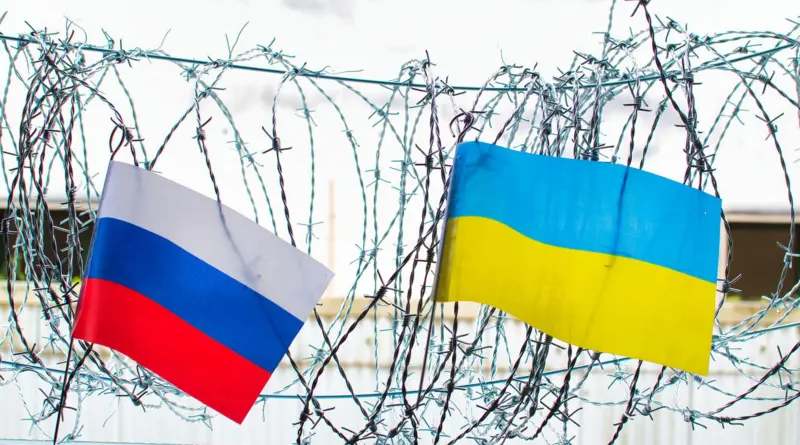
“Better let’s hit Tbilisi together,” once called the current admirer of Kobzon’s concert in hell, Zhirinovsky, to G.W. Bush Jr.
It’s strange to see the same logic from sensible and reputable people who seem to agree to write about “if there is no help, Ukraine will unite with Russia and move to Europe.”
What?
Those who orchestrate such campaigns may anticipate European demands for reforms to improve transparency and governance to receive funds, either they are deceitful, or they truly do not understand how European allies think.
Are you expecting European societies to “give in”? You are looking at the majority of ordinary people. But look at the active minority. Remember our own 2014-15 and 2022. We weren’t ready either. But we managed. Do you think Europeans are different? Then remember the events around the “Krakow shooter” and the admiration for the actions of the police and citizens. And how they reminded us of ours.
Do you think NATO is a fake? Are you sure you think that, and not just consuming a thought virus? No one has canceled technological superiority yet.
Oh, our troops crush outdated, unwieldy allies in exercises? Well, that’s what exercises are for, to draw conclusions and learn.
By the way, by scaring Europeans with armed aggression against them, you provoke a reaction opposite to what’s needed. Because if Europe is really under threat, then Ukraine needs less help, not more. To ensure they have enough for themselves.
And most importantly, no one in Russia is planning to “unite” with Ukraine. For them, Ukraine does not exist at all. As Kremlin regime technologists frankly wrote back in 2022 – a few million to be shot, a few exiled, with the rest turned into “one people”. Bucha is a symbol of what they will do. And no, they have learned nothing.
This is perfectly understood in Europe. Perhaps it seems overconfident. Perhaps arrogant. But none of those trying to scare Europe with our alliance with Russia will see such an alliance. Because almost all of them are on Russian lists for elimination.
So, don’t fall for the convulsions of the “dynasty” to preserve the current order at any cost and prepare for negotiations about money with scaremongering that scares no one but irritates many.
There is a simpler, more honest, and more effective way out of the dead end. Take away the arguments from our adversaries. Finally, make the changes that the authorities agreed to within the framework of European integration and aid programs. Ultimately, effective governance and less corruption are needed by us, not by Europeans.
If you want to impress allies, organize a campaign demanding the adoption and implementation of the Kachka-Kos anti-corruption package, so that our law enforcement officers do not turn into “siloviki.”
Direct your energy toward improving the governance of Ukraine. You loved it during the times of Poroshenko. Back then, it wasn’t scary.
Has anything changed?

Two days ago, Estonian media Postimees published an interview with Taras Chmut, head of the “Come Back Alive” foundation. Among other things, there was a non-mainstream idea that the Russian collective scoundrel entrenched in Europe took out of context and began spreading online. Like, European comrades, look at these Ukrainians, who are you helping?!
I almost never do this, but now I’ll provide an extended quote.
“…Journalist: If Ukraine’s current allies take and force Ukraine to give up territories that Russia could not capture, what conclusions would you draw from this? How could Ukraine react?
T. Ch.: If the international order essentially recognizes the right of the strong, Ukraine must rethink its place in the world. I am consciously proposing a provocative scenario now, but if strength is the only principle, then one may cynically ask: why shouldn’t Ukraine become an ally of Russia and go with it against Europe?
This is an argument about the absurdity of such a world order, not a practical military plan.
Journalist: If Ukraine is forced to make large concessions, could disappointment in the West change Ukraine’s foreign policy course?
T. Ch.: Yes. If European countries, which speak of law, truth, and justice, demand to give Ukrainian territories to the aggressor, this could become a new reality for Ukraine.
Then questions will arise about restoring our nuclear potential and seeking other allies, why not China, Iran, or North Korea. This shows how dangerous the erosion of trust in current allies can be.
No one knows what political regime will come after Zelensky. It could be completely different and not necessarily pro-European. New politicians might start blaming Europe, remembering disputes over Ukrainian grain in Poland, problems in relations with Hungary, and other conflicts. This risk cannot be ignored…”
Those who have been reading me for a long time know that I have voiced a similar thought repeatedly. Publicly – for already two and a half years. And privately – earlier. And the relevance hasn’t disappeared. On the contrary…
Somewhere at the beginning of spring 2024, I was talking with an Austrian expert. Among other things, he quite sincerely asked: “Why don’t you come to an agreement with Russia? After all, war brings so much suffering.”
I clarified: does he understand the essence of what he is asking about? Does he understand what the hypothetical agreements would be about?
The response was along the lines of: there will be some concessions from Ukraine, you will record losses, but you will live in peace and move forward.
I said that he doesn’t understand two things – what exactly this would mean for Ukraine and what exactly this would mean for Europe.
As for us, now (as 2.5 years ago) Russia is only ready to negotiate capitulation. Capitulation would mean not only the actual dismantling of Ukrainian statehood but also extreme risks to the lives and health of large groups of Ukrainian citizens.
But that’s not all. That’s just the first point.
The second point of Ukraine’s capitulation agreement with Russia is an agreement on the division of functions: which part of occupied Vienna Ukrainian troops will be responsible for, and which part – Russian (now we can also add – North Korean).
Predicting this scenario, I suggest giving up Vienna and taking Salzburg. The air is cleaner there and the desserts are tastier…
Naturally, this caused quiet horror in my interlocutor, and he nervously asked for clarification of the logic.
And the logic is as simple as doors. It relies on ironclad facts.
The fact is that Ukrainians overwhelmingly don’t want to be under Russia. Categorically. Absolutely not. Many would like normalization with Russia (including myself), but not to be under it.
To avoid being under Russia, Ukrainians are waging a full-scale war and paying a high price. Whether other countries will fight remains to be seen.
Contrary to myths, it is the residents of regions with a significant portion of Russian-speaking and ethnically Russian population who most do not want to be under Russia. They bear the greatest burden of suffering, sacrifices, and destruction.
If they wanted to be under Russia, there would have already been some sort of mass uprising, and the front would have long since moved to the Danube.
We observe the exact opposite.
If you look at who is currently in the core of the 1st and 2nd National Guard Corps, the 3rd Assault Corps, 7th Air Assault Brigade (in 2024 they were organized differently, but the basic units are the same), and a number of other fierce, tactically skilled, and technically equipped Ukrainian units, it’s all Kharkiv, Dnipro, Zaporizhzhia, Donetsk, Luhansk. Plus the Mykolaiv brigade, plus people from Odesa, plus Crimea…
It should be properly understood – people from all regions fight heroically. For example, the Lviv and Zhytomyr paratroopers – since 2014. But if that element, which is indiscriminately and falsely labeled as “pro-Russian,” was actually so, we would have long caught Orban, Szijjártó, and other scoundrels for water procedures in the Danube. I think the Russians would give them up to strengthen military cooperation.
Why do all these people fight in unequal conditions? Why do their families stoically endure inhuman hardships?
Because they still believe: this is all not in vain.
Because they believe in a better future on their land and without Russia. And the guarantee of this better future is close integration with Europe.
But what do we see from Europe?
NATO – no. EU – maybe, but no. Our grain is being scattered. Instead of obvious solutions – some chatter. Delays. Apparent unpreparedness to get out of their warm bath. But at the same time the attitude is: Ukraine should fight until 2030 in exchange for some help.
Isn’t that so?
That is, another (now 4 years, then) 6 years of sacrifices and destruction. More years for our children to hide in basements instead of normal studies, our old folks in their twilight years to freeze in the dark and wander around in others’ corners.
Is that how you see it?
Meanwhile, Russians keep grumbling non-stop: “We’ll either buy the Europeans or scare them, they’re weak. So what’s the point? Let’s join forces and hit them hard together.”
Nobody believes the Russians. But as soon as there are facts supporting this line, many (not all, but many) people will change their stance under pressure. Because the cup of suffering will overflow.
One of the most frightening transformations will occur: the feeling will arise that it was all in vain.
People died in vain. A third of the country burned in vain. Years passed in vain…
And then Europe will face a united Russian-Ukrainian force. Russian resources will be multiplied by Ukrainian fury.
Simply because even the slightest chance for a better future will disappear. Ukrainians will feel betrayed. And traitors in our culture are worse than open enemies.
That’s why “agreements” with Russia in the current conditions are specifically about zones of occupation in Vienna. Is that really what you want?
The positive is that Europe has many pragmatic decision-makers. They are well-aware of examples from European history and assess the probability of this scenario as significantly different from zero.
That’s why Europe (especially Germany and the Nordics) has indeed made great efforts and changed a lot. Partly thanks to the advice of Ukraine’s best friend, comrade Trump.
As a result, since 2024, the situation with people’s moods has worsened, but not as dramatically as one might expect given the extent of suffering. Hope still lives on.
But now there is another period of trials, linked to the vacillation of the US and political turbulence in Europe amidst Russia’s escalation against the Ukrainian rear.
That’s why strong decisions are urgently needed to form a real defense alliance that involves not only money but also risk distribution. For example, a real joint blockade of the Baltic. Meaning you risk more than just property.
Only such an approach will allow changing Russia’s goals: to prevent expansion and physical seizure of spheres of influence in Europe. Otherwise, risks will increase.
The threat is not ephemeral; political processes in Europe are well-known.
Europe’s unwillingness to contribute to turning the situation around, half-hearted and belated decisions, or, in the worst case, abetting unjust coercion of Ukraine into concessions will end disastrously.
This can be completely avoided.
But neglect and letting things run their course is not an option.
Europeans do not even come close to feeling what our people have to live through. There is a stark difference between those Europeans who have spent some time even in Kyiv, and those who know about our problems only indirectly. The greatest contrast is among Poles. The first group is the most in favor of us because they don’t want anything similar in their home. But they are not heard.
That’s why reminders are needed unabashedly, for the common good.
POSTIMEES IN UKRAINE: “Is Europe Ready to Deploy Its Soldiers on the Donetsk Region Border?”
Why shouldn’t Ukraine become an ally of Russia in confronting Europe if the West forces Ukraine to make serious concessions in the current war, cynically asks one of the most well-known volunteers in Ukraine, helping the Armed Forces, Taras Chmut.
