
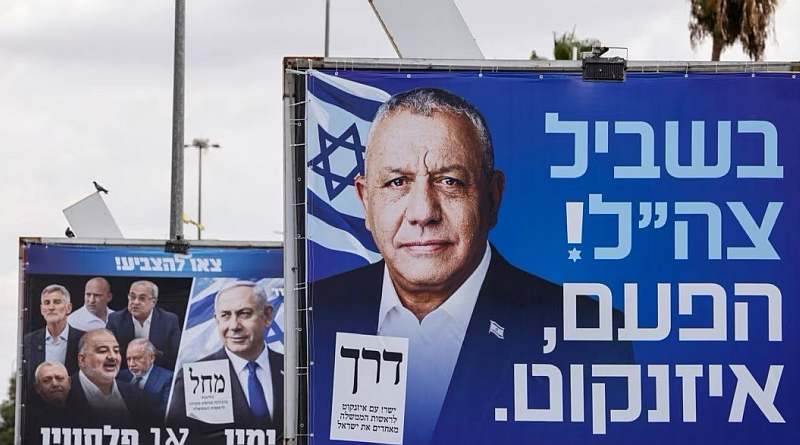

The parliamentary elections in Israel resulted in unexpected configurations that exposed a deep divide in Israeli society following a period of prolonged military-political instability. The Likud party, led by Benjamin Netanyahu, retained 27 seats in the Knesset, remaining the largest political force. However, the centrist movement “Yashar!” created by former Chief of Staff Gadi Eisenkot, sensationally won 21 seats, seizing the initiative from traditional opposition groups.
Arab political forces demonstrated high voter mobilization: the “Hadash-Ta’al” bloc received 11 seats, and the Islamist party “Raam” secured 8 mandates, substantially strengthening their parliamentary representation collectively.
The challenges of forming a new government are due to insurmountable ideological contradictions between potential coalition partners. None of the established camps managed to secure an absolute majority in the Knesset without involving marginal or recalcitrant factions that demand significant concessions in religious and social areas.
In the face of such a parliamentary deadlock, Gadi Eisenkot was tasked with attempting to form a viable cabinet, relying on centrists, moderate rightists, and parts of the electorate dissatisfied with the previous coalition. This mission encounters fierce resistance from ultra-Orthodox and nationalist parties, which fear the loss of state subsidies and changes to the status quo on military service conscription.
Relations with the USA are experiencing a period of concealed tension due to Washington’s pressure for a long-term resolution of the Palestinian issue and restraint on regional fronts. The White House closely monitors the power dynamics in Jerusalem, as the American administration seeks to restore stability in the Middle East and fears the radicalization of Israel’s course.
At the same time, ties with Russia depend on the Israeli leadership’s balancing act between Western allies and the need to maintain operational freedom of action in Syrian airspace, where Moscow retains a certain military presence.
The threat of direct confrontation with Iran continues to dominate Israel’s strategic calculations, perceiving Tehran’s nuclear program as an existential threat.
Political instability within the USA itself, triggered by midterm elections and fluctuations in bipartisan support for Israel, directly limits the maneuverability of Israeli command.
If Washington decides to cut military aid or refuses to support a preemptive strike on Iranian facilities, the Israeli leadership will face a challenging choice between a solo large-scale escalation and enforced strategic restraint.
An additional factor of instability is the growing social tension within the country, caused by the heavy burden of reserve duty and a deep economic crisis. Citizens increasingly demand real reforms from politicians that can reduce the cost of living and ensure border security without endlessly prolonging military campaigns.
In such a fragile parliamentary balance, any misstep is capable of provoking new snap elections, which would further erode voters’ trust in state institutions.
