
Olesya Zhigalyuk, BBC News Ukraine
Russia isn’t waiting for winter – it’s already trying to turn it into a weapon, Western media report.
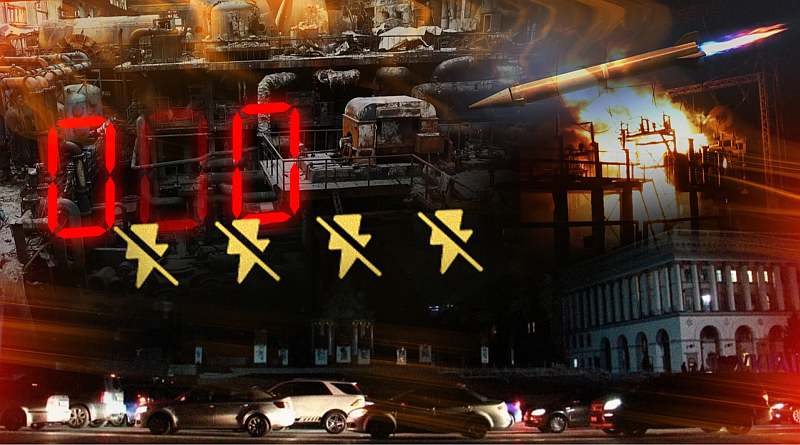
Moscow is intensifying strikes on Ukraine’s energy and civilian infrastructure. The goal is to leave cities without electricity, heat, and water, scare people, and force them to leave.
Western publications warn: a new Russian campaign could indeed become one of the toughest of the entire war.
A thousand missiles, air bombs, and drones
New York Times reports about a document that Ukraine’s Energy Minister Denys Shmyhal allegedly showed to European partners in Paris two weeks ago.
According to the publication’s sources, Shmyhal called this document a Russian plan aimed at methodically causing the collapse of the Ukrainian energy system through strikes. It involves a campaign using up to 1,000 missiles, drones, and air bombs.
The targets could be substations, hydro- and thermal power plants, boilers, as well as water supply and sewage facilities.
The most dangerous part of the plan is the attempt to disable three Ukrainian nuclear power plants. To achieve this, Russia might strike distribution substations connecting NPPs to the general power system.
The document refers to open substations located less than 1.6 kilometers from reactors.
It specifically mentions pump stations and treatment facilities. Russia could launch strikes with dozens of ballistic missiles with cluster warheads. The publication recalls that the Russians have not previously attacked such facilities on a large scale.
Ukrainian officials unofficially say the country lacks sufficient backup plans in case of serious water disruptions.
Kyiv, Kharkiv, and Odesa are named as primary targets. The document states that electricity supply in these cities could be reduced by 90%. Heating – also up to 90%. Serious sewage problems might arise.
At the same time, according to Ukrainian and Western intelligence estimates, Lviv is also on the list of cities that may suffer intensified strikes this winter, reports Financial Times.
The Ukrainian government believes the ultimate goal is to simultaneously deprive large cities of light, heat, and water, thus creating a humanitarian crisis.
Commenting on the document to Ukrainian media, Denys Shmyhal stated: “Our partners, like us, were struck by its cynicism, this cold, terrorist calculation.”
New York Times notes that the content of the document coincides with Vladimir Putin’s public statements about the intention to hit Ukraine’s energy sector this winter in response to Ukraine’s attacks on Russian oil refineries.
Kyiv already under significant attack
Judging by what is happening, Moscow did not wait for severe cold weather.
As New York Times writes, on October 1 alone, Russian missiles and drones hit a major thermal power plant and other energy facilities.
Explosions were heard in Kyiv. Several districts were left without electricity and water.
For Ukraine, this is an especially troubling signal after last winter. According to DTEK, residents of Kyiv regularly went without electricity for up to 12 hours a day or even longer.
Over the years of war, the Ukrainian energy system has significantly weakened. Olena Pavlenko, head of the analytical energy center DiXi Group, compared its condition to a person trying to “run a marathon with one lung.”
Ukraine is trying to prepare for new attacks: repairing power plants and substations, installing small gas turbines, building protective structures, and strengthening the network.

In August, Minister Shmyhal stated in parliament that Ukraine was well-prepared for the winter. At that time, the country had about 15 gigawatts of available capacity. By the end of the year, this figure was expected to grow to over 21 gigawatts, according to him.
This is enough to cover peak consumption, which last winter reached about 18 gigawatts.
But according to Mariya Tsaturyan from the research group Ukraine Facility Platform, a few new strikes could destroy much of what has been restored.
The vulnerability of the system, she says, is also evidenced by the outage following the strike on September 30.
Not Just Energy
Economist considers it part of a broader campaign.
Russia is simultaneously increasing pressure on Kyiv’s civil infrastructure.
In the past week, Russian attacks have affected supermarkets, data centers, playgrounds, a hospital, and the National Academy of Sciences of Ukraine.
Two high-ranking Ukrainian officials told the Economist that Moscow is operating on several fronts simultaneously. It strikes, conducts diversions, and tries to create political chaos.
One official stated: “Putin has ordered attacks on everything civilian. They want people to be afraid to go to the supermarket.”
Ukrainian intelligence services also warn of potential intensification of sabotage inside the country.
Ukrainian counterintelligence claims it prevents seven to eight Russian operations weekly.
There is a third component—informational.
Andriy Kovalenko, the former head of the Center for Countering Disinformation, says that Moscow hopes to provoke protests and push people to demand capitulation.
“Russians build such plans every year. But they futilely hope that their bot farms will force our people to protest and demand capitulation,” he believes.
Zelensky: “Now there are no more rules”
Financial Times adds another detail to this picture.
In an interview with the newspaper, Volodymyr Zelensky said that Ukrainian intelligence intercepted information about an alleged order from Vladimir Putin to abandon previous restrictions during air attacks.
“He said: now there are no more rules,” Zelensky stated.
According to him, this order was given in September. That’s when Russia started hitting Kyiv harder, particularly targeting educational institutions, hospitals, and data centers.
The Kremlin traditionally denies that the Russian army deliberately attacks civilian objects.
Dmitry Peskov stated: “The Russian armed forces do not strike schools or hospitals.”
Meanwhile, the Financial Times reports that its journalists examined drone debris after an attack on a Kyiv school. They saw markings and inscriptions in Russian on them.

Another serious problem for Ukraine is Russian jet drones.
They reach their targets faster, making them harder to shoot down. Russia actively uses them in current attacks.
Volodymyr Zelensky told the Financial Times that in one day, Russia launched about 500 drones. Approximately half are jet-powered.
According to him, Ukraine shoots down about 57% of jet drones and 85-90% of regular ones.
Kyiv is trying to create its own interceptor drones. Five models are currently being tested. By the end of October, Ukraine expects to produce about 400 such devices.
But there is a problem with engines.
“Engines are the key issue… We import a lot… There are some domestically produced engines, but not enough,” admitted Zelensky.
Will Russia succeed in breaking Kyiv
In publications by The New York Times, The Economist, and the Financial Times, one common question arises: can Russian strikes on cities really change the situation on the front and in Ukraine’s rear?
The Economist notes that paralyzing Kyiv is more challenging than it may seem.
Ukraine’s energy system is indeed weakened. But over the years of war, repair crews have learned to quickly restore damaged facilities.
Energy expert Olga Babiy says: “We need to look at our infrastructure not in terms of whether it can be destroyed, but whether it can be restored and how quickly.”
Even if the system can be restored, a new Russian campaign could cost Ukraine dearly.
The Financial Times writes that the Ukrainian authorities fear a new wave of refugees to Europe.
The Economist notes that Kyiv residents who have places to go are already preparing to survive the winter outside the capital — in private homes, summer cottages, or with relatives and friends in other regions of Ukraine.
Collage: Andriy Kalistratenko/UP
