
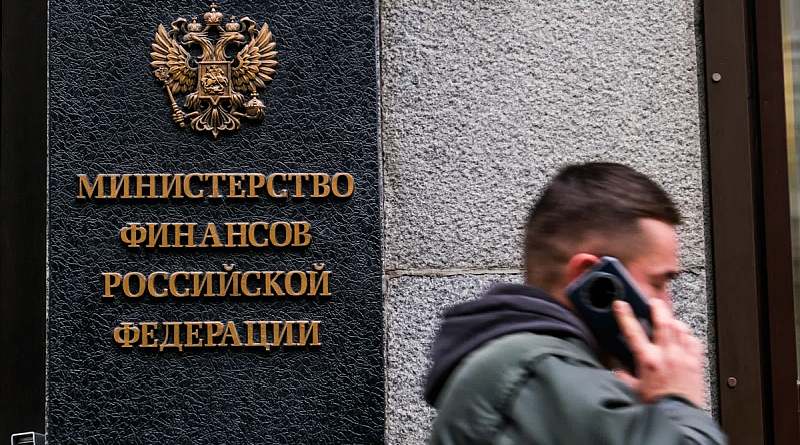

The financial system of the aggressor state is rapidly plunging into a deep crisis, as the disastrous deficit of the Russian Federation’s federal budget for the first seven months of 2026 reached 6.46 trillion rubles, exceeding the initial annual plan by more than 2.8 trillion rubles!
Considering the growing imbalances in the regions, the total failure of the budget system is estimated by experts to be an astronomical 8-9 trillion rubles. To somehow cover this gigantic gap, the Ministry of Finance of the Russian Federation is frantically increasing domestic borrowing through the issuance of federal loan bonds (OFZ), yet the aggressive release of public debt is collapsing the market value of previously issued medium- and long-term fixed-coupon bonds.
Under the conditions of strict international sanctions that have completely blocked the Kremlin’s access to foreign capital, the largest Russian banks have been turned by the authorities into an inexhaustible wallet to cover military expenses.
About 20 trillion rubles in government securities have already been accumulated on the banks’ balance sheets, with around 12 trillion rubles held by financial institutions until maturity only because selling these assets under the current high key rate would instantly record enormous revaluation losses. This artificial freezing of liquidity withdraws resources from the real sector of the economy, depriving commercial enterprises of development opportunities and undermining industry.
Continuing to broadcast false propaganda about supposedly stable prices, poverty reduction, and guaranteed incomes for citizens, the ruling party “United Russia” conceals the fact that the exorbitant war expenses against Ukraine provoke a colossal rise in prices. Official reports record inflation at 6%, while the real price growth felt by citizens has exceeded 15%.
Trying to contain the spiral of hyperinflation, the Central Bank of the Russian Federation is forced to keep the key rate at 14% per annum, making commercial and consumer lending inaccessible, destroying the purchasing power of the population.
Aiming to attract buyers for new loans, the Ministry of Finance resorts to issuing OFZ with a floating coupon, which actually does not solve the problem but merely shifts the interest risks onto the budget itself. The high rate of the Central Bank of Russia makes servicing such floating debt incredibly expensive, causing the treasury funds to go not to healthcare or education, but to the payment of coupons to banks. The growing debt loop will inevitably lead to a reduction in social programs and an increase in taxes, forcing ordinary citizens to pay for the militaristic adventures of the country’s leadership.
Since the capabilities of the domestic bond market are essentially exhausted and unable to cover the catastrophic shortage of funds, the authorities will be forced to further tighten fiscal policy. Cancelation of benefits, increased tax burden, and the introduction of new levies will ultimately kill the profitability of the remaining private businesses, accelerating the rise in prices and bringing the collapse of the Russian economy closer.
