
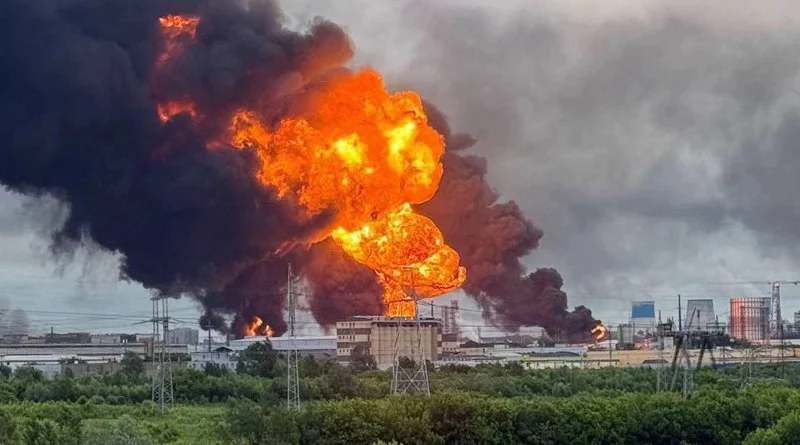
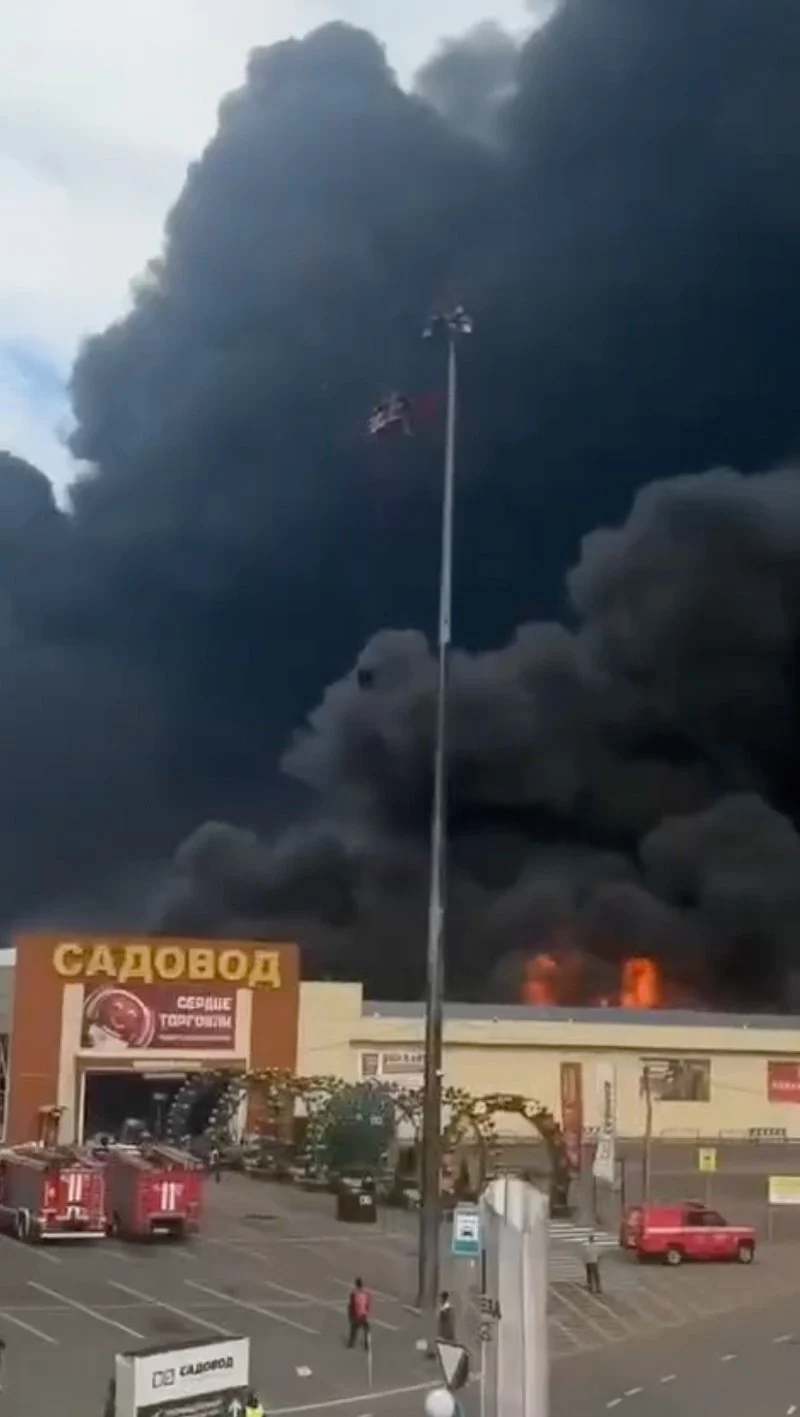
Massive Breach of Moscow’s Air Defense. Fuel barrels take to the air with rocket propulsion. The “Pantsirs” helplessly fire new missiles into the void. Electronic warfare crashes drones into high-rises. Internet is down. Plan “Carpet” is active. “Sadovod” market is on fire. And oil residues.
The cheerful little war reached the full extent again for the residents of the City of Rubber. That’s good. The depletion of the enemy’s air defense continues. Part of the missiles for mid-strikes will soon be produced by the EU, enabling us to scale up long-range strikes — the radar channel saturation tactic is working perfectly.
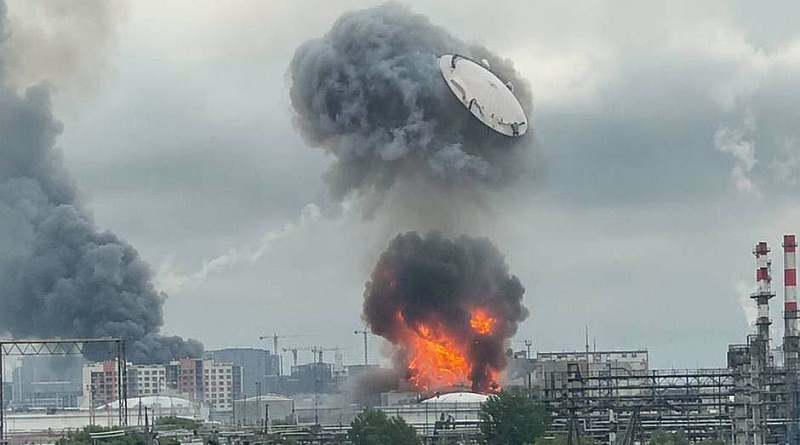
And this is not a media, TikTok strike, nor a chaotic response to another attack on a film studio or a monastery. Amid the real fuel crisis in Russia, we carried out a repeated, surgically precise strike on the Kapotnya refinery. While firefighters try to cool neighboring tanks, and world media broadcast images of oil clouds over the Kremlin, any restoration work on the plant has been completely halted by the Russians. Moscow is stretched thin: the army and the capital itself are the priorities for protection and fuel supply, while Russian regions are starting to suffer without gasoline and diesel.
Anatomy of a Finishing Shot
The most beautiful nuance in this whole story with the Moscow Refinery is the timing. Before the latest raid, the plant was already shut down: on June 16, our drones hit it, neatly knocking out the primary oil processing unit ELOU-AVT-6 — and the enterprise went into forced downtime for the second time since early May (when the powerful spring wave of 120+ long drones hit the capital). Calibration for this target has been ongoing since 2024, but methodical attempts to completely disable it began this spring.
The plant stopped (as immediately reported by Reuters), and the Russians, evidently thinking they narrowly avoided disaster, urgently pulled additional air defense systems to the site, deployed updated “Pantsirs” on special towers, and called in repair crews — to inspect pipes and restore lines.
And at that very moment, when the target is most vulnerable and literally “crucified” during repairs, a second, much more massive wave strikes. This is a classic “coup de grâce.”
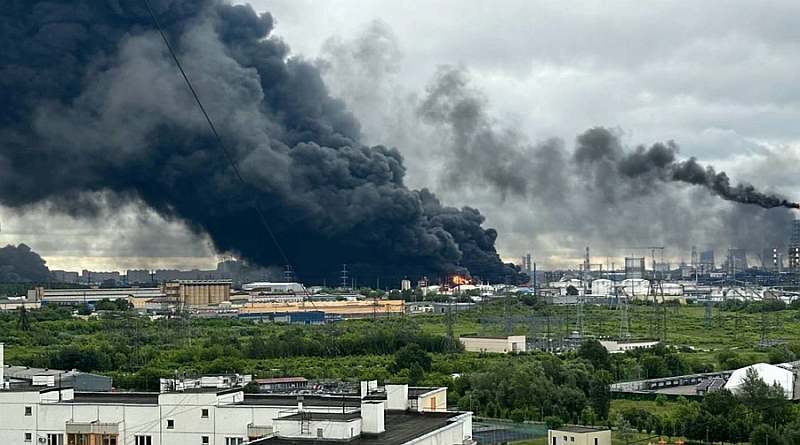
Yesterday’s swarm aimed specifically at secondary processing units, combined nodes, and the tank farm — five major fire outbreaks were recorded. This means that if after June 16 they planned to hold on with reserves and secondary processing while patching the main primary pipeline, today they burnt both the remaining fuel and the complex high-tech equipment for deep processing.
The Helplessness of the Moscow Dome
A separate art form is breaching the Moscow security dome with piston drones. Allowing such a swarm to reach a stationary strategic facility 15 kilometers from the Kremlin, which was already in maximum combat readiness after the first attack, is a verdict on the entire air defense system. Russian developers of the “Pantsir” modifications for combating UAVs might as well discard their diplomas. In Russia, officially (until they invest billions in scarce interceptor drones), there are no more safe places. Except perhaps the Far East, but even there, a truck with dismantled UAVs in a trailer could reach if necessary.
And now for their economy, the main question arises: how to fix this? Even if you urgently find import components, which are sanctioned for them (and you’re searching for them for all the blown-up plants in the European part of the RF) — that’s only half the problem. It is much more difficult to find a scarce team of high-altitude welders willing to climb a high-pressure column, clearly realizing that the plant has become a regular target, from which no interception systems save.
Of course, if we had Taurus or Tomahawk with proper 500 kg warheads, only a crater would remain from Kapotnya. Western red lines prevent a quick finish. But the reality is that we bring their economy to its knees even with cheap piston drones with a hundred kilograms of explosives. We extract the maximum from what we have and do it as efficiently as possible.
Economic Miscalculation: Ripples on Water
The clear outcome — we continue a successful operation to create an artificial fuel crisis on a national scale. Direct losses of 10–12 billion rubles for 500+ canceled flights due to the “Carpet” plan or the burnt “Sadovod” market — are pleasant, juicy trifles. Our main task remains unchanged — to hit in the tightest places. To target what provokes prolonged ripples on the water in the enemy’s horizontal structures and macroeconomics.
The mathematics here is destructive:
Loss of foreign exchange earnings. At Kapotnya, 30 thousand tons of oil were daily turned into high-octane gasoline, diesel, and jet fuel. This is the generation of a commodity flow of $15-20 million (we’re talking wholesale). A month’s downtime of such a giant is a pure minus half a billion dollars from PJSC “Gazprom Neft”‘s turnover. And it will clearly stand for more than a month now.
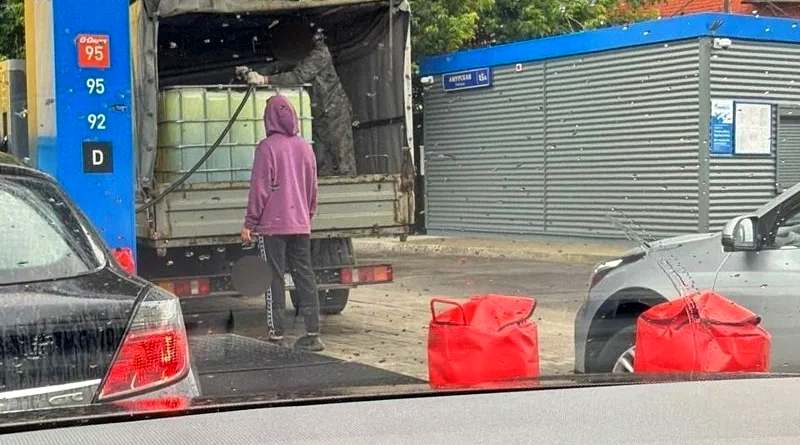
Logistical dead end. Since Kapotnya has completely fallen out, 40% of gasoline for the 15-million Moscow agglomeration and 70% of kerosene for its planes now need to be physically brought from somewhere. The fuel will have to be hauled by railway from Ryazan, Yaroslavl, or the Nizhny Novgorod region, where the plants have also already received greetings from our drones. This creates immense additional load on the already cracking railway network of the RF. RZD tariffs, the rental of scarce tanks, and time are added. The cost of each liter of fuel in Moscow automatically increases.
Main Conclusion
But most importantly, this double strike on Kapotnya finally breaks the internal stability of their machinery. The Kremlin is being forced into a tough macroeconomic zugzwang: trying to quell the fuel hunger in the capital and guarantee the supply to the front groups, they will have to “confiscate” from the regions. Regional gas stations will start drying up, logistics prices in the Russian Federation will rise, and the government will have to burn billions of federal rubles on subsidies to prevent a social explosion.
By knocking out oil processing nodes, we temporarily halt the conveyor and intensify the crisis in the regions. But we also amputate the key organs of their economy, forcing Russia to extract resources from itself and pay a triple price for every day of existence. This summer, they will remember for a long time.
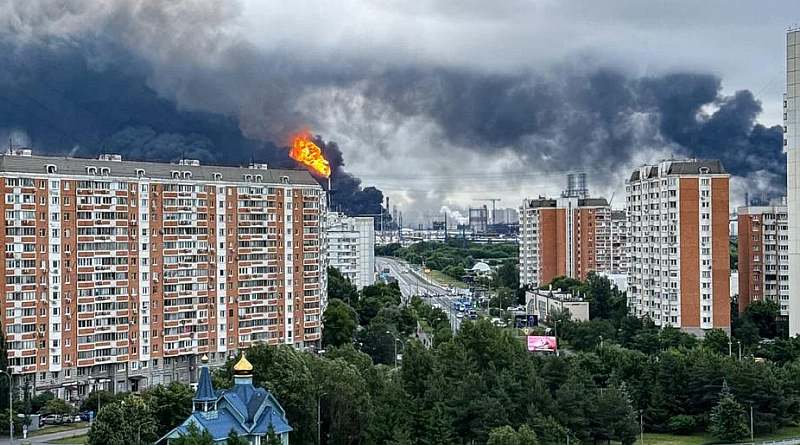
On the cover: Strike on the refinery in the Moscow region. Photo: social networks of the occupiers
