

Oleh Chernysh, BBC News Ukraine
In early June, Ukrainian troops carried out a series of strikes on bridge crossings leading from Russian-occupied Crimea to the mainland. This significantly complicated the logistics of the Russian army in the South. This operation was carried out by an entirely new unit, information about which had long been kept secret.
For the strikes, Ukrainian forces used domestically produced middle-strike UAVs for the first time. In previous years, the Armed Forces of Ukraine used Western cruise missiles Storm Shadow and munitions from HIMARS rocket systems to destroy bridge spans.
Currently, attacks on the key Crimean bridges near Chongar and Armyansk were carried out by Ukrainian FP-2 and “Behemoth” drones (which targeted only Chongar), capable of carrying 75-100 kg warheads over a distance of up to 300 km.
The strikes on Chongar took place on the night of June 6-7 and again on the night of June 9. The bridges near Armyansk were attacked on June 11.
Additionally, on June 8, the bridge leading from Henichesk to the Arabat Spit was hit.
All of them were significantly damaged, as publicly acknowledged by the occupation authorities of Kherson region, and require repairs. Movement on them was stopped. The Russians are swiftly attempting to establish pontoon crossings.
This campaign of “cutting off” Crimea was organized and conducted by a completely new structure in the Armed Forces of Ukraine, about which there is still minimal information.
This is about the “Phalanx” multi-domain operations center.
What is “Phalanx”
This structure was formed in the spring of 2026 by a decision of the Ministry of Defense, combining the forces of two powerful assault units: the First Separate Assault Regiment named after Dmytro Kotsyubaylo and the 475th Separate Assault Regiment Code 9.2.
They were initially created in 2022 based on volunteer units, quickly scaled up, and organized a method of effectively combining drone and assault actions at the front.
Both regiments have a celebrated combat history, for example, the 1st OSP is known for battles near Pokrovsk, and the 475th OSP for its participation in the operation to liberate Kupyansk at the end of 2025.
The units are led by two Heroes of Ukraine – Major Dmytro Filatov (call sign “Perun”) commands the 1st OSP, and Major Oleksandr Nastenko (call sign “Flint”) the 475th OSP.
The multi-domain center received its name from the infantry formation in Ancient Greece. The main weapon of the first line of warriors in the phalanx was a long spear (4-7 meters in length). The combination of this weapon and formation structure provided significant advantages to Alexander the Great’s army.
This is actually the logic behind naming the Ukrainian innovation, explains Commander Oleksandr Nastenko in an interview with BBC News Ukraine.
The idea is that Ukrainian troops for the first time received their “long spear” – the middle-strike attack drones, primarily FP-2s. Previously, they only had short-range drones.
“The long spear was not invented by Alexander the Great, but he was the one who built an invincible battle order with it,” notes “Flint.”
Infantry “middle-strikes” have effectively replaced tactical aviation at the front, he adds.

According to him, some of the Russians’ powerful fortifications can only be destroyed by powerful air bombs, but each sortie by a Ukrainian bomber is extremely risky as it is a priority target for Russia.
Moreover, Ukrainian aviation is now mainly engaged not in supporting the troops on the front line, but in performing air defense functions in the rear.
The arming of assault regiments with long-range drones has also significantly accelerated the planning and execution time of operations.
If a request for aviation support might have been considered for weeks, now an operation with drones hitting Russian positions at medium distances (100-300 km) takes only a few hours.
“The responsiveness we’ve gained sometimes has a decisive impact on the battlefield. I no longer have to look for someone to deal with this target. I can take it on myself,” says the commander of the 475th Assault Regiment.
The rapid increase in the range of assault units corresponds to the logic of this war.
The larger the “kill zone”, which now is about 20 km, the fewer targets there are in and around it to hit. Therefore, front-line units, especially those with a developed drone component, are forced to seek targets tens or even hundreds of kilometers from the frontline.
Thus, this spring, the idea emerged to bring together the planning, intelligence, and execution units of such operations from several assault regiments into a single center.
This is how “Phalanx” was established.
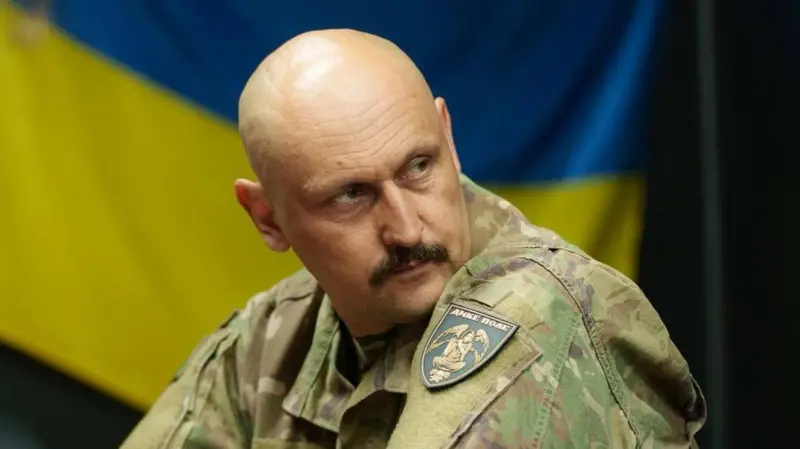
Nastenko emphasizes that the main task of the center is intelligence and planning. It also analyzes the battlefield and the effect of the strikes. Based on this, further assault operations “on the ground” are planned, meaning directly within the unit’s zone of responsibility.
Depending on the success and effectiveness of “Phalanx’s” work, the defense ministry plans to scale this experience to other military units in the future.
“The Multidomain Operations Center “Phalanx” is already showing very good results. It was created specifically for planning and executing successful assault actions. Not for other purposes. It is not a coordination center for Drone Systems Forces, nor is it a coordination center for fire strike forces. It is precisely a center that plans ground assault operations,” he explains.
Currently, both mentioned assault regiments are fighting in the Huliaipole direction, trying to hold back the advance towards Zaporizhzhia by almost 100,000 Russian troops of the “Vostok” group.
In fact, it was with this aim that the decision was made to attack the Crimean bridges.
Strikes on the Crimean Bridges
How was the operation planned?
The cyber intelligence of the “Phalanx” center discovered that the Russian army changed the route for fuel delivery to the Huliaipole direction, says Oleksandr Nastenko.
Previously, it went from Taganrog via the road to Mariupol. But in late spring, Ukrainian forces managed to take this road under fire control and destroyed hundreds of Russian military vehicles, including fuel trucks.
Thus, the Russian command decided to send them on a detour – through Crimea.
The Ukrainian cyber intelligence intercepted this information.
“We received information that a very large Russian convoy was being prepared. Within a short period – about 6 hours – a decision was made to strike the Chonhar bridge so that the convoy would not pass. This was late at night from June 6 to June 7. We did not inflict enough damage on this bridge, and a day later we struck it again,” – explains “Flint”.
Having blocked one bridge crossing, the “Phalanx” fighters immediately began preparing strikes on the remaining bridges on the Armiansk-Perekop segment.
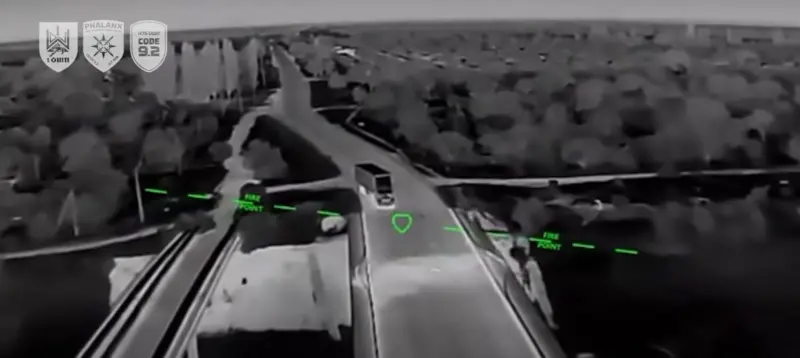
Cyber intelligence intercepted information that one of the Russian brigade commanders told his subordinates to try to pass through Armiansk.
The “Phalanx” center decided to strike in this area: to attack one bridge in Armiansk and two bypass bridges over the canal. The Russian convoy was standing in this section waiting to pass.
“All three bridges were very heavily damaged, and the equipment was destroyed. It was a large convoy of Russian equipment,” – Nastenko noted.
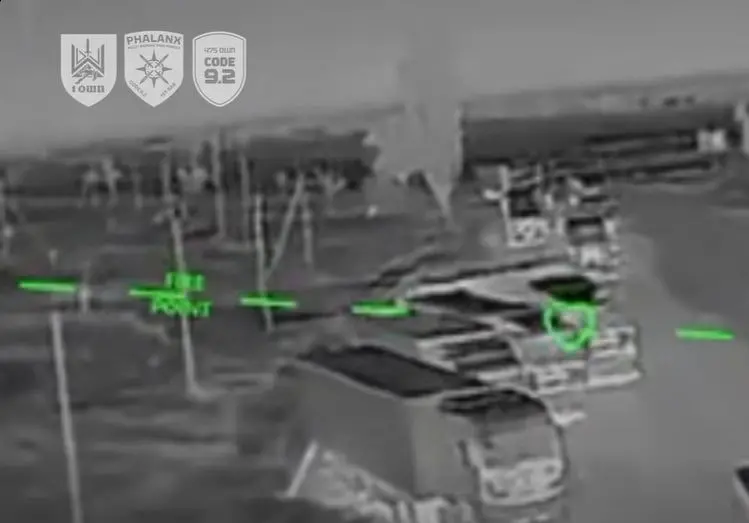
1 OSP Commander Dmytro Filatov said there were about 50 vehicles in this convoy, including fuel trucks. Some of them came under attack.
Videos released by the regiment’s press service show FP-2 drones attacking a truck waiting in line before the bridge. The queue shows at least 10 vehicles.
What was the result of the operation?
According to Commander Nastenko, logistics to Crimea are now “destroyed”.
“The transport corridor to Crimea from the mainland is no more. We have issued a “death penalty.” By striking the bridges, we have desecrated this object. I have no doubt that all the bridges will be finished off. This will be systematic work 100%. From now on, Crimea can be considered an island. Let the Russians buy boats to get to the mainland,” he stated.
According to him, the use of pontoon crossings by the Russians instead of bridges will “ease” the work for the Defense Forces.
“The task of completely destroying the bridges was not our goal. Basically, we are satisfied with the current situation. Damaged bridges mean limited movement. If they use pontoons, it does not offer the same capacity as a stationary bridge. There’s only reverse movement: one lane goes, the other stands. And so it goes all day. Huge “tails” of cars are created, logistics break down.”
In the opinion of the regiment commander, in the near future, Russian units in Zaporizhzhia will experience significant problems from disrupted logistics.
He cited intercepted data about the growing fuel shortage in the Russian brigades of the “Vostok” group.
“I can tell you: it’s just a disaster. The amount of fuel distributed to all the brigades of the group is so small that only one of our regiments “swallows” as much. So their situation with fuel is very, very bad,” says Nastenko.
According to him, the Russians do not stop trying to transport tankers from Crimea to the mainland. They disguise them as civilian transport, for example, by sheathing them with wood.
If it is possible to keep the Russian logistics blocked “for an extended time,” it could open up opportunities for “successful actions” by the AFU at the front, says Oleksandr Nastenko, while not revealing what he means by “successful actions.”
“Do I believe that we have the prerequisites for certain successful actions at the front? Yes, I do. But let’s not get ahead of ourselves. It’s just the beginning. I think that with the increase in the means coming to us, there will be more and more hits.”
Collage on the cover: BBC
