
Initially, humanity created nuclear weapons. Then, realizing the potential dangers, it decided that they should either be eliminated or restricted in use. The first international treaty aimed at stopping the proliferation of nuclear weapons was signed in 1968, and the Chornobyl disaster intensified anti-nuclear sentiments worldwide.
Ukraine faced the necessity of nuclear disarmament after the collapse of the USSR. Belarus inherited a small portion of the Soviet nuclear legacy, Kazakhstan a larger one, and Ukraine ended up with the third-largest nuclear arsenal in the world, following the USA and Russia.
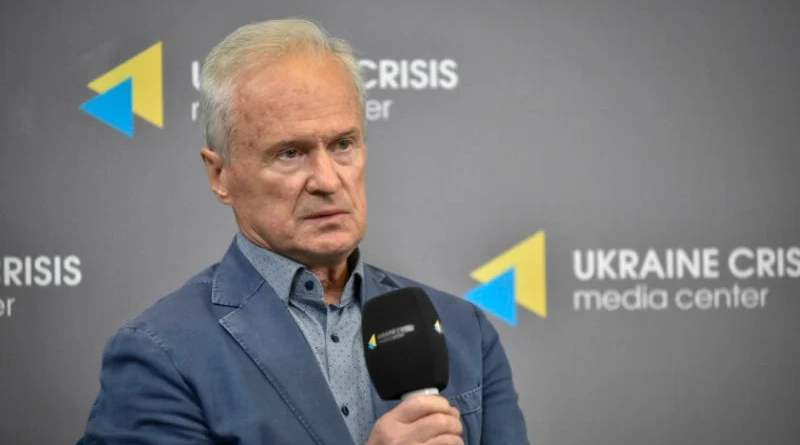
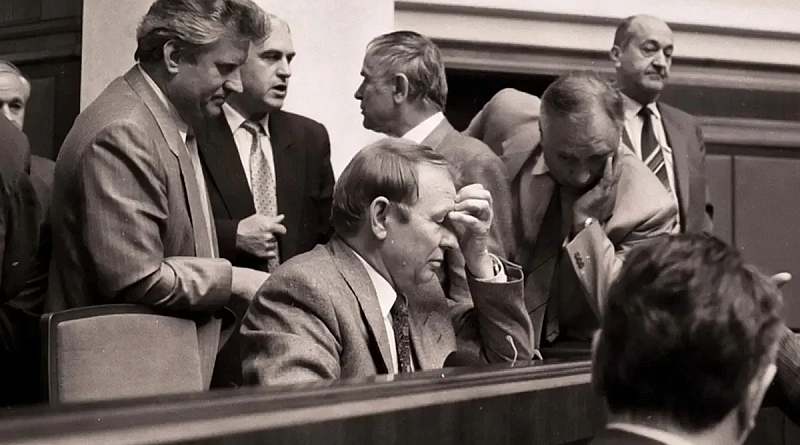
Ukraine quickly disposed of its arsenal, a move considered irrational by Yuriy Kostenko, who witnessed the process from the inside. He served as a people’s deputy for five terms and was the Minister of Ecology and Nuclear Safety of Ukraine from 1992 to 1998. In the first Verkhovna Rada convocation, Kostenko was the Deputy Chairman of the Commission on Environmental Issues, and in the second convocation, a member of the Commission on Nuclear Policy and Security. Kostenko was the first leader of Ukraine’s government delegation in negotiations with Russia regarding nuclear disarmament in 1992-1993. He headed a special parliamentary commission responsible for the ratification of the START-1 treaty. The nuclear issue was the main focus of his parliamentary work. After leaving the VR, Yuriy Kostenko wrote a book titled “The History of Nuclear Disarmament of Ukraine”. The reason for the conversation is an anniversary: 30 years ago, in June 1996, Ukraine completed the transfer of its nuclear arsenal to Russia.
“As of 1992, we were moving in the right direction”
Mr. Yuriy, how much nuclear weaponry was on the territory of Ukraine as of 1991?
All data regarding Ukraine’s nuclear potential were classified in the General Staff of the Armed Forces of the USSR. The parliamentary working group I headed began investigating this in 1992. We submitted inquiries to the Ministry of Defense of Ukraine, the Security Service of Ukraine, and even the Ministry of Foreign Affairs, receiving different data from each. Some information was provided by the military, but unofficially. We managed to obtain some data from Western experts, particularly from the Stockholm International Peace Research Institute, which still maintains its nuclear statistics today… Overall, we formed an understanding of what constituted the world’s third-largest nuclear arsenal, located in Ukraine.
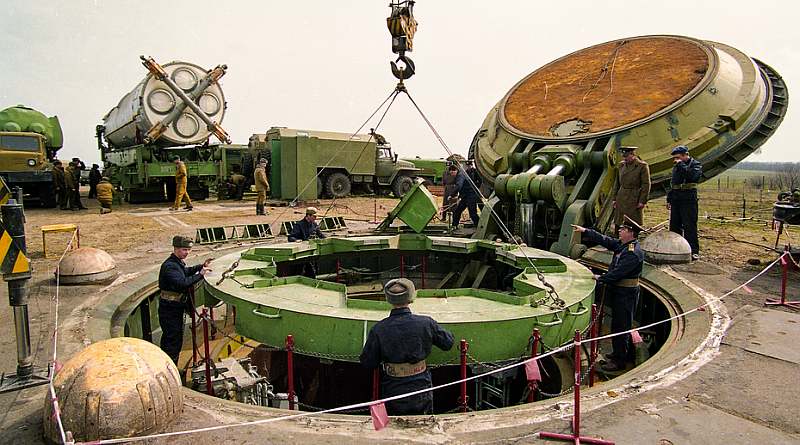
As of 1991, there were between 3,500 and 4,200 tactical nuclear warheads on the territory of Ukraine (according to the report of the Temporary Investigative Commission of the Verkhovna Rada to investigate allegations of theft in the Armed Forces of Ukraine and the undermining of the state’s defense capabilities from 2004 to 2017, there were over three thousand tactical nuclear charges in Ukraine, with documented removal of 2,883 tactical nuclear charges by May 6, 1992. — Ed.). These included operational-tactical missiles with nuclear warheads, nuclear air bombs, nuclear mines and torpedoes, and even anti-aircraft defense systems with nuclear charges. Russian Ambassador Yuriy Dubinin, Russia’s representative in the nuclear disarmament negotiations, also mentioned approximately three thousand nuclear charges.
Was this weapon made from Ukrainian uranium at Ukrainian enterprises?
Not exactly. This weapon was manufactured in Russia, but Ukraine was undoubtedly involved in the development and creation of the USSR’s nuclear shield. In particular, the first nuclear warheads were made from Ukrainian uranium mined in Zhovti Vody, and the Kharkiv Institute of Physics and Technology was involved in the uranium enrichment program. Moreover, in the closed city of Sverdlovsk-45, where I happened to visit, 68% of the workers were Ukrainians. (Sverdlovsk-45 is actually the city of Lesnoy, built by GULAG prisoners in 1947 in the Urals. It enriched uranium. — Ed.). The personnel who developed nuclear weapons for the USSR were predominantly ethnic Ukrainians.
What about strategic nuclear weapons?
There were about two thousand units. Specifically, the strategic missiles had 1,240 warheads, with the rest on cruise nuclear missiles.… But why was it important in 1991 to know the exact amount of nuclear weapons? Because it influenced the amount of compensation Ukraine was to receive for their destruction. That is, it was important to calculate exactly how much enriched uranium and plutonium we transferred to Russia to arrive at the actual price. And the price, by the way, turned out to be astronomical: more than one hundred billion dollars worth of material assets were transferred to Russia with the nuclear warheads.
How did it happen that the Verkhovna Rada decided to destroy nuclear weapons, but they were not destroyed and were instead handed over to Russia? And almost for free, excuse the non-parliamentary language?
This can be discussed for hours. I will try to keep it brief and to the point. So, the year is 1990. Ukraine adopts the Declaration of State Sovereignty. It states: “The Ukrainian SSR solemnly proclaims its intention to become a permanently neutral state in the future, which does not participate in military blocs and adheres to three non-nuclear principles: not to accept, not to produce, and not to acquire nuclear weapons.” This was included in the text of the Declaration, I would say, due to post-Chernobyl emotions… And the deputies voted for it immediately, even without discussion.
October 1991 arrives. Dmytro Pavlychko, then chairman of the parliamentary committee on foreign affairs, initiates the adoption of a statement on Ukraine’s non-nuclear status. I am invited to a meeting of this committee, even though I was not a member, as I was dealing with other issues — Chernobyl and environmental matters. I come and say that we, as an independent state now, should not rush into a non-nuclear status. A discussion ensues, and in the end, we reach a compromise: Ukraine declares its intention to move towards a non-nuclear status. Just move towards it, not proclaim it here and now. We also discuss certain prerequisites, the full list of which appears in April 1992.
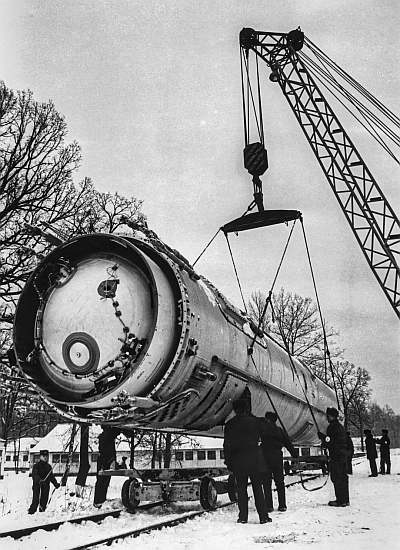
Firstly, part of the tactical nuclear weapons is to be transported to Russia, but exclusively for destruction. The rest remains in Ukraine, and the Verkhovna Rada prohibits exporting it. Secondly, the destruction is carried out under international supervision. Thirdly, Ukraine receives answers to a number of questions: who funds the disposal of nuclear weapons? How is this disposal carried out? Because when a nuclear missile was designed, everything was done to make it fly, not to dispose of it. The disposal technologies for such weapons did not exist in principle in the early 1990s.
And most importantly, in the resolution of the Verkhovna Rada from April 1992, issues were raised regarding what legally effective security guarantees Ukraine would receive now as a non-nuclear state. All these were right and necessary questions, formulated without haste and without an obligation to immediately abandon nuclear weapons. Later, the Russians attributed to us the promise to instantly get rid of the nuclear arsenal. But no, there was nothing like that. As of 1992, we were moving in the right direction according to the START-1 treaty and the Lisbon Protocol, which provided for the destruction of 36% of strategic nuclear weapon carriers and 42% of nuclear warheads. (START-1 is the informal name of the treaty between the USSR and the USA on the reduction and limitation of strategic offensive arms; signed in 1991 by Mikhail Gorbachev and George H.W. Bush. The Lisbon Protocol is an addition to START-1 with a different set of signatories: USA, Belarus, Kazakhstan, Russia, Ukraine; the document was signed in May 1992. — Ed.)
“We were offered energy and security cooperation, and they were even willing to pay for it”
So when and where did we go wrong?
Kravchuk began to sign agreements, which he had the right to conclude as head of state, but which were worthless without ratification by the Ukrainian parliament. (The Agreement on Common Measures on Nuclear Weapons was signed on December 21, 1991, in Alma-Ata. According to it, Ukraine, Belarus, and Kazakhstan committed to transporting all tactical nuclear weapons to Russia for dismantling under joint control. In addition, LB.ua found in the Verkhovna Rada archive a document titled “Agreement between Ukraine and Russia on the Procedure for Moving Nuclear Ammunition from the Territory of Ukraine to Central Pre-Factory Bases of Russia for the Purpose of Their Dismantling and Destruction.” It is dated April 11, 1992, signed by Kravchuk and Yeltsin, and is still in effect. — Ed.)
Around the same time, Kravchuk gathered leading nuclear weapons specialists and began asking them questions. For example: “Can we quickly remove nuclear warheads from strategic missiles and send them to Russia?” To this, the director of Hartron, academician Yakiv Eisenberg, replied: “We can remove the warheads, but they need to be replaced with so-called electronic equivalents. Otherwise, the ballistic missile might launch. Even though a launch without a nuclear warhead wouldn’t cause much damage, the United States would detect the launch and might respond with a nuclear strike on Ukraine.” Kravchuk said, “Then make these electronic equivalents!” Eisenberg replied, “And where’s the funding? Besides, it will take several years, and we definitely won’t manage by 1995 (as Kravchuk demanded. — Ed.).”
Then Kravchuk asked, “Can we block the missile launch from our territory?” “We can,” Eisenberg replied, “but inform Yeltsin. As soon as we interfere with the ballistic missile control system, the General Staff in Moscow will get the signal. When someone enters this control system without warnings, it’s already an emergency.” Kravchuk said nothing, but everyone understood that he wouldn’t call Yeltsin. Because Yeltsin would send him very far with such ideas… The entire nuclear complex was always controlled from the Kremlin, and when Ukraine took a course toward independence, Russia began demanding the return of the nuclear weapons.
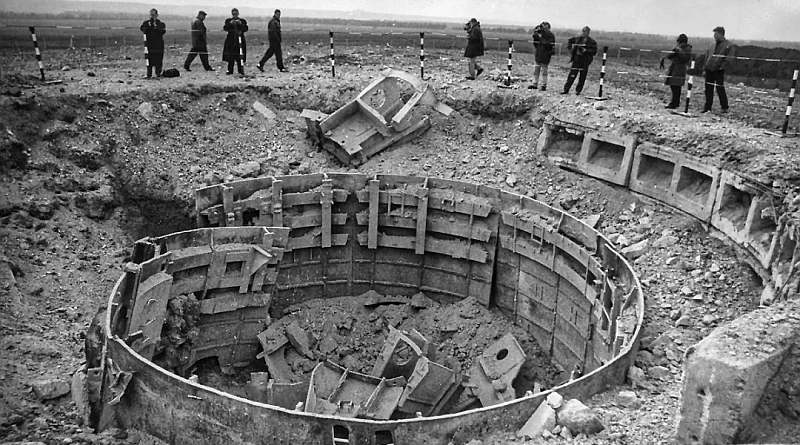
Can Kravchuk be blamed for Ukraine losing its nuclear weapons?
Kravchuk is already answering to God for all his actions. Although, of course, the blame lies with the then-executive power. Including the Ministry of Defense (the department was then headed by Kostyantyn Morozov, who under Kuchma was ambassador to Iran, and under Yushchenko the head of Ukraine’s mission to NATO. — Ed.).
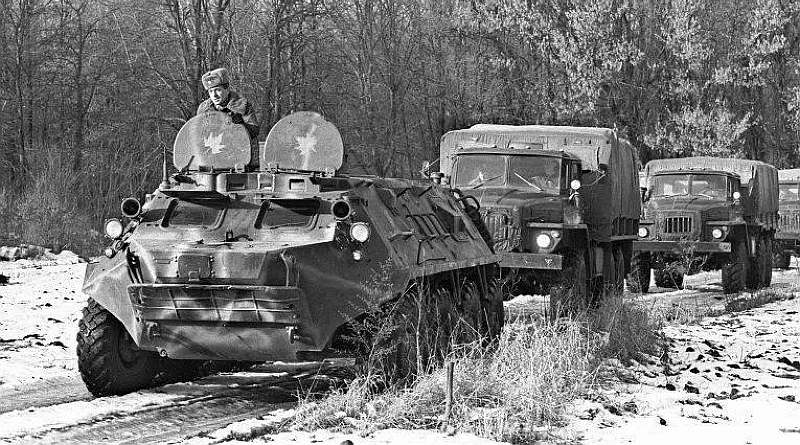
The removal of tactical nuclear weapons to Russia began in 1992, and this was not only not sanctioned by parliament but directly contradicted the documents adopted by the Verkhovna Rada. I believe that the Ministry of Defense was following Kravchuk’s instructions, but of course, unofficial ones. When I made an inquiry to the Ministry of Defense and asked what was actually happening, they sent me a paper citing the Declaration of State Sovereignty of Ukraine and… the decision of the 12th Directorate of the General Staff of the USSR Armed Forces.
What USSR in 1992?
So basically… It was clear that this was a mere formality. Hastily done and unsigned. But I am convinced that Kravchuk was well aware that tactical nuclear weapons were being removed from Ukraine.
Did you personally try to fight against this?
I did what I could to prevent the transfer of nuclear weapons to Russia. In 1993, Shmarov was appointed instead of me as the head of the government delegation on disarmament (Valeriy Shmarov — Director General of Ukrspetsexport, the third Minister of Defense, Deputy Prime Minister of Ukraine for the military-industrial complex. He worked during the presidencies of Kravchuk and Kuchma. — Editor.). Shmarov immediately initialed agreements to transfer Ukrainian nuclear weapons to Russia. On September 3, 1993, these agreements were signed by the prime ministers in Massandra in the presence of the presidents of Russia and Ukraine. It was a state crime against Ukraine’s interests because the Verkhovna Rada did not consent to such actions.
How did the United States observe all these movements?
If in 1991 the United States was momentarily confused, by 1992 the US began to engage in Ukraine’s denuclearization. Roman Popadiuk, then the US ambassador to Ukraine, told me: “You took on political commitments regarding nuclear disarmament, so fulfill them.” “And you should help,” I replied. And they started to help.
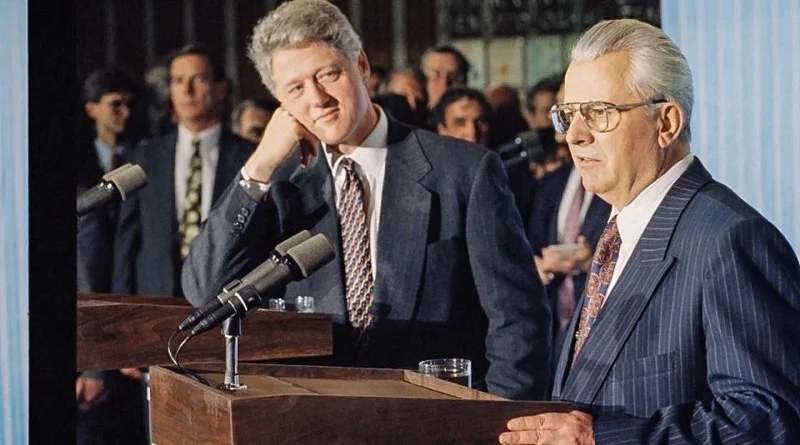
Helping or pressuring? Leonid Kravchuk recalled in an interview: “They (Bill Clinton and US Vice President Albert Gore) demanded: ‘If you do not remove the warheads from Ukraine, there will be not just pressure, but a blockade of Ukraine, not only by the US.’ Europe supported them in this plan. Sanctions, blockade — it was said directly.” Was Kravchuk being deceitful?
Kravchuk did not specify the chronology of events. He quotes his conversation with Clinton at Boryspil airport in 1994. On the way to Moscow from Brussels, where the NATO summit was held, Clinton landed in Kyiv. But what happened before that? In 1992, the US State Department sent a message to Ukraine’s Ministry of Foreign Affairs that America was ready to assist in nuclear disarmament. The guarantee of security offered was NATO membership. At the same time, the US was ready to support Ukraine both in nuclear disarmament and in the process of joining the Alliance. Specifically regarding the former: the American corporation General Atomics offered services to process Ukrainian nuclear warheads into fuel for our nuclear power plants.
A wonderful proposal.
The proposal was excellent, but the Americans had been reiterating it from late 1992 to mid-1993. They wrote letters to the then First Deputy Prime Minister Ihor Yukhnovskyi, waiting for a response. Additionally, another corporation offered a technology to block the launch of liquid-fueled rockets. There would be no need to change codes…
And report to Yeltsin in Moscow…
Absolutely. The Americans would have come, done their part — and that’s it, the strategic nuclear missile would be deactivated. Moreover, America proposed creating an international fund for nuclear disarmament, so the process wouldn’t have to be paid for from the state budget… Once again: they offered us energy and security cooperation and were ready to pay for it. All these proposals were on the table with the Ukrainian leadership.
But then events unfolded as follows: in the summer of 1993, Russia was invited to the G7 summit, as everything was leading to the G7 turning into the G8. At this summit, Clinton told Yeltsin that something unclear was happening with Ukraine’s position, so maybe it made sense to move the nuclear disarmament negotiations from a bilateral format to a trilateral one, involving Ukraine, Russia, and the USA. And Yeltsin agreed to this. At that time, I was dismissed from my position as head of the government delegation as a “nationalist” and “Banderite” who was “blocking the negotiation process,” as they said in Moscow… Shmarov was put in my place, and he signed agreements unfavorable to us.
“America came to protect Ukraine, but instead received a slap in the face. Because Ukraine did not even warn the American side that it had decided behind their back to hand everything over to Russia”
So, Ukraine itself, voluntarily ignored the American proposal regarding both missile blocking and nuclear fuel production for nuclear power plants?
Yes. And when I tried to explain this to Shmarov, he listened to me with a stone face. Then he said: “Yuriy Ivanovych, I will be guided not by all you have told me here, but by the instructions received from the President.” And Kravchuk was just frightened by the fact that the warranty period for nuclear warheads was ending and they could start exploding like Chernobyl.
This is utter nonsense. Nuclear warheads don’t explode without an order, that is, without entering a code. The Soviet Union had several disasters with nuclear submarines, but there was no radiation leak. The United States once “lost” a nuclear bomb over Spain; it fell and broke, but the nuclear charge did not explode, because that’s precisely how the system for preventing unauthorized use of nuclear weapons works.
I tried to explain all this to Kravchuk, but he replied: “And what are you, a general? A military man? You’re a minister of ecology, so deal with ecology. Or isn’t Chernobyl enough for you?” That’s how the communication level was. All because the Russians were working well here, sometimes pushing the information that nuclear warheads were “spoiled,” sometimes writing in “Izvestia” that “a second Chernobyl is brewing in Ukraine’s missile silos”…
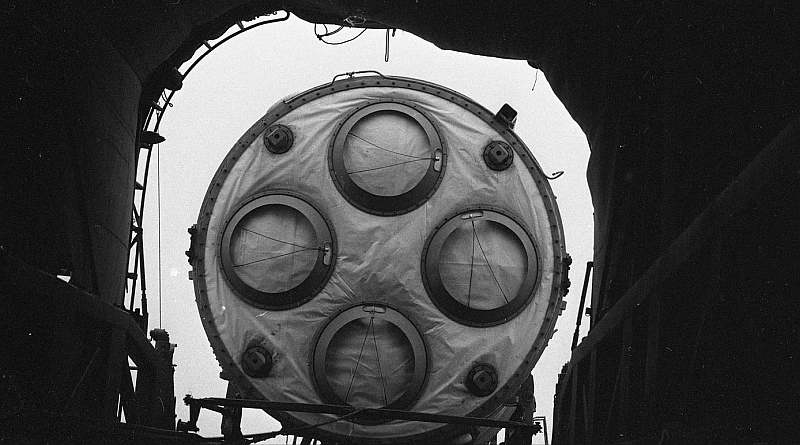
But let’s return to the chronology of events. How and why did the Americans change their position? In August 1993, the first meeting of the contact group was to be held in London to prepare for trilateral negotiations. The Americans came, the Russians came, and from Ukraine, they sent… the secretary of the embassy. And this was for interstate negotiations! So, it was actually the USA and Russia conducting them. When Strobe Talbott, the US Deputy Secretary of State and Clinton’s right-hand man, suggested forming the agenda, Ambassador Dubinin interrupted him and said there was nothing more to discuss. “How so?” — Talbott didn’t understand.
And then Dubinin placed before him the draft of the Massandra agreements, not yet signed by the heads of government, but already initialed by the head of the Ukrainian government delegation, Shmarov. It referred to the transfer of all nuclear warheads to Russia. “The matter is closed, there’s nothing to discuss in a trilateral format,” Dubinin said.
Talbott did not hide his irritation, Dubinin writes in his memoirs. America came to defend Ukraine, but instead received a slap in the face. Because Ukraine didn’t even inform the American side that it had decided behind their back to transfer everything to Russia. That’s how shamefully it all happened with the participation of Ukrainian and Russian officials, among whom there were many like this (pats himself on the shoulder).
Meaning with epaulets?
Exactly… Well, then the signing of the Massandra agreements takes place. The part concerning nuclear weapons is signed by Ukrainian Prime Minister Kuchma and Russian Chernomyrdin. Meanwhile, Kravchuk and Yeltsin sign the protocol “On Settling the Problems of the Black Sea Fleet,” which is another absurdity. And after the Americans see Ukraine’s complete pivot toward Russia (contrary to all the decisions of the Verkhovna Rada), they, of course, change their attitude towards us.
Because the United States at the time adhered to the principle of law and the letter of international treaties, such as START-1 and the Lisbon Protocol, and could not accept the legal chaos Shmarov had endorsed. So the USA also returned to cooperation with Russia in the military and security sphere, and Clinton and Yeltsin signed an agreement. And in 1994, Russia joined the “Partnership for Peace” program, which means not NATO membership, but the possibility of bilateral interaction with the Alliance.
And this after the USSR (read: Russia) targeted nuclear missiles at the USA? They are still targeted at the USA, aren’t they? Isn’t there too much deference to Russia, even if Ukraine disappointed America?
Let’s start with Russian missiles. Yes, they are aimed at the USA. Strategic nuclear weapons are always targeted at the most powerful opponent, and in Russia’s strategic doctrine, that opponent is still the USA, not, for example, China. As for US-Russia cooperation, America was guided by what was possible and necessary for it. It needed to continue nuclear disarmament, and that was possible with Russia. Not with Ukraine, because Ukraine had withdrawn from such a process.
“Russia not only took our weapons, but also deprived us of opportunities for economic development from the start”
And how did Kazakhstan manage its nuclear weapons?
Quite wisely. Nazarbayev refused to sign over nuclear weapons to Russia—he said he needed to sort out his country’s nuclear potential first. He added that his country planned to disarm, but along with the rest of the world, not ahead of everyone. Then Nazarbayev went to Washington and signed an agreement with the Americans to develop the most powerful oil field at that time in Tengiz. He secured 50 billion dollars in investments. (On April 6, 1993, President of Kazakhstan Nursultan Nazarbayev and Chevron CEO Kenneth Derr signed a historic 40-year agreement. Around 50 billion dollars is the investment amount over more than 30 years of the project. American investments in the Tengiz field transformed Kazakhstan’s post-Soviet oil sector into a world-class industry. — Ed.) Then he sold 600 kg of highly enriched uranium stored at the Semipalatinsk test site, also getting good dividends. Only afterward did he join the Tashkent security treaty, which initiated the CSTO. Thus Kazakhstan is formally friendly with Russia and under its nuclear umbrella, but also has well-established cooperation with the USA.
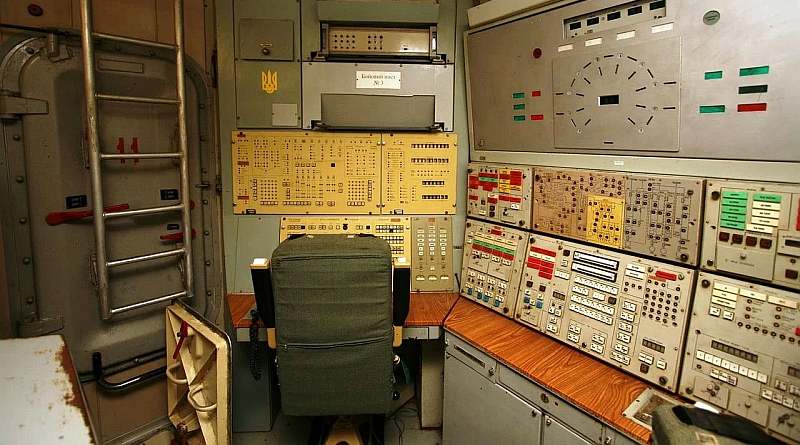
Ukraine could have resolved the nuclear disarmament issue even better, with even more benefit for itself. Because we had an even greater nuclear potential… But in Ukraine, the situation was influenced by the KGB, as the unreformed SBU was the KGB. I proposed to follow the example of the Baltic states, Poland, the Czech Republic, which expelled old KGB operatives and completely overhauled their personnel. To which Evgen Marchuk, who was appointed to head the SBU, remarked: “Yuriy Ivanovych, you simply can’t imagine how complex this structure is. If you start to dismantle it, it might tear our country apart from within and destroy independence.”
How so?
I don’t know. But former dissidents Levko Lukyanenko, Mykhailo Horyn, Stepan Khmara, who spent considerable time in Soviet prisons for Ukraine’s independence, seemed to take these warnings seriously and chose to move step by step. That is, they didn’t rush to uproot the KGB agents in the SBU.
Did the former political prisoners try to prevent Kravchuk from handing nuclear weapons to Russia? Or were they opposed by the communist majority in the early 1990s?
The communist majority, of course, opposed, but not in matters of nuclear disarmament. They supported this process. The Verkhovna Rada formed clear directives for the executive branch on how to proceed with nuclear disarmament. However, the parliament never set time frames. We were repeatedly told by the Americans that it was important for Ukraine to move towards nuclear disarmament and that they would allow as much time as needed. And the communists supported this strategy. The biggest proponent of maintaining our nuclear potential and exchanging it only for very favorable dividends was the late Ivan Stepanovich Plyushch.
And Kuchma? After all, a missile engineer, former director of Pivdenmash…
Kuchma did not support Kravchuk when he wanted the Verkhovna Rada to ratify both START-1 and the Treaty on the Non-Proliferation of Nuclear Weapons (NPT) simultaneously. (The signatories of this 1968 treaty were the nuclear club states: the USA, USSR, Britain, France, and China. Other states were recognized as non-nuclear. — Ed.)
Such ratification would have been a legal nonsense: under the NPT, Ukraine is recognized as a non-nuclear state, while under START-1 it undertakes obligations to eliminate nuclear weapons. So, whose weapons are we eliminating then? Perhaps Russian? This question I posed as the head of the special parliamentary group on nuclear disarmament. And Kuchma sided with our position. Seeing him, the parliamentary majority rejected Kravchuk’s proposal. He was caught off guard because in November 1993, the parliament ratified only START-1, and the NPT later. So, over time, these ratifications were separated.
You asked why the parliament didn’t stop Kravchuk… The thing is, in September 1993, Kravchuk announced early elections for both the parliament and the presidency, so the deputies were more concerned about whether they would re-enter the Verkhovna Rada. But you are right in saying that the parliament did not do enough by not stopping the executive branch. Because as a result, we got nothing, and Clinton only promised Kravchuk that Russia would provide us with free nuclear fuel for nuclear power plants worth 980 million dollars over two years.
At the same time, Russia sold 500 metric tons of highly enriched uranium to the United States for 12 billion dollars. This agreement between Russia and the USA was signed in 1993 and lasted for 20 years. During this time, the USA produced electricity from this uranium and earned nearly two trillion dollars in profit. But in the mentioned 500 tons, there is also a Ukrainian share — approximately 140 tons. And our benefit should have been calculated in amounts hundreds of times greater than 980 million dollars.
That is, the USA received super-profits, and Russia, having appropriated our uranium, pocketed 12 billion dollars, also gained access to the nuclear fuel market. It still controls 46% of this market. Because despite the sanctions, Russia sells this fuel both in the USA and in Europe. Europe and America could have bought such fuel from us. But Russia not only took our weapons, but also deprived us of opportunities for economic development from the start.
And all because Kravchuk was afraid of the specter of a new Chernobyl…
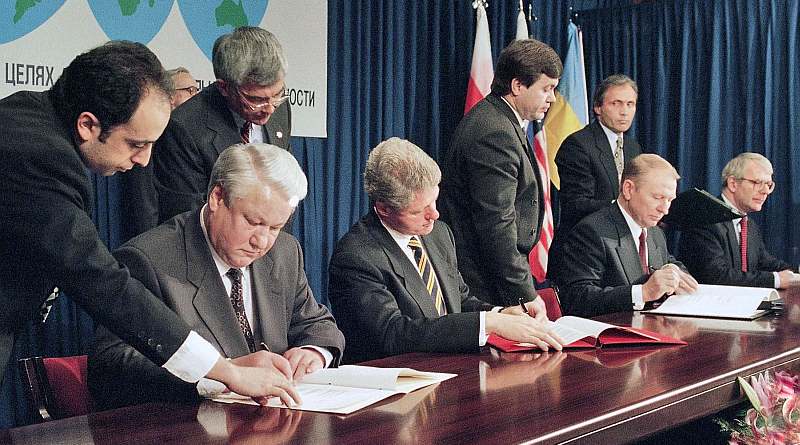
Not only Kravchuk. But also those who prepared the Budapest Memorandum. In particular, the Ukrainian Ministry of Foreign Affairs, whose delegation, led by Borys Tarasyuk, went to Washington in January 1993 and started talking there about some paper security guarantees, even though we were already offered security guarantees — NATO membership. The American press wrote at that time that the US State Department sent Tarasyuk away three times, unable to understand what the Ukrainian side wanted from him. And the Ukrainian side finally voiced that it needed not NATO, but some document that would convince deputies to ratify the START-1 treaty in parliament.
Well, the Americans thought, if you need a paper instead of NATO, we will write such a paper. Tarasyuk met with Bush, who was finishing his term, and he said that the USA could offer such a memorandum. These would be the norms for which each nuclear state is responsible according to the UN Charter — regarding non-aggression against a non-nuclear country. The Ministry of Foreign Affairs should have clearly understood that this is by no means a security guarantee. But the Ministry presented it to Kravchuk in such a way that this document would reliably protect us. Although the Budapest Memorandum was not even ratified by its signatories. So, it is essentially a declaration of intent and does not obligate legally.
So, the United States cannot even be reproached for failing to implement the Budapest Memorandum?
No. The USA did not attack Ukraine and did not encroach on its sovereignty, in full accordance with the memorandum. They changed their stance when they saw that Ukraine was not leaving Russia’s political orbit, so they turned their attention to Russia. America is not obligated to protect Ukraine’s national interest for us; that’s not done anywhere in the world. It was our responsibility. (The fourth point of the Budapest Memorandum, which was often referenced after the start of the full-scale invasion, states that the USA and Britain are committed to providing assistance to Ukraine if it becomes a victim of aggression. Neither the scope nor the form of assistance is specified in the memorandum. — Ed.)
“Some participants of those processes are already speaking with the Lord, but some are still alive and must answer”
The Budapest Memorandum was prepared during Kravchuk’s presidency, but it was signed by Kuchma. Did Leonid Danylovych feel uneasy about this document?
Tarasyuk had an audience with Bush, during which he shifted the NATO paradigm to the Budapest Memorandum paradigm. It took a year to finalize the document. The newly elected president Leonid Kuchma signed the memorandum. Therefore, yes, Kuchma bears responsibility for the text of the document he signed. But for all the events that led to this, it is the Ministry of Foreign Affairs and the previous executive branch that are responsible.
I know that Kuchma had significant doubts about the Budapest Memorandum. From his memoirs, it is clear that then French President Jacques Chirac strongly advised against signing this document. Meanwhile, Deputy Foreign Minister Oleksandr Chaly pushed Kuchma to sign it quickly, despite understanding the consequences as a lawyer. If we had retained nuclear weapons (even if stored away), the war would not have started. Moreover, NATO would have protected us.
In 2012, the level of support for joining NATO among Ukrainians was 12%. Honestly speaking, I didn’t find data for 1992. I don’t know if it was measured then. I assume that at the dawn of independence, such a level was even lower…
What you’re saying is Kravchuk’s favorite counterargument. He also said: “Yuriy Ivanovych, we won’t be understood.” And I replied that joining NATO is a long process. And until Ukraine meets the necessary democratic standards, boosts its economy, defines security priorities—basically, until it does everything the Alliance requires, there will be no accession. Poland, which declared a course towards NATO membership, took ten years to achieve it. And during that time, everyone worked tirelessly: the government, the judiciary, and the defense sector…
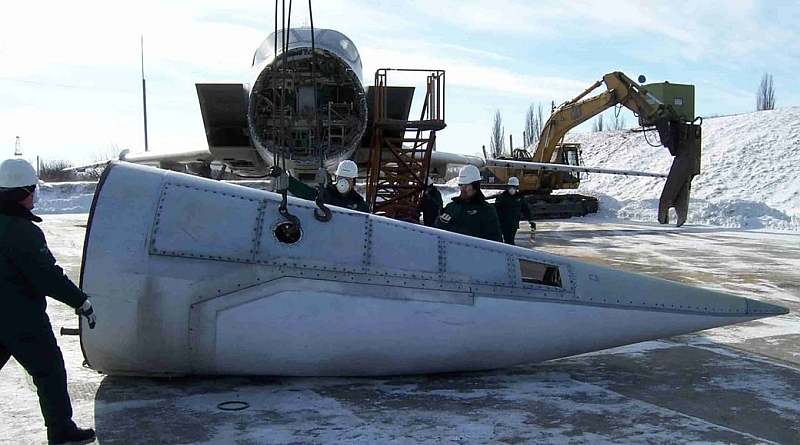
Are the Tu airplanes—that take off from Russian territory and carry cruise missiles to our borders—also handed over to Moscow as part of nuclear disarmament?
Of course. Some were handed over, and now they are bombing our cities. That’s why I keep insisting that a special parliamentary investigative commission should be established to determine who is responsible for such “disarmament.” Some participants of those processes are already speaking with the Lord, but some are still alive and must answer. And don’t say too much time has passed: in the USA, for example, they are still studying the circumstances of Kennedy’s assassination.
The aircraft were transferred as compensation for Ukraine’s energy debts to Russia. But here, too, there was a notable story. When the USSR collapsed, calculations were made to determine who owed what to whom, and it turned out that as of 1991, Ukraine had no debt obligations to Russia. However, these debts somehow appeared later and pertained to 1991. In other words, these debt obligations were fabricated because all the gas meters were always on Russian territory, and Ukraine had no way to verify how much gas was actually reaching us.
So, they imposed some debts on us to use them as leverage. Both in the situation with nuclear disarmament and during negotiations regarding the Black Sea Fleet. “You owe us,” the Russians always said. I tried to shift such conversations to the idea that they “owed us” for the nuclear weapons… At one time, Kuchma turned to Clinton, and Clinton put pressure on the Russians, who then announced that they were ready to write off $460 million of the “energy” debt for tactical nuclear weapons. But they ultimately wrote off only $230 million, and only under Tymoshenko’s government. That’s how they wrote off our non-existent debts!
But there’s another issue. Did you know that Ukraine was effectively paying Russia for the basing of the Black Sea Fleet? Not them to us, but we to them?
I didn’t know. It is known that the permission to base the fleet was used to pay off gas debts. This was part of, among other things, the so-called Kharkiv agreements signed by Yanukovych in 2010.
We could have received at least $5 billion from Russia for the fleet’s basing. Because that’s how it works worldwide: the one who rents pays the one who leases out the land. The US, for instance, pays Japan for the basing of military facilities. But what did we have instead? We received nothing from Russia, yet regularly transferred subsidies from the state budget to the Crimean budget. Because the presence of the fleet on its territory meant additional expenses, and these expenses were covered not by Russia, but by Ukraine.
At one time, I told Tymoshenko: “Yulia Volodymyrivna, we need to pay off the remaining energy debts to Russia. Yes, it’s unfair because there are no debts, but we need to pay what they demand and move on to completely different calculations regarding the fleet’s basing. We need to set them a real rental price that matches international practice.” To which Tymoshenko replied that it was impossible because Russia refuses to immediately accept all the remaining so-called “debt”, and they annually present us with only small amounts of debt obligations, which are not provided for by any documents. This theater of the absurd in relations with Russia continued until 2014.
And then the Russian-Ukrainian war began, and now we are talking, among other things, about the Russian “Oreshnik,” which theoretically can launch a nuclear strike on Ukrainian territory. Is that so?
From its territory, Russia can strike “Oreshnik” on Ukraine, but not from Belarusian territory, because Belarus is too close. A missile has a concept of a so-called “dead zone,” which is the distance that the missile simply skips, not stopping, and can only strike a target beyond that distance. “Oreshnik” flies 5,000 kilometers, but its dead zone is 700–1,000 kilometers. When the Russians launched “Oreshnik” at us, they started from Kapustin Yar (on the lower Volga, — Ed.).
However, if we talk about the likelihood of a nuclear war in general, I do not consider it. The Cuban Missile Crisis taught humanity something. Trouble can only occur when artificial intelligence intervenes in the control of nuclear weapons, as AI is already being used in the military sphere. There is another potential threat: a major accident at a nuclear power plant.
Let’s return to the Budapest Memorandum and its projection on the current situation. While the Trump administration did not withdraw from the negotiation process on the Russian-Ukrainian war, the U.S. offered us bilateral security guarantees for a period of 15 years on the condition of the withdrawal of Ukrainian troops from the Donetsk region. Clearly, no one is going to withdraw any troops, and that’s correct. But in the future: how do we build relations with the U.S. to no longer receive just a simple piece of paper instead of guarantees? Should such guarantees be ratified by Congress?
Listen, whether Congress ratifies something or not – it doesn’t matter at all. The only security guarantee for Ukraine, as the current war has shown, is the military might of Ukraine itself. But Europe must also have its power separate from the United States. And we can be a part of the European security system because Ukraine has already proven its ability to be one. And all the papers (waves hand)…
Want a clear example of what treaties are worth in the modern world? The US and Israel have signed bilateral agreements on military cooperation. But America starts its senseless war with Iran, from which it no longer knows how to escape. And tells Israel: stop the war with Lebanon because it is needed to end the war with Iran. Trump yells at Netanyahu and calls him insane. And it seemed, they had agreed so well, were such allies…
Another example: the US has an agreement with Taiwan, and what? Isn’t Trump ready to “give up” Taiwan to please Xi Jinping? The US has an agreement with South Korea, but recently they are asking Seoul not to “provoke” Pyongyang, because North Korea having nuclear weapons no longer provokes skepticism in the United States. In the past, Washington laughed at North Korea’s attempts to create nuclear weapons, but now they no longer laugh. In short, no state can guarantee the security of another state… The third nuclear potential in the world — that was our guarantee until we squandered it.
You’re not suggesting to restore it?
No. It’s not necessary now. Now our place is in the European security system. Europe should become the third global center of influence with its own nuclear umbrella and security system. Once there were two global poles — the USSR and the USA, now there are also two: the USA and China, and Europe should become the third player on the global stage. And move from being objects to subjects of world politics.
After all, we also signed numerous bilateral security agreements with Russia, and where are they now? No, I’ll say it again, you have to rely only on your own strength or, ultimately, on the strength of the coalition of which you are a part or plan to become a part.
Cover: Yuriy Kostenko. Photo: facebook/Yuriy Kostenko
