
American officials have informed European colleagues that some previously contracted arms deliveries will be delayed amidst the war with Iran.
This is reported by Reuters citing sources.
Five agency sources, speaking on condition of anonymity, said this will affect several European countries, including the Baltic and Scandinavian countries.
Reuters sources added that some of this weaponry was purchased by European countries under the Foreign Military Sales program (FMS), but has not yet been delivered. These deliveries are likely to be delayed.
The White House and the State Department redirected inquiries to the Pentagon, which did not respond to requests for comment.
These delays show how the war with Iran, which began with US-Israeli airstrikes on February 28, is limiting the supply of some critically important weapons and ammunition from the US.
European officials complain that the delays put them in a difficult position, Reuters writes.
Under the FMS program, countries purchase American-made weapons with logistical assistance and consent from the US government.
The Trump administration urged European NATO partners to buy more American-manufactured arms, particularly through the FMS program. Washington aims to transfer responsibility for Europe’s defense from the US to European partners.
However, such arms deliveries are often delayed, causing frustration in European capitals. Some officials are increasingly considering European-made weapons systems.
Meanwhile, American officials state that the weapons are needed for the war in the Middle East and accuse European countries of not aiding the US and Israel in opening the Strait of Hormuz.
Reuters also notes that even before the war with Iran, the US had already significantly depleted its weapon reserves, including artillery systems, ammunition, and anti-tank missiles. This occurred since Russia’s invasion of Ukraine in 2022 and Israel’s military operations in Gaza at the end of 2023.
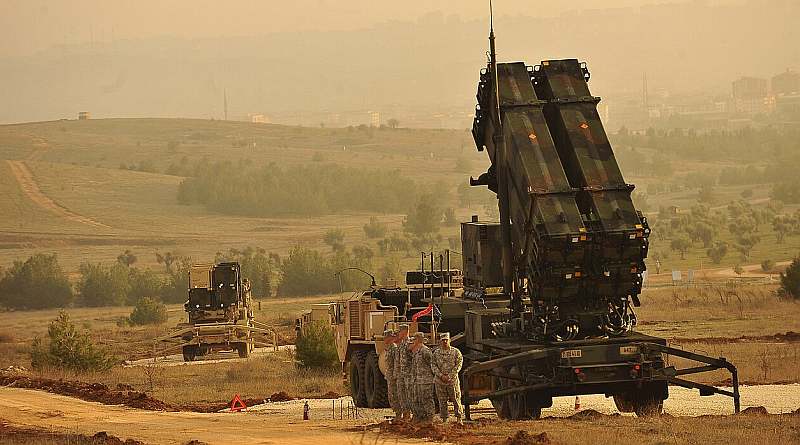
Since the beginning of the Iranian campaign, Tehran has launched hundreds of ballistic missiles and drones at Gulf countries. Most were intercepted using PAC-3 Patriot interceptors, which Ukraine uses to protect its energy and military infrastructure from ballistic missiles.
During a recent meeting with the Dutch Prime Minister, President Volodymyr Zelensky reiterated that Ukraine lacks missiles for air defense systems needed to repel Russian ballistic attacks.
Zelensky noted that Ukrainian air defenses shoot down 90% of targets, but there is a significant shortage of anti-ballistic missiles.

Previously, Russia conducted a massive protracted attack on Ukrainian cities, using over 700 rockets and drones. Most were shot down, but 12 missiles and 20 attack drones struck various locations. In Kyiv, Dnipro, and Odesa, 17 people died.
At the beginning of April, Trump threatened European allies to stop supplying weapons to Ukraine under the PURL program if they did not join the operation to unblock the Strait of Hormuz.
Previously, the Washington Post reported that the Pentagon is considering redirecting significant military equipment intended for Ukraine to the war with Iran.
Featured image: An American MIM-104 Patriot battery covering the Turkish city of Gaziantep, February 2013. Photo: Department of Defense USA
