
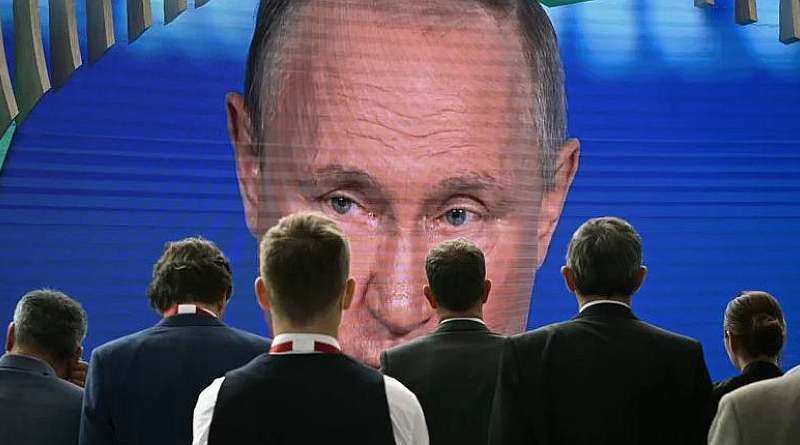

The process of “compressing” the ratings of Vladimir Putin and the “party of power” is turning from a statistical anomaly into a stable trend. When the numbers from VCIOM and FOM start showing negative dynamics, it’s not just a fluctuation, but a real manifestation of tectonic shifts beneath the Kremlin’s foundation. The current fall in trust in the president by 5 percentage points over a week (from 76% to 71%) and anti-records of “United Russia” are just the tip of the iceberg.
There are several reasons explaining why the “Teflon” image of power has begun to burn.
For a long time, Putin’s legitimacy was built on an unspoken contract: “we limit your freedoms, but guarantee safety and stability.” Events of recent years, including the tragedy at the “Crocus City Hall” and the inability to protect border regions, and eventually almost all of Russia, have nullified this point.
The Kremlin found itself in a trap of its own rhetoric: while the special services hunted for “extremists” on social media, the real threat came from a flank that was considered “cleared,” otherwise, what was the need for the “SMO”? In the mind of the average person, a question arose: if the “strong hand” cannot protect people in the capital, then what is its purpose? This psychological break was reflected in the FOM poll from March 27-29, recording a record drop in trust.
Simultaneously, the rating of “United Russia” dropped to a minimum since 2022. In Russia’s political vertical, the party has always been a “lightning rod” for negativity, but now it has become a toxic asset. In conditions of prolonged conflict and inflation, which even the official Rosstat cannot hide behind the “Olivier index,” UR is associated exclusively with prohibitive initiatives and rising prices.
Moreover, the ruling party has completely lost its independence, turning into a department of the presidential administration. For the voter, this means a lack of feedback. “United Russia” does not solve problems, it merely “talks them away,” causing a dull irritation even among previously loyal voters.
Now, even moderately patriotic Z-channels more often criticize the government’s social bloc, recording a gap between “victorious reports” on TV and price tags in stores. The militarization of the economy, the so-called “military Keynesianism,” provides GDP growth on paper but drains goods and personnel from the civilian sector.
Inflation is growing, and eventually, the rise in prices for basic products (eggs, oil, fuel) hits Putin’s most faithful electorate, namely retirees and public sector workers. In this context, the shortage of imported medicines and spare parts becomes an everyday reality that propaganda cannot overcome.
The deep people are tired not only of all current politics but also of the lack of an image of the future. All of the Kremlin’s ideology is now oriented to the past: “our grandfathers fought,” “traditional values,” “restoration of the empire.” For the youth and middle class in major cities, this discourse looks like an attempt to drag the country into a dusty basement of history.
As a result: a drop in ratings as a form of passive protest. People do not take to the streets due to the great fear of repression, but they “disconnect” from the system. When FOM records a drop in trust, it means that even those who were used to answering “yes” to sociologists have begun to doubt.
Putin’s security forces and officials are trying to contain the situation with new waves of repression and imitation of vigorous activity, but it is difficult to deceive sociology. The drop in Putin’s ratings to 2019 levels is a clear signal that the “resource of sacredness” of the leader is exhausted. The system relies on inertia and the power apparatus, but moral leadership is lost. If earlier Putin was “above the fray,” now he embodies all the problems from endless war to rising gasoline prices. And this process of erosion of trust is unlikely to be reversed by simple reshuffles in the offices or new slogans.
