
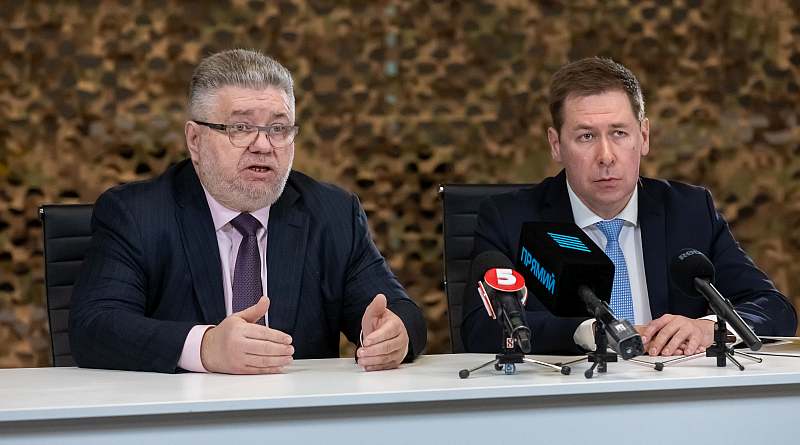
The European Court of Human Rights has accepted Petro Poroshenko’s lawsuit challenging the imposition of illegal sanctions for review
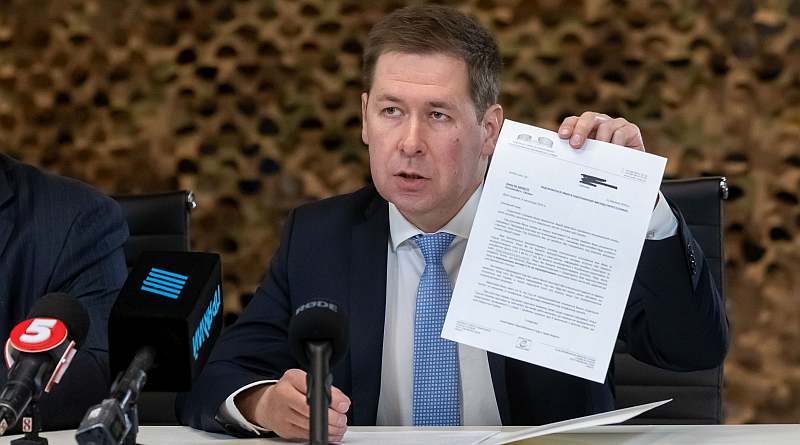
This was announced during a briefing by the lawyer of the fifth President, Illia Novikov. On the eve of the Supreme Court session on April 3, where a decision on Petro Poroshenko’s lawsuit is to be announced, lawyers also warn the authorities against pressuring the judges.
“The European Court of Human Rights has opened proceedings related to this case. The main lawsuit seeking the recognition of the sanctions as illegal has not yet been considered by the Supreme Court of Ukraine, but the case as a whole, since it also concerns our notice submitted to the Grand Chamber of the Supreme Court, questions whether it is normal to be unable to suspend the decree on sanctions. They responded—no, presidential decrees cannot be suspended for anything. Currently, the ECHR has opened proceedings in a very unusual manner, as such cases are not usually considered at this stage, which they informed Petro Poroshenko’s representatives about,” Novikov said.
“This means that this case is already under review by the ECHR, which indicates increased attention to our situation,” emphasized the lawyer.
As known, Petro Poroshenko is challenging Volodymyr Zelensky’s decree on illegal sanctions in the Supreme Court. The Supreme Court has also included in the case materials the decision of the ECHR from October 16, 2025. The European Court of Human Rights concluded that there are systemic problems in the Ukrainian sanctioning system, particularly the lack of proper judicial control over the authorities’ sanctioning decisions and justification of the reasons for imposing sanctions, even in the context of war and under the guise of national security.
Earlier, a representative of President Zelensky in the Supreme Court acknowledged that changes were made to the signed Decree enforcing the NSDC decision on sanctions against Poroshenko, which she called “technical amendments.” Representatives of the authorities also stated that the sanctions against Poroshenko were imposed preventively, “for educational purposes.”
On July 31, the decision of the Vinnytsia District Administrative Court came into effect regarding Petro Poroshenko’s lawsuit against the NSDC apparatus and the NSDC secretary. The court noted that current Ukrainian legislation does not provide for the possibility of correcting mistakes or making changes to legal acts, including decisions of the National Security and Defense Council of Ukraine and presidential decrees, outside the established procedure for adopting the relevant act.
A representative of President Zelensky also confirmed during the session that the National Bank of Ukraine unlawfully imposed financial restrictions against Petro Poroshenko.
Lawyers warn the government against pressuring Supreme Court judges
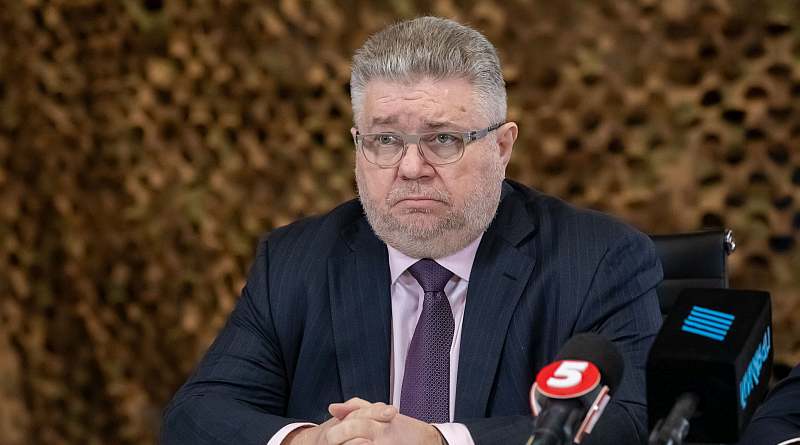
Petro Poroshenko’s lawyers stated that the authorities might be applying pressure on the Supreme Court judges, who are set to announce the decision on April 3 regarding the fifth President’s lawsuit over unlawful sanctions. They also reminded that the authorities’ representatives are deliberately dragging out the court process, which began more than a year ago. In theory, the case should have been resolved in two months, the lawyers claim.
“The Code of Administrative Procedure requires the authority, once a citizen appeals to an administrative court, to immediately provide all evidence of the legality of its actions. Thus, in our case, President Zelensky should have presented his justifications 14 months ago, after he implemented this unlawful sanction decision, explaining why he did so until now. We understand that President Zelensky had no legal grounds for imposing sanctions on Petro Poroshenko then, nor does he now,” states Golovan.
“Both President Zelensky, his circle, and those who self-represent him in the administrative court understand their position is losing, that the actions in imposing sanctions were unlawful, and therefore their only option is to delay the process,” says the lawyer.
“Unfortunately, we are not convinced that the meeting we have scheduled for April 3 will take place. Observing the tactics of our opponents, we are confident that something will happen. We don’t know yet what it will be. Someone will fall ill, there will be an air raid alert, or the power will go out. I hope I am wrong, but we are not in a situation where we can simply hope that everything will be fine. We are publicly addressing the fact that there was to be a meeting on April 3,” states Poroshenko’s lawyer.
“We have reasons to fear that there may be pressure on the court. Understanding that the president cannot expect to indefinitely delay this process, we fear that actual pressure may be exerted on the judges. The situation is currently not just about dragging out the process and avoiding a loss by avoiding a court decision, but actual pressure may occur. It will be a certain indicator for us if the process is again moved from the main hall, which allows the placement of attendees, press, and diplomats who come to this process. If it is moved again to a small hall, which physically cannot accommodate everyone, and if we hear again that there are ‘valid’ reasons for a break or postponement, society and the media will critically perceive such statements. Because this is a marker of the abnormality of this process. It concerns not only Poroshenko but the overall situation in the country,” emphasizes lawyer Ilya Novikov.
“Sanctions were initially presented by President Zelensky as primarily an instrument of international influence. We depend on our partners, on the Europeans in the question of whether the sanctions are effective or merely decorative. And the sanctions against Poroshenko, the decree on the implementation of the NSDC decision contains a clause that the Ministry of Foreign Affairs of Ukraine is obliged to inform partners and ask them to duplicate the sanctions. The sanctions against Poroshenko have not been duplicated and will never be duplicated. And the process now ongoing in court is being monitored, and it is being watched. Currently, sanctions are just a decoration that can work as an instrument of pressure on internal opposition,” Novikov states. He also reported that the European Court of Human Rights accepted Petro Poroshenko’s lawsuit for consideration.
“The main lawsuit regarding the recognition of the sanctions as illegal has not yet been considered by the Supreme Court of Ukraine, but the case as a whole, since it also concerns our remark, which we submitted to the Supreme Court, is whether it’s normal that the decree on sanctions cannot be suspended. We were told—no, presidential decrees cannot generally be stopped. Currently, the ECHR in a very unusual manner, as such cases are usually not considered at this stage, has opened proceedings, as informed to Petro Poroshenko’s representatives,” noted Novikov. “This means that this case as a whole is already under consideration at the ECHR, indicating increased attention to our situation,” the lawyer stressed.
“When the world observes such processes of ours, it understands that there is still a long way to the implementation of the rule of law in Ukraine,” concludes Ihor Holovan.
