
Today — Kostyantynivka Direction
1. Enemy Forces and Means
The enemy (Russian forces) continues active offensive actions in this direction aiming to eliminate the Kostyantynivka defense area of the Ukrainian Armed Forces, capture Druzhkivka, and reach the near approaches to Kramatorsk from the south and southeast.
The main forces (units) of the enemy advancing on the Kostyantynivka direction are organized into two tactical groups (TG) “Dzerzhynsk” and “Bakhmut” respectively. They are composed of parts and formations from two military groupings (MG) “South” and “Center”. They are reinforced by separate formations from the MG “Dnepr”, specifically:
TGr “Dzerzhynsk”
– 4th Separate Motor Rifle Brigade (MRB) from the 3rd Combined Arms Army (CAA) MG “South”;
– 103rd Motor Rifle Regiment (MRR) of the 150th Motor Rifle Division (MRD) from the 8th CAA MG “South”;
– 10th Tank Regiment (TR) 20th MRD from the same 8th CAA MG “South”;
– 78th MRR 42nd MRD from the 58th CAA MG “Dnepr”;
– 54th MRR 6th MRD from the 3rd Army Corps (AC) MG “South”;
– 1194th MRR 3rd CAA from MG “South”;
– 1219th, 1436th, and 1465th MRR from the 51st CAA MG “Center”;
– 20th and 155th “consolidated” MRR, manned by personnel of the Russian Navy;
– 77th Separate Motor Rifle Regiment (SMRR) from the 7th Military Base (MB) 49th CAA MG “Dnepr” (Gudauta, Abkhazia).
TGr “Bakhmut” (effectively the main forces of the 3rd Army Corps)
– 72nd MRB from the 3rd Army Corps MG “South”;
– 1008th, 1307th, and 1442nd MRR 6th MRD also from the 3rd Army Corps MG “South”;
– 89th TR 6th MRD again from the 3rd Army Corps MG “South”.
Additionally, the main forces of the 70th MRD 18th CAA MG “Dnepr” are operating towards Chasiv Yar — Druzhkivka, and part of the forces of the 20th and 150th MRD 8th CAA MG “South” are operating towards Sofiivka — Druzhkivka, possibly reinforced by several units of the 120th Naval Infantry Division (NID) of the Baltic Fleet (BF). This was formerly the 336th Separate Naval Infantry Brigade (SNIB).
From the mentioned composition of enemy forces and means, it becomes evident that the main efforts of the Russian command on the Kostyantynivka direction are currently concentrated along the strip of the 8th CAA MG “South” (in other words, in the direction of actions of TGr “Dzerzhynsk”).
2. Current Situation
It is clear that the Russian command continues to implement its plan, which involves flanking the Kostyantynivka defense area of the Ukrainian Armed Forces from the east and south, as part of (a phase in) the implementation of a broader (operational-tactical) idea, regarding enveloping the entire agglomeration of Kostyantynivka-Druzhkivka from the east and southwest.
Currently, the enemy is persistently trying to expand its tactical penetration into the southeastern part of Kostyantynivka (3rd AK, TG Bakhmut) and break through into the western (central) part of the city (on the right flank of the 8th CAA, TG Dzerzhynsk), conducting active offensive/storm actions in the following directions:
– Predtechyne – Kostyantynivka;
– Oleksandro-Shultyne – Kostyantynivka;
– Kleban-Byk – Pleschiivka;
– Berestok – Kostyantynivka;
– Yablunivka – Illinivka;
– Yablunivka – Stepanivka.
As of the evening of March 31, 2026, they have managed:
– To consolidate in the areas of Predtechyne and Stupochky (3rd AK).
– To infiltrate quite a number of small infantry groups (including UAV operators) into the southeastern part of Kostyantynivka and consolidate in the “Dacha” area. Meanwhile, the enemy is likely already fighting for the railway station area and persistently trying to advance north of the T-0504 road, along Bakhmutska and Toretska streets (8th CAA).
– Advancing towards Yablunivka — Berestok, they likely occupied the latter (8th CAA).
– The presence of separate small enemy assault groups was also recorded in the Illinivka area (in the Naberezhna Street area), as well as to the west of it (8th CAA).
– To engage in battles for Stepanivka, breaking through to it from the south (8th CAA).
In turn, attempts by Russian forces to advance north of Rusyn Yar, as well as towards Sofiivka — Novopavlivka along the road to Druzhkivka, have obviously not yielded significant results. Similarly, their attempts to advance towards Chasiv Yar — Virolubivka and south of the railway line, aiming to reach the Stinky — Mykolaivka — Chervone — Podilske area (west of Chasiv Yar), have also been unsuccessful so far.
Moreover, it has turned out that the advance of forward Russian units on the right flank of the 8th CAA’s zone towards the western (central) part of Kostyantynivka is significantly complicated from the flank, as the Ukrainian Armed Forces continue to hold several positions in the Pleschiivka and Ivanopillia area.
Currently, the command of the Russian 8th CAA is attempting independently and with reinforcements to significantly expand its penetration in the Berestok and Illinivka areas, conducting active assault actions along the eastern bank of the Klebanbytske reservoir and attacking Stepanivka from the south.
As I see it, the further “scenario” of enemy TG Dzerzhynsk’s (8th CAA) actions is clear. In the near future, its command will likely attempt to merge its right flank with the left flank of the 3rd Army Corps in the area of the Kryshtyn River’s bend (south of the railway station), thus forcing the Ukrainian Armed Forces, under the threat of encirclement (blocking their supply routes), to retreat completely not only from the Pleschiivka and Ivanopillia areas but also from the entire southern part of Kostyantynivka.
Thus, the enemy apparently intends to start intense battles in the “industrial zone” in the south of Kostyantynivka (the district of the Kostyantynivka Technical College of the Luhansk National Agrarian University), Myroshnychenko Street, and so on, as the positions of the Ukrainian Armed Forces in this area significantly hinder their further advance on both the right flank of the Russian 8th CAA and the left flank of their 3rd AK, which is stalled in battles in the southeastern part of the city.
I think that in this case, the Russian command will try to use its favorite tactic for storming more or less significant populated areas—covert massive infiltration into the borders of such localities with their small and “miniature” infantry groups. For this, the command of both Russian task force groups will need to amass a sufficient quantity of assault infantry.
It’s worth noting that at least two factors may contribute to this, namely:
– In a few weeks, with the onset of foliage cover, Russian command will be able to move these small infantry groups closer to the city relatively unnoticed.
– Moreover, in this regard, it should be noted that their advanced units and subdivisions are already directly on the outskirts of the city.
3. Prospects
From an operational-tactical point of view, it is likely worth highlighting several circumstances that may significantly affect the further development of the entire situation in the Kostiantynivka direction:
– Obviously, the Russian command quite clearly understands that the main part of the material and technical support (logistics) for Ukrainian units fighting in the Kostiantynivka defense area is carried out along the conditional axis of Kramatorsk — Druzhkivka — Kostiantynivka. Therefore, they are actively attempting to prevent this, primarily by increasing their capabilities concerning fire impact on it (including the active use of tactical zone strike UAVs).
This is why numerous attempts by the enemy to move their units and UAV groups as close as possible to this axis are recorded, using the territory under their control for this purpose (sometimes despite the risk of their destruction by Ukrainian means, even up to the battle formations of their frontline assault units). This primarily concerns the flank areas and zones concerning this “artery.”
– However, in the context of executing a more extensive task, namely the capture of Kostiantynivka along with Druzhkivka, the Russian command may quite possibly “change” the entire methodology to achieve this goal. Specifically, by shifting their main efforts to more distant flanks of their strike tactical groups.
In case the battles for Kostiantynivka itself drag on without visible and obvious results for them, the enemy (Russian command) may do this by sharply increasing their own offensive activity in the area of Chasiv Yar and in the direction of Sofiyivka — Rayske.
In other words, instead of a frontal and, obviously, very bloody assault on Kostiantynivka from the south and east, they may focus on bypassing it in directions converging at Druzhkivka (which is already beyond Kostiantynivka). Moreover, this would significantly increase their chances to block the entire logistic axis of the Ukrainian Armed Forces in the Kostiantynivka area, not only with UAVs but also physically on the ground.
– Yes, this is precisely the option chosen by the Russian command regarding the Kostiantynivka direction, which I have previously referred to as the “big circle” in my reviews. However, at this moment, the so-called “small circle” remains their priority, primarily bypassing and encircling Kostiantynivka itself.
The reason for this is also obvious—the Russian command currently simply does not have enough forces and means to implement such a “big” decision. Well, this is not surprising since currently, the Southern Military District (and, accordingly, its main striking force in the form of the 3rd Combined Arms Army) is persistently breaking through the defense of the Ukrainian Armed Forces on the Sloviansk direction.
In turn, the UV “Center” is up to its “testicles” in battles on the Dobropil direction, having not yet “fully” captured Pokrovsk and Myrnohrad.
Moreover, the Russian command simply has no other options for additional forces and means to implement such a decision on the Kostiantynivka direction (especially immediately). Furthermore, it is worth remembering that it was forced some time ago to withdraw a significant part of its 120th division to the Southern operational zone to try to “stabilize” the situation on the Novooleksandrivka direction.
Overall, strike tactical groups capable of more or less rapid advancement in the tactical zone, not to mention larger troop formations for deeper advancement, do not appear “out of thin air.” They need to be formed, delivered to concentration areas, moved to deployment starting points, and all this must happen covertly and comprehensively from air cover to the continuous supply of basic logistical items.
Moreover, for a future offensive (or at least a significant increase in the intensity of attacking/assault actions), these logistical items must be ACCUMULATED in sufficient amounts, moved to the first echelon (as close as possible to the “consumer,” i.e., those same strike groups and troop formations), and a number of other necessary preparatory measures must be undertaken. Most importantly, there must be sufficient troops to create these very strike groups and troop formations.
Parts and units “badly battered” in previous battles with a “pronounced” shortage of personnel and basic types and kinds of their standard weapons and military equipment (WME), to put it mildly, are not suitable for these purposes. Simply because their actual combat capability level in such a case does not meet the volume and content of offensive tasks (especially if it’s not just about a tactical level, but something “deeper”).
In this sense, I fully admit two things, namely:
– In the fall-winter of 2025-2026, the Russian command probably managed to “scrape together” some strategic reserves. An indirect confirmation of this may be their obvious accumulation during this period of a significant number of WME of basic types in their rear. In this sense, I personally do not believe in the option of “preparing for an invasion of the Baltic countries” and consider it rather a “strategic level disinformation” created to mask the process of significant reserve accumulation. Although, of course, it might be the opposite, but with very little probability (in my opinion, the probability here could be a “70 to 30” ratio in favor of a “major strategic offensive” on the Ukrainian front).
– The Kostiantynivka direction itself (as well as the Lyman and Sloviansk) for the upcoming summer-autumn campaign of Russian troops is obviously quite relevant since it is directly related to holding under Ukraine’s control the last large urban agglomeration of the Donbas—Sloviansk-Kramatorsk. In other words, to the so-called “ultimate demands” announced by our opponent regarding the “theoretical” end of the war, which he can declare as his “victory” with minimal chances of successful “foreign policy justification.”
Based on all the above, the likelihood of a scenario where the Russian command decides to implement the “large option” in the Kostyantynivka direction remains quite high. Simply because it cannot continue to postpone the capture of Kostyantynivka and Druzhkivka in the context of forthcoming “major battles” for Kramatorsk and Sloviansk.
At the same time, it is worth emphasizing that the option where part of the Russian troops from the “South” and “Center” groups engage the Ukrainian Armed Forces in stubborn offensive battles near Kostyantynivka, while their strike groups deploy on the flanks for a “thrust” to Druzhkivka and advance to the near approaches to Kramatorsk from the south and east, seems quite likely to me.
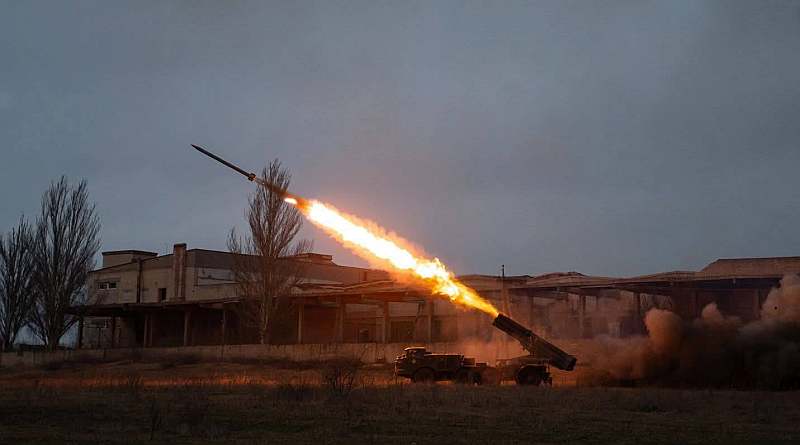
Photo: 26 Artillery Brigade named after General-Khorunzhyi Roman Dashkevych
