
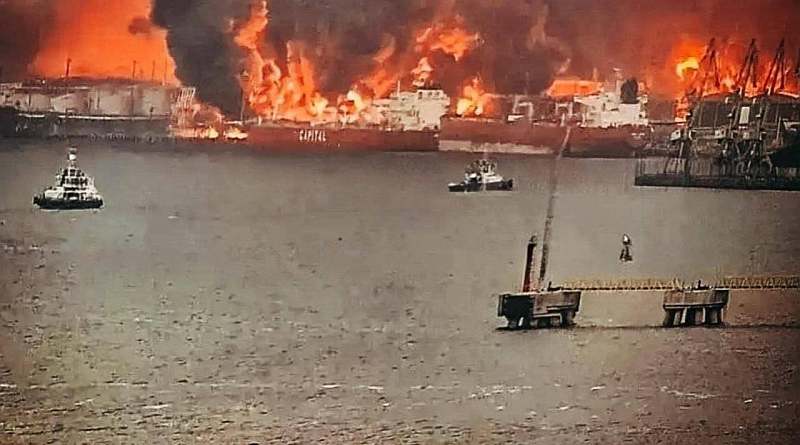
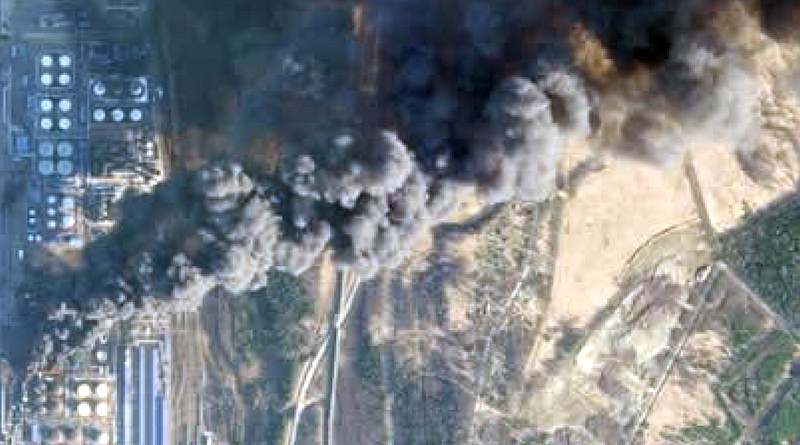
Well, two of the largest terminals in the Baltic have been taken out — Ust-Luga and Novatek. A huge plume of smoke can be seen from space. Fires on the docks, particularly on the light oil product fill lines (oil, kerosene, diesel fraction). Tankers are burning at anchorages. Transshipment halted.
To give you an idea of the scale: the Ust-Luga complex processes about seven million tons of condensate per year. That’s millions of dollars in export revenue lost daily while they try to extinguish and restore the pipes.
Our most large-scale and successful attack on their logistical infrastructure. And we repeated it today to solidify the result.
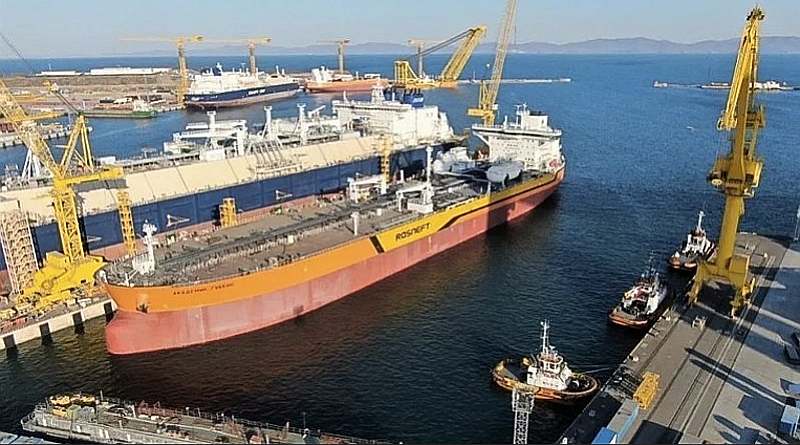
The patrol icebreaker “Purga”, which took on water and lay on its side, is a blow to Moscow’s ambitions in the Arctic. Admiral Shipyards and the plant in Vyborg are under enemy fire. Hello, “special military operation according to plan,” what about bases in the Arctic and the Northern Sea Route for 100 million tons of cargo?
I hope Norway, Sweden, and Finland appreciate the math: there’s no need to spend 50 billion dollars on new flotillas and squadrons. It’s enough to invest a few hundred million in guided munitions and Ukrainian ballistics — and the Russian fleet will rest at the dock like the Black Sea Fleet.
In the Black Sea, a shadow fleet oil tanker Altura was attacked. The vessel under the flag of Sierra Leone, according to tracking, was headed from Novorossiysk to Istanbul. A tanker with a million barrels of Urals oil (that’s approximately 65–70 million dollars) — a maximally lucrative target — is now drifting with a damaged stern.
In parallel with the Russian shadow fleet (almost 600 rusty tubs), there is a threat of interception in the English Channel: the United Kingdom has authorized the stopping, inspection, and confiscation of vessels. Logistics are becoming golden: the freight and insurance of shadow tankers already consume up to 30% of the cargo’s value.
Events are snowballing. Each one, like ripples on water, impacts the Russian economy. The model they thrived on for 50 years — sending gas and oil through pipelines to premium Europe (over 150 billion cubic meters of gas annually) — is dead. Gazprom has turned from a main cash cow and geopolitical weapon into a loss-making black hole, closing the year with a net loss of 629 billion rubles — for the first time in 25 years.
Shifting these volumes to Asia is physically impossible — there are no pipelines. The “Power of Siberia” pumps a meager 22 billion cubic meters, and China is in no hurry to build “Power of Siberia-2” at its own expense, demanding domestic Russian prices.
Add to this the paralysis of international transactions. Even if they sell oil to India, they receive billions of rupees (equivalent to nearly 40 billion dollars at the peak), which remain stuck in Indian accounts — they can’t be withdrawn or freely converted. Perhaps they can buy spices and medicines with them.
Due to the threat of secondary sanctions from the USA, payments are delayed for months and even loyal Chinese, Turkish, and Arab banks block them. Trading reverts to barter and gray crypto schemes, where transaction fees reach 5–7% and eat up all the margin.
And we strike. Methodically striking with drones that fly over 1000+ km, targeting the established flow in the Black Sea region and now in the Baltic (which accounts for 40% of their maritime oil exports).
Harsh times call for harsh decisions. Want to advance? We will mobilize 30,000 people a month, lower the conscription age, hire legionnaires from Latin America and Africa, ramp up production of over a million FPV drones and hundreds of thousands of mines. You will hang on wire in anti-tank ditches and lose an entire army corps (plus hundreds of armored units) over the winter. For the sake of a seven-kilometer advance. You will take ruins in a year, with a new line of defense behind them and even more trained pilots.
Want to play total mobilization by turning off Telegram and YouTube for the population (consuming the key interest rate of the Central Bank at 16–20%, which practically kills civilian business)? Okay, we will continue targeting oil and gas transshipment, cutting your revenues. The National Welfare Fund, the liquid part of which has halved, will soon be reduced to zero.
Next are a series of harsh budget sequestrations, the printing press will be turned on, and there will be a need to pawn your mom’s jewelry for Chinese food. Maybe you’ll manage to capture the ruins of a few more cities. But they don’t have millions of shells, drone manufacturing plants, or “Flamingos” or “Neptunes,” nor people.
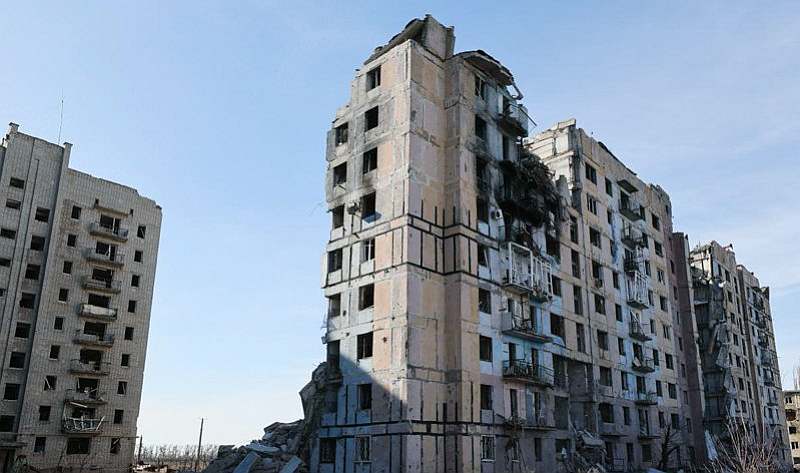
There’s only broken bricks, mines, and guaranteed HIMARS and ATACMS strikes for any attempts to build something there, as it happened at DAP.
Want to go into deep defense? We are increasing the production of missiles that punched a 30-meter hole in the Iskander production workshops (which is why you are now able to launch a miserable seven pieces in ten days instead of dozens). We are testing our own ballistics and scaling up drones — in our salvo, there are now no fewer than your “Shaheds.” And we will expand solid fuel production in Denmark. Electronics are civilian “scatter” — you won’t hit them with rockets. We’ll arrange a city war — and then not only 450,000 people in Belgorod will sit without electricity and heat.
You have already lost access to premium Western technologies. Replacement is exclusively through China. But this is a strict vendor lock-in. The Chinese understand perfectly well that Russians have nowhere else to go: they have captured over 60% of your car market, selling cars two to three times more expensive than at home. They sell third-tier hardware with wild markups, refuse to transfer technology, and take resources with a 30% discount. A complete primitivization is taking place: cars are produced without modern systems (ABS, airbags), planes are assembled by cannibalizing 20–30% of the available fleet. This is a 20-year rollback for infrastructure.
You have some place to retreat to — 1/7 of the land. Make it so that 20% of your population doesn’t live without central sewage, with toilets outdoors, where a janitor’s salary in the EU seems like an unattainable dream. We have nowhere to retreat. So the more you press us, the more blood is spilled, the more will arrive in response, and mobilization in Ukraine will intensify.
Want to negotiate a ceasefire along the line? Welcome to the table. No? Then burn in hell. Burn in hell like Ust-Luga.
On the cover: Fire at the Ust-Luga port on March 25, 2026. Photo: Dnipro Osint
