
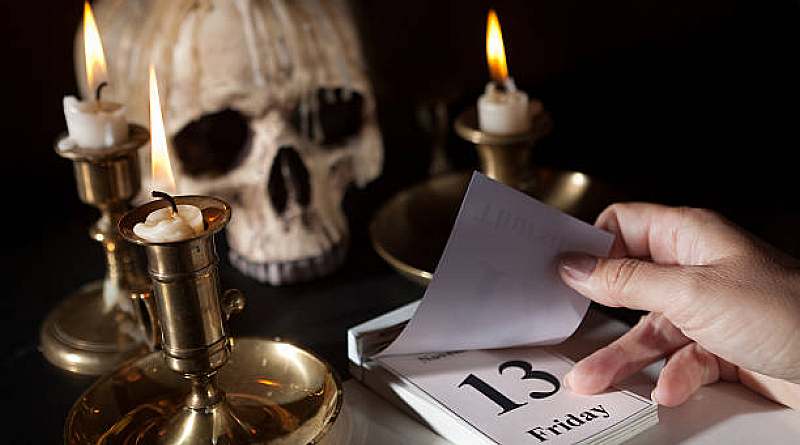
Sometimes I’m a skeptic. And sometimes an agnostic. In the broad sense. In a state of balance, I don’t believe in astrology, subtle body, homeopathy, or tarot cards. But when things get tough, I feel a weakness in my convictions: like “well, maybe there’s something to it?”.
I have a friend: an adult, skeptical, with a physics and mathematics education, IQ around 160. His stepdaughter has an incurable disorder, and he was advised to see some bioenergetic healer. He went for a consultation and brought back an expensive necklace for the child made from specially charged wood. Of course, nothing changed, and now he prefers not to mention it, but such a fact did happen. In the consciousness of each of us, literally everyone, there is a small area for mysticism.
The need for mysticism, embedded in a person either by heredity, psychotype, or cultural tradition, is satisfied in various ways, and practitioners of one confession or another do not necessarily fully satisfy their quest. The Church has tried to partially eradicate, partially use this dualism, this hidden competition for centuries: for instance, witch hunts are both a struggle for monopoly over the magical and a confirmation that uncontrollable magic does indeed exist, albeit under the devil’s patronage.
At the same time, religious practices are religious precisely because they, alongside the magical component, cultivate ethical guidelines, coexistence rules, priorities, and a worldview in general. Religions can be liked or disliked, they can be followed or not, but it is always possible to intellectually separate rules from mysticism. You leave out the communal prayer at the table before a family meal and focus on Protestant ethics. You abstract from the five-time prayer towards Mecca and separately consider the strict sharia prescriptions. Few parishioners would agree with such a speculative operation, but it at least allows one to distinguish any worldview from superstition.
Superstition is an attempt to find solid ground when everything around is uncertain and fluid. Not knowing where a threat is lurking — carry a talisman, even if it’s a chicken leg or a bracelet. Not imagining where the stock price will leap — consult the stars, at least check the horoscope. The age of modernity seemed to have pushed delving into the supernatural as a way of communicating with reality far into the past. But rationality is not for everyone, knowledge requires effort, and problems have to be solved here and now, and they do not fit into a graph on millimeter paper (if anyone remembers what that is) or into an Excel table. This contradiction manifested itself in all its glory during the late Soviet era: the ordinary engineer, indoctrinated atheist, and materialist, massively turned to reading Blavatsky, Roerichs, and seeking wisdom in the legacy of ancient India, China, Tibet, trying to recreate hypothetical pagan relics at his feet, attempting to find a guide in a life he did not control. It would be easiest to explain the mysticism epidemic as a result of poor Soviet education, but in the West, synthetic religions and exotic New Age blossomed simultaneously as a protest against the strict determinism of the previous era with its clearly drawn, once and for all, cause-and-effect relationships.
However, we should not confuse the awareness of the vastness of the universe, quantum uncertainty, and other intimidating concepts for humanities scholars at the turn of the millennium with elementary ignorance. The lack of education that was apparent during Soviet times has now blossomed in unprecedented scales. The aforementioned engineer with a degree from KPI in the late eighties was keenly listening to Anatoliy Kashpirovsky’s spells on television and charging water in jars under the influence of Alan Chumak, which called into question his previous credit in materials resistance and electrodynamics. Ten years later, slightly worn out, he was buying Yu-Shinse pyramids named after Dmytro Gordon and reading predictions from the clairvoyant Naina. But this is nothing compared to the modern Ukrainian industry of astrologers and tarot readers, numerologists and neurographers, certified specialists in quantum psychology and human design. Because if in the late USSR, the share of “engineers earning 120” (referring to a monthly salary in rubles) comprised an incredible 15-18 percent of working city dwellers, today they have been replaced by marketers and lawyers, graduates of today’s so-called universities — feel the difference. I’m not even mentioning the level of stress due to shelling, losses, and separated families here.
Now imagine the confusion of former lawyer Yuriy Rybchynsky and former producer of “Premonition,” when he finds himself practically managing a large European country during wartime — it’s enough to drive anyone insane! There is no knowledge, no practical skills, no understanding of the complexity of a gigantic machine in a state of turbulence, and most importantly: no personnel, no personnel! A normal corporate head would immediately hire an international recruiting company, but the actual vice-head of a state does not have such an option. You might end up turning to a fortune teller, and how would you act, honestly?
However, we shouldn’t get carried away with self-humiliation; we are not alone in this universe, we are not even the first here. In the USA, the “esoteric services” market is estimated at an annual 4-5 billion dollars, considering the accompanying “merch” (crystal balls, crystals, cards, meditation apps, etc.) — this is two orders of magnitude more than ours. The surge in mysticism in recent years is partly explained by changing attitudes towards education. If until recently, a university diploma was considered in the States as an unconditional starting minimum for a decent career, today college dropouts are in vogue (bright minds who left college), they own leading companies and dictate their vision to the world. Mark Zuckerberg, whom we know as Zuckerberg, Bill Gates, Alexander Wang, and dozens of other big business leaders made this choice and feel no worse than MIT doctoral graduates. Let’s not forget about the tragic decline of higher education in “first world” countries: amidst waves of wokism and pro-Palestine sentiments that once again place conviction over knowledge, demagoguery has replaced intellectual daring, and the prestige of universities has critically fallen, and this is not the whining of offended right-wingers, but a sad statement. Now, the ignorant not only develop neural networks but also promote the agenda of technofascism; that’s just how their minds work.
When evaluating the demand for the irrational, it is important to distinguish between attempts to comprehend the complexity of life and the desire to simplify everything to the level of a participant in the show “The Bachelor” (a reminder, it’s an American franchise). A sober minority is already predicting the onset of new Dark Ages, the decline of science (except for narrow fields related to IT), and rationality, the dominance of artificial intelligence up to the enslavement of humans, and so forth. I don’t want to encroach upon Kurzweil’s laurels, but I believe that intelligence, as such, will always be in demand; AI, no matter what, will aid in understanding and create a new alliance between humans and machines, and humanity as a whole (!) will not become dumber. However, a certain progress in stupidity—more precisely, a regression—will be observed for some time. Whether we indulge or resist the downward tendencies in the segment of civilization we control depends on us. This includes supporting the elimination of so-called fake universities (and building new centers of intelligence, which are met with little enthusiasm today), revising the foundations of the hypocritical academic world that breeds disdain for scholarship, boycotting charlatans, and participating in collective mockery of cultural phenomena like “Battle of the Psychics.” So that the chicken claw becomes cringe-worthy among as wide a population as possible.
In the end, it’s not fiction that Ukraine, after the war, has the chance to become a trendsetter. Of course, if efforts are made. You may say I’m a dreamer.
