
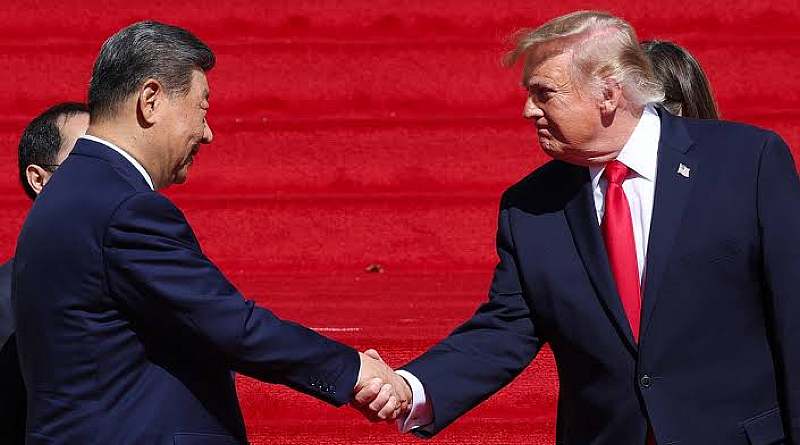

The historic meeting of the leaders of the two largest economies in the world attracted the attention of the global community, as the outcomes of the talks determine the direction of international relations for years to come.
During the official events, the American side emphasized the historic significance of the moment, and the American leader openly acknowledged the unique nature of the dialogue that had developed. Beijing received a significant opportunity to strengthen its position on the world stage when actions by the White House weakened the usual institutions of American global influence.
As Washington reconsiders traditional alliances, Beijing is redirecting major resources towards high-tech developments and artificial intelligence. This arrangement allows the Chinese leadership to show outward respect to the American counterpart while maintaining complete freedom of action in strategically important sectors.
Analysts paid special attention to the statement that Xi Jinping became the first Chinese leader to make a second official visit to the United States. This fact underscores the special nature of interaction between the states, where personal contacts between top officials become the primary tool for resolving complex contradictions.
The US leadership emphasized the existence of a solid friendship that was established between the leaders of the two countries since 2016 and noted significant progress in Russian-American relations, which directly affect overall international stability.
The parties confirmed the key role of the Trade Council, whose activities are aimed at forming balanced trade ties between the powers. The agenda included critically important topics, including issues of global security, the development of advanced technologies, and the regulation of artificial intelligence.
The American leader expressed confidence that the decisions made during the visit can guarantee peace and prosperity for many centuries to come, recalling the successful experience of joint efforts by the US and China against common enemies during World War II, and summarized the readiness to continue joint work to ensure a bright future for both states.
Many political analysts rightly note that such negotiations create ideal conditions for the further expansion of the Chinese economy, as internal transformations in the US political system distract Washington’s attention from deliberately containing the eastern neighbor.
While American institutions are focused on revising the former global agenda, the Chinese side is actively boosting its scientific and technological potential, turning the current period into an incredibly advantageous historical window of opportunity. Beijing effectively uses diplomatic rhetoric, ensuring that all participants in the negotiations maintain face while simultaneously addressing fundamental tasks of its own national security.
Although official statements are filled with optimism, international experts point out the persistence of deep systemic contradictions. While leaders declare their intention to work together for prosperity, the technological race continues at an accelerated pace, reaching a fundamentally new level of rivalry. Analysis of the talks’ results shows that diplomatic gestures merely mask the fierce competition for world leadership in the 21st century, in which each side intends to defend its geopolitical interests to the end.
