
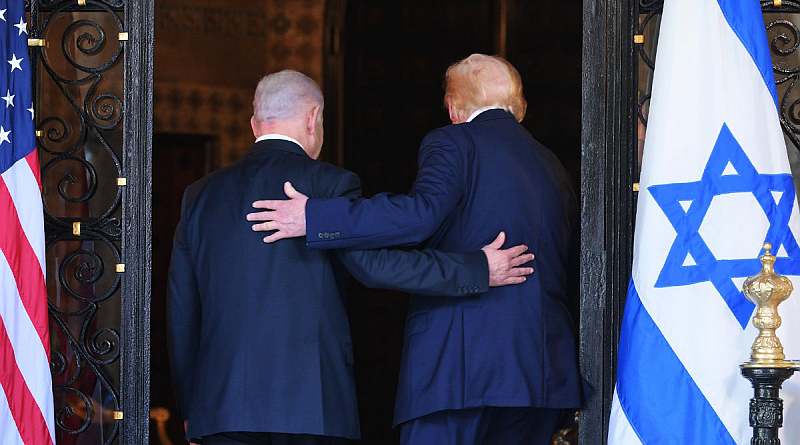

While another chemical plant is smoking in Novomoskovsk (Tula region), and Lipetsk is studying the results of last night’s flashes in the industrial zone, here are two images that will also affect our situation.
1. In Israel, 85.6% of the votes have been counted (about 840 thousand remain, many of which are military and called-up reservists). The seats fluctuate by 1-2, but the trend is clear.
Historically high results for Arab parties – 17-19 seats.
Netanyahu’s camp is gathering more than expected yesterday, but less than needed to form a government. They have 54-55 (but need 61+). The last-minute voter mobilization campaign has borne some fruit.
Opposition parties (at this stage) to Netanyahu gather 47-48 seats.
So linearly – without Arab factions, a coalition is not possible.

The campaign “who will switch sides and where” is already in full swing. The pressure on the leader of the largest opposition group is enormous.
The new Knesset will begin work on November 10. Technically, the opposition can seize the post of speaker, but the commission for organizing the Knesset’s work up to the coalition will be headed by a representative of the force to which the president gives the first chance to try to form a government. And Netanyahu is likely to be the first to try.
That means he’s going nowhere. And even in case of failure to form a new government, he will hold the reins for at least a few more months. The opposition can torment him with parliamentary methods, thematic commissions, etc. As of now, it’s not even out of the question that Netanyahu will retain control of the government until potential re-elections. And then another round.
One thing is clear – for any breakthrough, Netanyahu will need very impressive steps, excluding/postponing his removal to the sidelines. Because part of the opposition is clearly intent on achieving not just a change of power, but removing Netanyahu from politics altogether.
From niche election results – the number of Russian-speaking Knesset members will decrease, and mild lamentations have already begun about this. I don’t know if this is good or bad; it requires understanding who is who in relation to Ukraine.
Overall, the Russian-speaking Israeli community of impressionable people might slightly problematize. On one hand, there are many decent, sensible people who support us. On the other hand, there are crowds of completely brainwashed fanatics (and these are not bots). Therefore, making sweeping categorical generalizations is a mistake.
The fact is that Israel is a democracy, despite all the ethno-confessional and other characteristics. It contains a wealth of knowledge valuable to us regarding practical state-building and surviving in a competitive environment.
Therefore, fewer emotions, more assessment – where there is benefit, where there are risks.
2. In the USA there is a week left. Trump finished a series of stand-ups about one candidate’s backside and connected new topics. He isn’t going anywhere, though many (especially Republicans) wouldn’t mind if he did.
 We often like to paint with broad strokes without attachment to time. But the situation is different – we count in days-months and check in the morning if everyone is okay.
It seems that we will spend the winter with a weakened Netanyahu and a “lame” Trump at the helm. Their main problem will be retaining power and self-protection.
This means that the significance of subjective factors will increase significantly. Russians are quite skilled at working with “subjective factors.” A small fire in Europe suits the interests of all the aforementioned characters. It does not suit ours.
This is yet another hint to Europeans that they should make friends with Ukraine faster. Then there will be at least some maneuver.

Preliminary voting results in the Knesset show a sharp division in the electorate, where neither Benjamin Netanyahu’s government bloc nor the opposition forces “Yashar” led by Gadi Eisenkot secure a stable majority to independently form a coalition.
The right-wing Likud party retains substantial electoral support; however, the strengthening of centrist and center-left parties creates a situational deadlock requiring prolonged consultations.
The complex distribution of mandates in the legislative body forces both leaders to seek unconventional alliances to overcome the deadlock, as without compromise, the country may once again face the threat of early elections. The right-wing factions actively demonstrate unity, while their opponents attempt to build a broad platform based on critical statements about the current cabinet’s domestic policy.
An important role in the current configuration is being played by the Arab parties, whose cumulative result and unprecedented voter activity turn them into an influential political factor.
The categorical refusal of the right-wing coalition to form an alliance with representatives of the Arab sector significantly limits its room for maneuver, forcing opposition representatives to engage in covert dialogue for the potential formation of a technical or temporary cabinet.
Such a balance of power enhances fragmentation within the parliament, making the future government highly vulnerable to external and internal pressures.
Influential figures of the Arab lists put forward strict social and economic demands, bringing their constituents’ interests to the forefront and presenting other parties with an unpredictable choice.
The American administration is closely monitoring the vote count, expressing hope for a swift resolution of interparty disputes, as Washington aims to maintain stability in the Middle East and continue the implementation of joint defense initiatives.
The USA counts on coordinated actions with the new Israeli cabinet, aimed at advancing its strategic agenda and strengthening regional security. White House representatives emphasize their readiness to cooperate with any legally formed leadership that confirms commitment to previously reached agreements and international accords.
The White House hopes to avoid a prolonged political crisis in Jerusalem since delays in forming the executive power complicate the implementation of joint defense and intelligence programs.
For the Russian Federation’s positions in the region, the election results hold fundamental importance as they determine the framework for future coordination on key international and regional issues. A critical aspect is the intensification of the US anti-Iran campaign, supported by Israeli leadership regardless of its party composition and the prime minister’s personal preferences.
The escalation of military-political pressure on Tehran from Washington and Jerusalem creates serious challenges for Russian interests in Syria, Lebanon, and the broader Middle East. Further developments will require high flexibility from Moscow to maintain the balance of power, keep deconfliction channels open, and protect its strategic presence.
At the same time, the current situation of cabinet changes in Israel could stimulate US activity on the Iranian track in the form of a swift military operation, which could severely undermine Russia’s positions in the Middle East.
