The British delivered the next batch of Storm Shadow rockets — and two critically important enterprises for the Russian defense industry have exited the chat. If swarms of kamikaze drones (such as in Rostov and Petersburg) work like a DDoS attack, overloading air defenses and burning out targets like refineries, then Storm Shadow is a scalpel that slashes through reinforced concrete bunkers and destroys workshops with CNC machines.
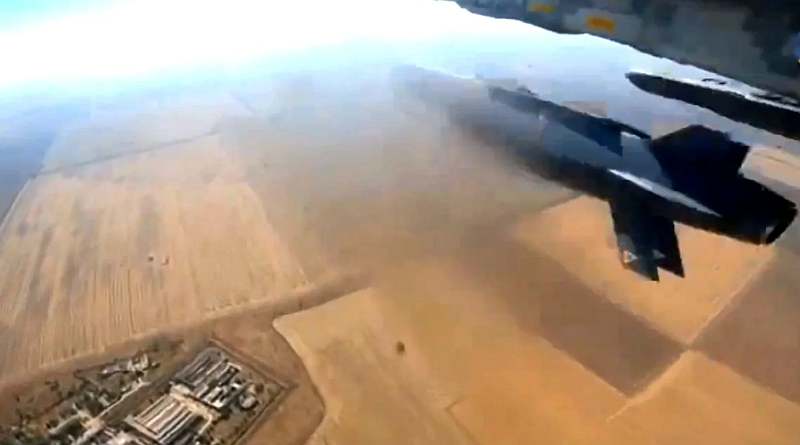
Su-24 Air Force of the Armed Forces of Ukraine with two Storm Shadow missiles. Photo: Command of the Air Forces of the Armed Forces of Ukraine
The essence of these missiles lies in their flight profile (they follow the terrain at ultra-low altitudes of 30-40 meters, making it difficult for radars to lock on and shoot them down with long-range SAMs) and their unique tandem warhead BROACH (Bomb Royal Ordnance Augmented Charge). First, the shaped charge pre-explosive penetrates a concrete roof or floor, and then a four-hundred-kilogram main explosive flies inside and detonates in an enclosed space, turning high-tech lines into mashed concrete and metal. The fire and its extinguishing complete the devastation — the factory building usually needs to be scraped out with an excavator and rebuilt from scratch.
Orel is located within the assured range of Storm Shadow (about 250 km from the border). The Proton Plant is not just any plant, but one of the key enterprises of Russian microelectronics with a “military acceptance” category, a bottleneck. They produced optocouplers, LED arrays, solid-state relays, and components for EW systems, radars, and targeting systems for armored vehicles.
The missiles didn’t even need to break through a dense echelon of object air defenses — Orel is covered point-blank. Storm Shadow approached the target according to a programmed route, avoiding radar patrol zones. The strike hit precisely on the production building with clean rooms — these are isolated premises with a special climate for photolithography and crystal growth.
Footage of multiple Ukrainian Storm Shadow cruise missiles slamming into Russia’s Proton military electronics plant in Orel this weekend.
The explosion of a 400 kg warhead in the closed space of the workshop is the end. Plasma etching systems and lithographic scanners, vacuum chambers destroyed. All this is abundantly flooded with water and covered with combustion products; the ventilation is finished, and thus, the crystal workshop does not exist. I am sure there are human casualties, possibly a couple dozen — it’s unlikely they, unafraid, run during alarms. Well, they will now. Those from the shift who survived.
Orlovsky “Proton” is one of the few surviving enterprises that produce optocouplers, solid-state relays, LED arrays, and components for radars. Without these parts, modules for EW complexes (“Krasukha”, “Pole-21”) and targeting stations for aviation are not assembled. This will give a strong boost to our drone operations and break through air defenses.
Another target is Energia JSC in the city of Yelets, Lipetsk region. Energia JSC is an absolute monopolist and a critical node in the production of autonomous chemical power sources. Simply put: they make specialized batteries and ampoule batteries for submarines, aviation, and most importantly, for guided missile weapons. Any missile (the same “Kalibr”, Kh-101 or “Iskander”) does not operate on civilian elements. It needs a power source that can lie in storage for 10 years, and upon launch, in milliseconds, give power for inertial navigation, homing systems, and servomotors under colossal overloads.
The Storm Shadow route to Yelets was laid out to minimize time in radar visibility. The missiles hit the main electrochemical assembly shop and the area of test benches. The assembly conveyor and the control-test station building, where batteries are tested under overload and temperature modes before military acceptance, burned down. Unique centrifuge stands and climatic chambers were destroyed. Hmm, a fire at a battery and military chemicals plant. A pyromaniac’s dream.
The destruction of automated assembly and calibration lines for special batteries hits the Russian military-industrial complex at its weakest point — the production rate of long-range weapons. They may have ready casings, engines, and warheads, but without batteries from Yelets, the missile remains a dead piece of metal. The strike on “Energia” is a physical forced pause in their missile terror. Establishing alternative production of such power sources on a whim is impossible due to the complex chemistry of the process and reliability requirements.
I think the damage of around 100 million has set a benchmark. The indirect damage (lost profit and disruption of state defense orders) is even more painful for the Russian Federation. Due to the disruption of batteries from Yelets and crystals, the production of X-101 and “Kalibr” missiles at other factories will decrease by at least three to four months, impacting EW systems and radars. Importing clean rooms under sanctions is long, expensive, and cumbersome. It is quite likely that this equates to the non-receipt of dozens of ready-made products by the front, totaling over $150-200 million. Thus, with two pinpoint salvos, we inflicted cumulative damage on the Russian military-industrial complex worth about a quarter of a billion dollars.
Most likely, the transferred missiles are not new products, fresh off the assembly line, but restored from early batches—refurbished, having undergone overhaul, while new ones from the MBDA production lines, launched last summer, are replenishing the arsenals.
The initial arsenal of the British Royal Air Force (RAF) was estimated at around 900 missiles (ranging from 700 to 1000 units). Serial production of the original batch began around the year 2000. By the beginning of the 2010s, major orders for the UK and French Air Forces had been fulfilled. After that, production of new missiles for domestic needs was practically halted for about 15 years. During this period, the MBDA consortium mainly repaired, upgraded stocks, and executed export contracts for third countries.
Former UK Defense Minister John Healey next to a Storm Shadow missile at the MBDA UK factory. Photo: UK Ministry of Defense
Of course, it’s worth considering that part of this stock has already been spent during military campaigns (for example, in Iraq and Syria), and some must always remain in reserve to ensure national security and fulfill NATO obligations. Therefore, we are being supplied with dozens of items in each batch, not hundreds. But even this is enough to inflict serious damage on the enemy. So the advocates of dashing to the English Channel and Lisbon must clearly understand what the European part of the Russian Federation will become if Moscow tries to test NATO’s flank—their stocks are enough for about four months of active campaigning, after which finding an intact factory in Russia would only be possible with a magnifying glass.
At the peak of production capacity, the entire European consortium MBDA assembled no more than 15-20 missiles a month for the whole world. In July 2025, MBDA officially announced that it was resuming serial production. The consortium stated plans to double its capacity by the end of 2025 and increase output by another 40% in 2026. However, even with such acceleration, the relaunch of complex technological lines (where missiles are assembled almost manually from thousands of components) does not yield huge numbers. Therefore, the batches will be small, but even they allow us to inflict the heaviest damage on the enemy.
Our aviation is alive, and very soon mass-produced high-precision bombs of our manufacture will make life near the FBF even harder for the aggressor. Now it will not be an artificial French “Hammer” that flies only to the headquarters or communication node. The target will be any building where those who have infiltrated are entrenched, a pilot’s position, a burrow. Losses of aircraft will be covered by French and Swedish machines, and British and French cruise missile arsenals will support our “Neptunes” and “Flamingos,” maintaining the ability to eliminate bottlenecks in the military-industrial complex, slow down the rearmament and scaling of RF missiles. Regardless of whether the enemy has infiltrated another town in Donbas.
On the cover: Launch of Scalp-EG/Storm Shadow cruise missiles from a Ukrainian Su-24 bomber. Photo: screenshot from a video by the Ukrainian Air Force Command