
A few days after the start of the war between the United States and Israel against Iran, when the world was searching for a figure that could truly replace Ayatollah Khamenei, who was killed on the first day of strikes, I read in the Israeli newspaper “Haaretz” a long article dedicated to the head of Iran’s Supreme National Security Council, Ali Larijani (he too would soon die after a missile strike). Larijani was well known to me as one of the most experienced and ruthless Iranian politicians, but the Israeli colleague unexpectedly portrayed him as a philosopher who analyzed Kant’s works, wrote academic books, and published in Iranian journals, while remaining a staunch religious fanatic. This portrait unexpectedly reminded me of images of the first leaders of the Bolshevik party before the Stalin era. All of them wrote books and articles – not only Lenin and Trotsky, but also Zinoviev and Bukharin could boast of multi-volume collections of their works (such a collection would later appear for Stalin himself, but the “chief leader” rather tried to resemble his destroyed competitors).
It’s hard to call the Bolsheviks philosophers, but all these people were gifted publicists with a broad worldview – like Larijani. However, like Larijani, they tried to use their knowledge and undeniable talents for the sake of dogma. And for the sake of power. In the Soviet Union, however, this dedication to ideology turned into a ritual after three or four decades of the regime’s existence. Iran is now on the verge of such a transition unless war stalls it or the war destroys this regime. But today, Larijani’s ideas about a “spiritual war” opposing the struggle for money can be shared by most Iranian leaders and determine the trajectory of their actions, while simultaneously devaluing the worth of human life, which ceases to have meaning for the sake of a “spiritual victory.”
Some might say that this “spiritual victory” simply emphasizes once again that the civilized world is fighting against religious fundamentalists from the past, but I wouldn’t oversimplify the situation. After all, Donald Trump and all the Republicans owe their victories to millions of voters from evangelical Christian communities. These people are sincerely interested in the safety and existence of Israel, not so much out of sympathy for Israel, but because of the belief that the restoration of the Jewish state on the Holy Land brings the time of Resurrection closer. Trump cannot simply walk away from the Middle Eastern conflict, as losing the support of these people would be a more dangerous situation for him than crashing the stock market. The American president may be a completely rational person (although collective prayers in the Oval Office somewhat destroy such an image), but in any case, he depends on voters who live in worlds far from rationality.
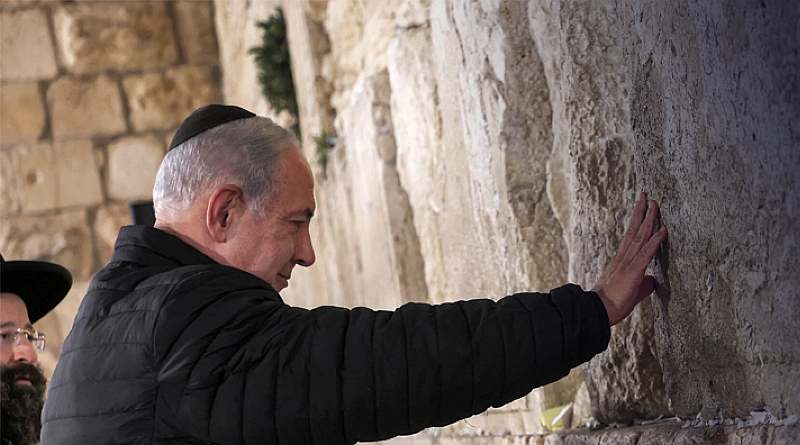
On the opposite end of the globe, another rational politician, Benjamin Netanyahu, a descendant of a renowned family of Zionist activists who wears a traditional kippah only on ceremonial occasions, depends on coalition partners whose parties are governed very differently than the Prime Minister of Israel’s own “Likud.” For example, in the Shas party, the highest governing body is not the usual party leadership but the Council of Torah Sages, which makes decisions on fundamental issues. In the “United Torah Judaism” bloc, where several non-Zionist political formations are united, party decisions are also made by a Council of Torah Scholars. And, of course, both councils consist of rabbis with undisputed authority among their followers. Often, these individuals leave our world at no less than 100 years old, which does not prevent them from directing the Israeli Knesset from behind the scenes of classical politics to the very end. Such were the legendary founders of religious parties rabbis Elazar Shach and Ovadia Yosef, whose farewells were among the most significant events in recent Israeli history.
And here’s the paradox: Netanyahu cannot ignore the radical sentiments of these and other partners in the ruling coalition and at the same time is forced to agree to the impossibility of conscripting members of their religious communities into the army, creating a critical challenge for the Israel Defense Forces today. However, ultra-Orthodox rabbis believe that fervent prayer will bring about the Messiah’s arrival and thus the emergence of a “true” Jewish state faster than military service.
When we talk about the existential nature of the Russian-Ukrainian war, we actually mean quite understandable things: imperialistic expansion, Russia and Russians’ unwillingness to recognize Ukrainians as an independent nation and Ukraine as a “real” state. From the perspective of the 21st century, this is, of course, real absurdity, showing how far back in time Russia is stuck. But both Ukrainians and Russians are fighting on and for land. Ukrainians are fighting for their land, while Russians for foreign land.
And in the Middle Eastern war, the main action of the conflict unfolds for many of its participants and interested observers not in the Strait of Hormuz.
It literally unfolds in the heavens.
