
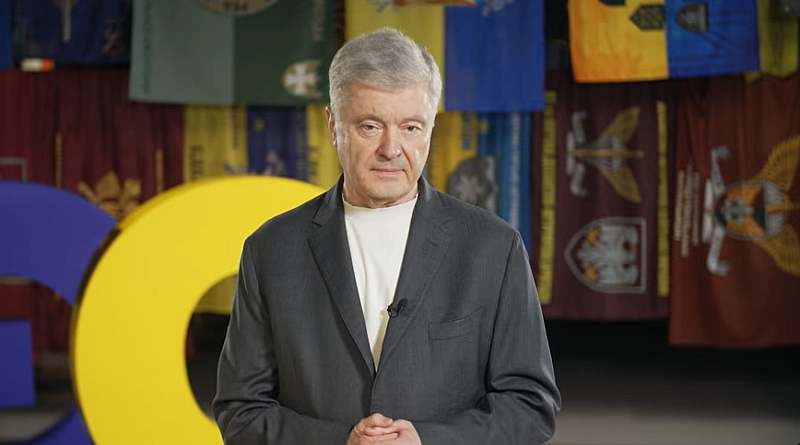
April 1 was often associated with Odesa, Humoryna, with the innocent “your back is all white.” But now it’s not the time for jokes. Today we must talk about what really matters.
In 2025, Ukraine was supposed to receive 12.5 billion euros of aid from the European Union within the Ukraine Facility, but only received 10.5 billion. Two billion euros, which we need like air, simply vanished. Not due to war. Not due to partners’ positions. But because Ukrainian authorities failed to fulfill their commitments. In 2026, the risks are even greater. Ukraine may miss out on not 2, but at least 4 billion euros just within this program.
And this is just the beginning. A much larger support project of 90 billion euros is hanging in balance. I want to remind you: these 90 billion are not just taxpayers’ money from EU countries. They are secured by frozen Russian assets. So, if these funds are not used to support Ukraine, Russia gets hope of reclaiming these assets. And in wartime, such losses undermine our defense capabilities.
Without these funds, both the army and millions of Ukrainians could face very serious problems. That’s why I want to remind you: exactly four years ago, on April 1 and 2, Yuriy Biryukov, Oleksandr Pohrebyskyi, Maryna Poroshenko, and I first saw Bucha. Not the Bucha shown later to journalists when the bodies were already cleared from the streets. But the real one—with darkness, shock, and horror. And I can assert: it was Bucha’s sacrifice, and the heroism of the Armed Forces of Ukraine, that helped Ukraine earn the status of EU candidate. Because the peoples of member states were shocked by Russia’s brutal cruelty.
And now, four years later, Ukraine received a yellow card from the European Union. Just yesterday, the EU Commissioner for Enlargement, a great friend of Ukraine, Marta Kos, was forced to send an official letter to the head of the Verkhovna Rada. This letter was attempted to be hidden from both parliament and the public. And this is about fear. Only thanks to media, civil activists, certain MPs, and journalists, did Ukrainian society learn the content of this appeal.
Behind the diplomatically restrained wording, there is an absolutely clear message, even a warning to Ukraine: you are losing trust, you are losing money, you are losing time. The Commissioner clearly states: Ukraine should have taken specific steps. Justice. Energy. State governance. Transparency and efficiency. Transport. And these are not whims of the European Union. These are reforms we need.
You may ask: how many steps did Ukraine fail to take? Back in December, there were ten specific steps in the Kachka-Kos plan, a joint plan of the Ukrainian government and the European Commission. As of now, not a single point out of ten has been fulfilled.
Most of the requirements relate to the first cluster, fundamentals: rule of law, democracy, justice. And it’s not just about laws. Passing laws will not be enough. The question is in implementation, practice, application. Because Europe is watching closely: do we have independent courts in Ukraine, do independent legal institutions function, is Ukraine free from political pressure?
Trust is yet another main currency of Eurointegration. Our achievements in 2017-2018 were based precisely on trust. The Association Agreement, visa-free regime, and deep and comprehensive free trade area.
Therefore, we, “European Solidarity,” demand that all Kachka-Kos plan bills be urgently adopted during the next plenary week.
Again, I emphasize: this is not just a list of laws. It’s a test. A test of trust that Ukraine needs to pass. I am speaking about this today so that Ukraine does not miss its historical chance. Because the window of opportunity is very narrow. And this chance was opened for us by the Armed Forces of Ukraine. They have earned it. And the authorities must not lose it.
“European Solidarity” will do everything to ensure our country continues its path towards Eurointegration.
In a situation where Ukraine urgently needs external financing, but Hungarian Prime Minister Viktor Orban maintains a veto on the main financial aid package, Brussels has proposed an alternative way for Kyiv to receive budget support while simultaneously creating a positive momentum in relations with the EU.
