
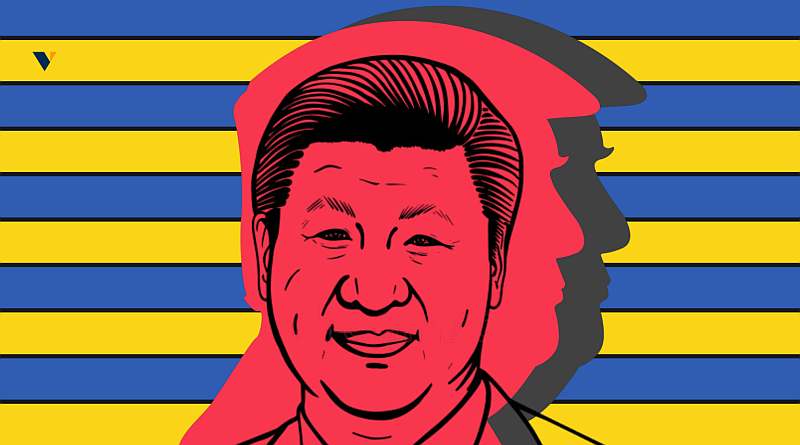
Donald Trump’s visit to the Chinese capital and his negotiations with Chinese President Xi Jinping have once again raised the question of how interested Beijing is in ending the Russia-Ukraine war and whether it is ready to influence the position of Russian President Putin. Especially since Putin is heading to China shortly after Trump and will hold talks with the Chinese leader just a few days after the American president left Beijing.
It is known from both U.S. and Chinese representatives that the issue of the Russia-Ukraine war was discussed by the American and Chinese leaders. After Trump’s visit, China’s Foreign Minister Wang Yi emphasized that China is interested in this war ending and in activating peace efforts.
The question is how Washington, Beijing, Moscow, and Kyiv see the end of this war and the negotiations themselves. From the perspective of common sense, it would be logical for negotiations between Russia and Ukraine to take place after a ceasefire is reached. This has always been advocated in Ukraine, while Russia has always opposed it.
President Trump, at the beginning of his presidency, also supported negotiations after a ceasefire, but later retreated from his position and agreed with Putin’s concept of negotiations during the war—a concept that has not yet led to any real results, aside from the deliberate stalling by the Russian president. However, we have not heard China’s stance on a realistic model for negotiations.
Regarding the outcomes of the war, positions differ as well. Ukraine seeks to preserve sovereignty, territorial integrity, and the right to determine its own future. The collective West supports this. The United States is willing to agree to a ceasefire along the front lines and not to restore Ukraine’s territorial integrity by military means, but alongside this, it advocates for the preservation of Ukrainian sovereignty. Moscow, clearly, has different goals. Putin is willing to fight until the destruction of Ukrainian statehood and will only stop when he lacks the resources to achieve this goal.
And what about China? Of course, Beijing has no particular interest in Ukraine disappearing from the political map of the world, but it also has no interest in Ukraine remaining a state becoming part of the West. Beijing would be content with two options—either the annexation of former Ukrainian territories to Russia or the preservation of Ukraine as an independent state, but within Russia’s sphere of influence and under significant Chinese supervision. A model of such statehood already exists next to Ukraine—Lukashenko’s Belarus. The Belarusian dictator sits on Russian bayonets but constantly looks to Beijing, as he realizes that the Chinese leader is the guarantor that Putin will not one day simply annex Belarus to Russia as regions.
So what can Trump talk about with Xi when it comes to ending the war? In fact, almost nothing, as with most other issues on the U.S.-China agenda. However, the American president could influence Chinese leadership regarding the evident assistance China provides to Russia for its resilience in the war and overcoming the effects of Western sanctions. The less Chinese assistance there is, the sooner the war will end. But does the President of the United States have the ability to discuss this with the President of the People’s Republic of China today, when his own administration allows Russia to earn from oil amidst the crisis around the Strait of Hormuz? If you yourself are effectively weakening sanctions against Russia, how can you demand from someone else to increase pressure?
And here we again come to a simple and obvious truth. The question is not about China’s position. The question is about America’s capabilities.
Collage: Vilni Media
