
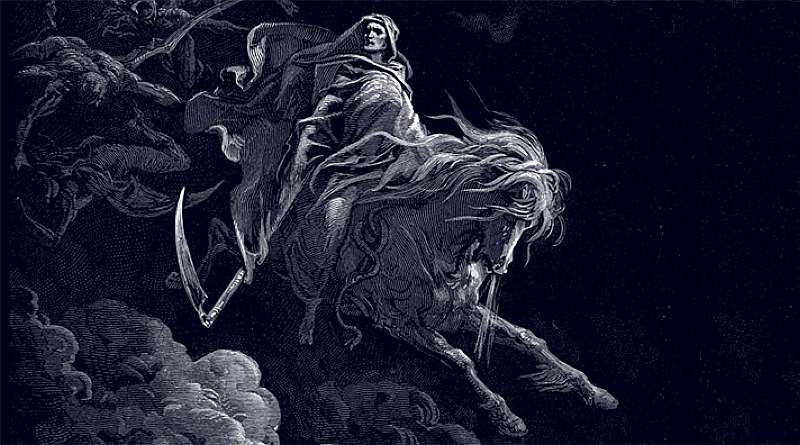
In February 2022, despite all the horror that engulfed Ukraine after the onset of the large-scale war, the way out of the situation might have seemed difficult, yet transparent and obvious.
The aggression needed to be stopped, preventing Russian troops from occupying a significant portion of the country and pushing them out of at least part of the occupied land. The state needed to start operating more efficiently, which also meant an intensified fight against corruption. Clear security guarantees were needed, that is, joining NATO with its Article 5.
However, the peculiarity of the situation was that this had to be done quickly at a time when the possibilities for a quick end to the war were practically blocked. After the failure of the blitzkrieg with the immediate capture of Kyiv and the replacement of the Ukrainian government, Putin, within a few months, reoriented to a strategy of a protracted war, which the Kremlin continues to adhere to. And allies did not conceal their reluctance to give Ukraine modern offensive weapons, fearing a nuclear response from Russia—and no one in the West truly knew (nor knows even now) what to do after such a nuclear response. The bet was placed on the prolonged exhaustion of Moscow in hopes that Putin would realize the futility of a long war and stop. Almost five years into the major war of Russia against Ukraine, this bet has not paid off.
However, other processes began to develop, practically inevitable over a five-year span. After all, war—like oncology—inevitably metastasizes if the process is not stopped in time.
The first danger is the change in the character of the war. The Russian army has not significantly advanced for several years in a row. But now, the Kremlin is counting on the exhaustion of the Ukrainian rear, the destruction of infrastructure, and the transformation of large Ukrainian cities into uninhabitable places. And if in the first months of the war we were confident in the common sense of the consolidated Ukrainian society and only feared that the army might lack the resources to stop the enemy, now our defenders are achieving real successes at the front. Nonetheless, in the rear, the voices of those for whom Ukraine is an empty notion and who are ready to sell the future of the homeland for an illusion of temporary peace are growing louder. This is a very dangerous trend not only for wartime but also for peacetime, as it promises the political triumph of the party of capitulation and fear of Moscow.
The second horseman of the apocalypse is the transformation of a corrupt state into a mafia state. The prerequisites for such a transformation were laid back in 2019 with the victory of Volodymyr Zelensky and the Servant of the People project. The sheer number of profit-seeking “new faces,” when all property had long since been redistributed, logically pushed some of these charming faces toward alliances with organized crime and the creation of its cells within state structures. Of course, four years is not much time for such a transformation. Democracy assumes that alarmed voters have the opportunity to correct their previous decisions. But here, too, the war has had its effects: the lack of a mechanism to change power and its practical lack of control make anti-corruption bodies the only safeguard against the degradation of the state organism—and no one has said they are destined to win in the fight against the mafia.
And finally, the third problem is the deficit of security. In 2022, we could quote American President Joseph Biden, who promised to protect every inch of NATO territory—and, of course, we could wish for our own territory to be among those inches. In 2026, we can’t help but notice the attitude of American President Donald Trump toward NATO. Moreover, after the war with Iran, we don’t even know if the United States is capable of being an effective security guarantor even when it desires to be. Countries that hosted American military bases on their soil obviously counted on nobody threatening their security, not on being bombed precisely because American military bases exist there. Therefore, when I hear reports about consultations on security guarantees for Ukraine, I want to ask if they even exist in the modern world. After all, security guarantees are truly about respect for rules and “red lines.” And also about the fear of superpowers, which simply no longer exists.
And, by the way, the appearance of this third horseman gives additional chances to the first. It threatens with new metastases—the spread of the Russian-Ukrainian war into Europe. After all, hatred towards Europeans, who are now perceived as the main culprits for Putin’s lack of victory, increases in the Kremlin with each new day of conflict. And if Putin now does not fear Trump’s reaction (and he does not), why shouldn’t he at least try?
These three main problems, not even for Ukrainian victory but for Ukrainian survival, do not mean a programmed defeat. But they need to be recognized and addressed. To survive, we must destroy each horseman.
This means a serious dialogue with society about the duration and dangers of the war. It means increasing the efficiency of the government and zero tolerance for corruption and mafiosi in its structures. It means rejecting single-handed management of the state, which simply drags Ukraine down. It means finding mechanisms for security cooperation with those states that realize the danger to their own future and with the healthy forces in those countries where power betrays the ideals of democracy. There is no need to fear this, because by trying to adapt to powerful villains, we will simply perish. But for such work, the people who govern Ukraine need to realize that values truly exist and are not used to deceive the electorate. And the time to squeeze out the populist drop by drop is simply not there—time is running out.
Well, it is also necessary to understand that if we defeat these three horsemen but cannot end the war, new horsemen and new problems will inevitably appear. And we will also have to fight them even when they seem insurmountable.
This is actually the Ukrainian plan for survival and victory.
Cover image: “Death on a Pale Horse” 1865. Painting by Gustave Doré
