
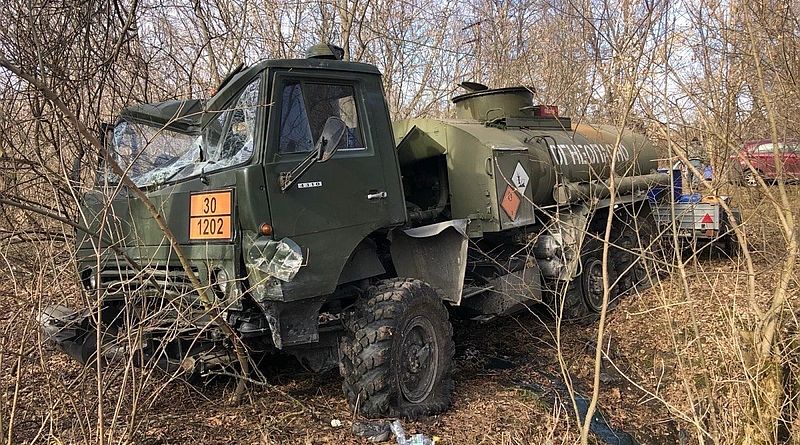

Against the backdrop of an intensified crisis in supplying the Russian army with fuels and lubricants, Vladimir Putin’s official statements about the consistent state of the economy are perceived by the civilian population not as an attempt to reassure, but as cynical mockery. The “Special Military Operation,” which was initially conceived as a demonstration of the state’s colossal resource base, has clearly proven its complete depletion.
The systemic fuel crisis engulfing the key sectors of the country is a direct inevitable consequence of the continuation of military actions, thus rectifying the catastrophic situation is only possible through the complete cessation of war.
The current issue with supplying army units with fuel has long extended beyond a local logistical hiccup, as it has taken the form of a deep systemic crisis of the whole state management. At the moment, when representatives of the “United Russia” party publicly urge civilian people not to react to the lack of gasoline like offended teenagers and maintain unconditional electoral loyalty, the acute fuel shortage has transformed from an intra-economic problem of the civil sector into a key factor directly limiting the combat capability of the troops.
The situation where the largest oil power, receiving super-profits from energy resource exports, finds itself completely unable to supply its own army with fuel, indicates not temporary setbacks, but the collapse of the resource and managerial model of a protracted military campaign. Setting a strict limit of 20 liters of fuel per day per piece of equipment openly demonstrates the inability of the material and technical supply bodies of the Ministry of Defense to perform basic functions.
The necessity of manually delivering water, food, and ammunition by servicemen over a distance of up to 11 kilometers due to the absence of refueled vehicles shifts combat operations to an archaic level of supply, which is absolutely inconsistent with the nature of modern maneuver warfare and completely nullifies the combat resilience of units, depriving them of the ability to evacuate the wounded.
In conditions of severe fuel scarcity, a vicious practice is forming everywhere, in which financial expenses for purchasing fuel are forcibly shifted onto lower-ranking servicemen. Due to the market cost of fuel in the frontline zone rapidly soaring to 200 or even 300 rubles per liter, personnel are forced to spend from 50 to 70 thousand rubles monthly from their own monetary allowances to buy gasoline for generators that ensure stable communication and the operation of positions. The state, which began a large-scale military operation, is now effectively shifting the heaviest costs of conducting it onto the shoulders of ordinary soldiers.
Alongside the total shortage of fuel in the combat zone, a critical drop in the quality of supplied products is noted. Servicemen directly describe the supplied fuels and lubricants as a surrogate, whose use leads to regular engine breakdowns and reduces the combat capability of military equipment. At the same time, private vehicles, generator installations, and other equipment actively involved in performing combat tasks remain without centralized supply, exacerbating the overall crisis.
The inability to establish uninterrupted army fuel supplies reflects the systemic degradation of state management and the complete exhaustion of economic capabilities. The Kremlin is effectively depriving the army of the basic conditions for conducting military operations, turning the protracted operation into a demonstration of strategic insolvency. The fuel crisis becomes a striking indicator that the war resource model is exhausted and no longer provides stability to either the front or the rear.
Photo: Operational Command “North”
