
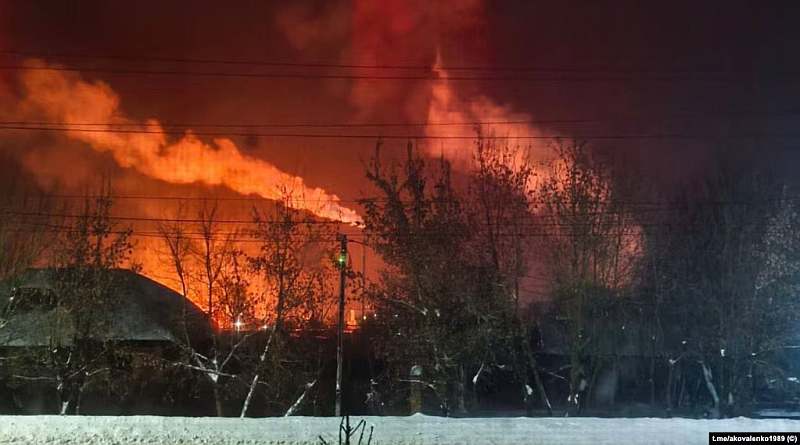
Drone attacks in recent months have significantly affected the Russian nitrogen fertilizer industry, the founder of EuroChem and the Siberian Coal Energy Company Andrei Melnichenko told journalists on the sidelines of the Russian Union of Industrialists and Entrepreneurs conference.
Well, Russian billionaires don’t like our campaign against explosive manufacturers, as it hits their wallets. And simultaneous problems in fertilizer production, mass livestock culling due to foot-and-mouth disease, and fuel shortages — that’s a jackpot, public love for the regime is guaranteed.
When I write about this, I’m told in the comments, “it’s still unclear where they hit and what the damage next to the chemical plant is.” But now, when the opponent complains about it, even billionaires who profit from it, isn’t it better, gentlemen?
In February, the Defense Forces attacked “Dorogobuzh” — seven people died, a railway station was dematerialized, and 5% of Russian ammonium nitrate production dropped out (expected relaunch not before May). On March 19, it hit Nevinnomyssk “Azot” (that’s EuroChem) — this was a drone attack on one of the world’s largest factories, where the acetic acid production shop was knocked out. And on April 13, it hit “Cherepovets Azot” (part of the “PhosAgro” company). This was a big catch. Drones from the Unmanned Systems Forces hit an industrial giant in the Vologda region. Two out of three workshops of the nitrogen complex were affected, and Cherepovets means hundreds of thousands of tons of ammonia and ammonium nitrate per year.
The market reacts. On European Freedom Finance, for example, there are now 100% secured investments in grains amidst problems with the Strait of Hormuz and fertilizer shortages. Several large wars consume explosive precursors, Ukraine and Russia are absorbing everything like a vacuum. Iran suffered from bombings of chemical plants, fuel prices are rising, spare parts have become less accessible due to logistics and combat equipment production — a completely expected result. Russia has imposed a ban until the end of April on ammonia nitrate exports — a strong signal. The ban on industrial sulfur exports has been extended until June 2026, and this is raw material for fertilizer production.
So, we need to keep striking not only at refineries, transshipment, and gas. Chemistry is a perfect target. It ripples through agriculture, light industry, and processing. And this is a financial minus for the war.
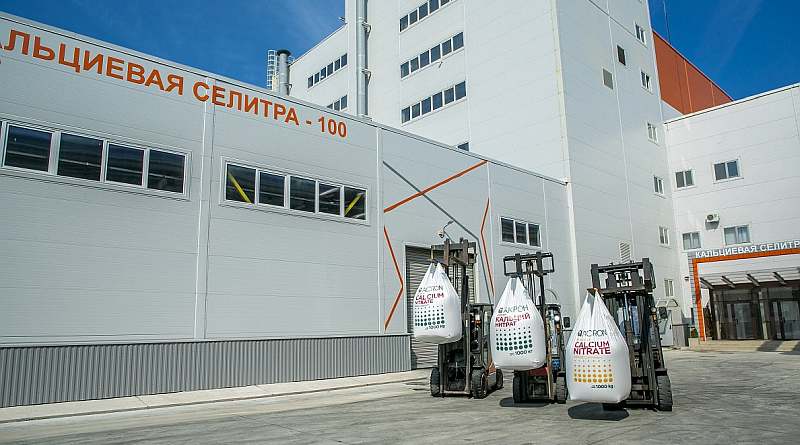
Why are our attacks increasing? Firstly, we need to slow down the production of KABs and shells, and ammonium nitrate is a precursor. Moscow plans to produce about four million shells and mines by 2026 — such a number does not suit us. Therefore, we influence the entire chain: from the production of casings and hardening to detonators.
Secondly, we are on the brink of massive scaling up of cruise missile and UAV production in the EU. Not only FPV or reconnaissance drones, but also long and medium-range ones. The Chorus project in France plus AASM Hammer glide bombs (up to a hundred per month), the production of the “Ruta” missile is being localized at Rheinmetall facilities. And it goes on. In 2026, joint ventures were launched, for example, with Fire Point company. In Denmark, our FP-5 Flamingo are assembled and solid fuel is produced for them, while in Germany, casings are made.
The main European missile giant MBDA reached peak capacities in 2026, increasing the production of Storm Shadow and SCALP-EG missiles by 40% just this year. Now an updated version Mk2 is going into series production. Its guidance head has been completely redone — it now ignores the most advanced electronic warfare systems, orienting not only by terrain and digital target map but also by images of the object itself. MBDA launched a ground version of its naval cruise missiles (LCM). Now there is no need to struggle with suspensions under the Su-24 and deplete valuable resources; they can be launched from regular truck launchers. More burnt workshops in Bryansk, good ones, and varied.
The EU has stopped delivering a variety of different equipment. Now the focus is on unification: three to four models, under which factories and lines are set up. At one time, the Soviets built the mass-produced T-34, which was generally inferior to most specialized German machines, the Soviet army lost nearly 90,000 of them, but the bet on mass production paid off. Now we want to introduce Moscow to their favorite recipe — mass western production.
Most new Western systems acquire target lock-on (machine vision). This negates Russia’s advantage in electronic warfare and will force spending on interceptors. Interceptors cannot secure landings near Konstakha. Diverting funds from, for example, the expansion of BMP and BTR production, and forcing them to lose vehicles in banzai attacks on motorcycles and quad bikes is invaluable. Localization works: some components (airframes, warheads) are made here, while the brains and engines are made in the EU. This allows bypassing bureaucracy, and hitting European factories with “Iskanders” is still difficult.
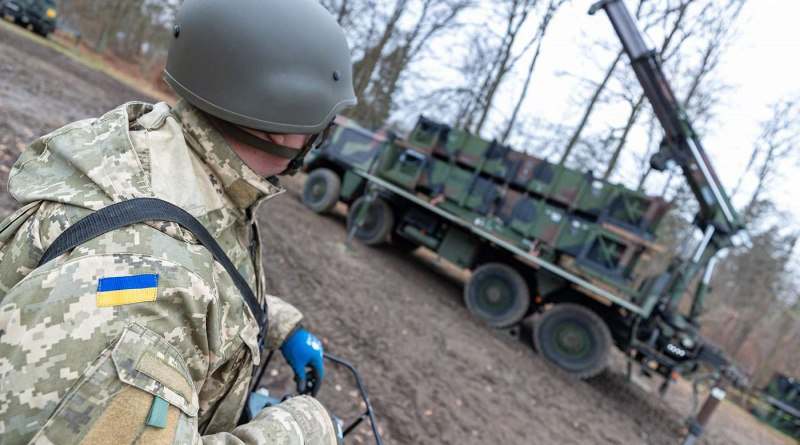
Thirdly, the recent news that the Germans will produce 3,000 GEM-T missiles for Patriot for Ukraine and the EU at their facilities and at their expense. It doesn’t matter that 2027–2028 is essentially state guarantees. The money is paid, and they can be supplied from inventory, as the plan for 2026–2027 is approximately 750 missiles. They cannot intercept “Kinzhal,” but are effective against ballistics like “Iskander.” This means more safety for deploying new enterprises in Ukraine and the possibility of additional supplies from EU inventory.
Fourthly, adding the satellite constellation that the EU is deploying specifically for targeting (project IRIS²), soon there will be no safe zones for Moscow even beyond the Urals. With high-quality target photographs, radar activation schedule, and radar control for several hundred kilometers from AWACS aircraft following, we can chart perfect routes for strikes.
Regarding finances, Russia consistently ranks among the top three global exporters of fertilizers. In 2025, they earned about $16–18 billion from them. Despite sanctions, the EU still buys about 16% of its fertilizers from Moscow (although the share is decreasing). This is foreign currency used by Russians to purchase chips through third countries and pay contractors. Agro-export brings in even more: by the end of 2025, it amounted to a record $41.5 billion, with grain contributing about $18–20 billion. Despite hits on ports, since the beginning of 2026, Russians have increased grain exports by 52% compared to last year. They are dumping to oust other players to quickly raise funds for the war here and now.
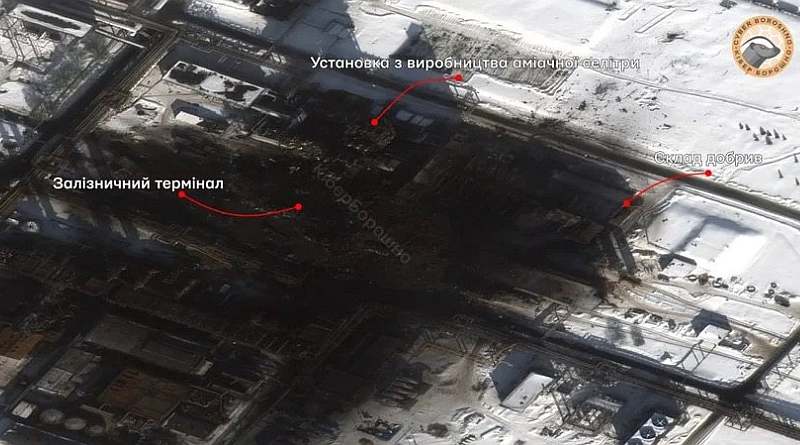
Official Rosstat data for March is still being compiled, but according to preliminary estimates and RZD data, fertilizer production growth has slowed to zero or dropped into negative. Fertilizer loading on the railway in the North-West region dropped by 2.5% in the first quarter, and transshipment in Baltic ports fell by 12% in the first two months of 2026. Reasons: shortage of vessels and systemic disruptions in ports. Together with export bans, this is a characteristic sign that we hit the mark very well. The agricultural sector is pulling the economy, but when you lack ammonium nitrate to feed both the fields and the guns simultaneously, you have to choose. The Kremlin chose guns, which means that soon the agricultural sector will also decline.
In the headline: On the night of February 25, a chemical plant in the city of Dorogobuzh, Smolensk region of Russia, was attacked. Photo: Radio Svoboda
Copyright © 2021 RFE/RL, Inc. Reprinted with permission from Radio Free Europe/Radio Liberty
