

Information on current Russian losses due to sanctions as of 11.11.2026.
1. Ukrainian drones attacked the Ust-Luga port on the Baltic Sea: a large-scale fire broke out, possibly damaging tankers.
– On the night of November 11, Ukrainian drones attacked the Russian port of Ust-Luga in the Leningrad region. After the strikes, a fire broke out on the port infrastructure territory. NASA FIRMS satellite service recorded several thermal anomaly spots directly in the port and in the water area.
– Ust-Luga is one of the largest Russian ports on the Baltic Sea and an important hub for exporting crude oil, petroleum products, grain, and other goods. Russia also exports oil through this port using the shadow fleet. The port is under sanctions by the EU, USA, UK, Canada, and Switzerland.
– Damage to port infrastructure may create additional obstacles for Russian oil exports and the shipment of other goods through the Baltic Sea.
2. Russia’s budget deficit exceeded 5.2 trillion rubles, despite record oil prices.
– By the end of January–October 2026, Russia’s federal budget deficit grew to 5.23 trillion rubles ($63 billion), or 2.3% of GDP. In October alone, it increased by another 48 billion rubles, according to data from the Ministry of Finance. Russian expenditures continue to outpace revenue growth, and the rise in Russian oil prices did not correct the situation.
– Compared to the same period last year, the deficit increased by one-third, or by 1.29 trillion rubles. Its current volume is almost one and a half times the initial annual plan of 3.6 trillion rubles. Forecasts indicate that by the end of 2026, the budget gap will reach 7.3 trillion rubles, or 3.2% of GDP.
– Oil and gas revenues fell by 14.1% year-on-year over ten months, while revenues from non-resource sectors grew by 19%, but this is not enough to offset the decline in energy resource revenues and the rapid increase in state expenditures. From January to October, budget spending increased by 13.4% to 38.4 trillion rubles.
– The war against Ukraine and financing of the military economy remain one of the main factors pressuring state finances. Estimates suggest that spending on national defense this year could amount to about 17 trillion rubles instead of the 12.9 trillion budgeted.
– In the draft budget for 2027, 17.1 trillion rubles are already earmarked for military needs, and about 50 trillion for the next three years in total. The Kremlin continues to increase military commitments, limiting the ability to finance other areas and restrain the budget deficit.
3. Russia’s maritime oil exports fell to a three-week low due to port disruptions and Ukrainian attacks.
– Seaborne deliveries of Russian oil are decreasing due to shipping disruptions at key export ports and Ukrainian attacks on oil infrastructure. In the four weeks up to November 8, the average export volume fell to 3.63 million barrels per day — 40,000 barrels less than the previous four-week period.
– The most significant disruptions were recorded at the Pacific port of Kozmino. Last week, no oil was loaded there for several days, likely due to repair work.
– Additional problems are caused by Ukrainian attacks on oil transportation infrastructure. On November 2, a Ukrainian drone hit an oil pumping station in Samara — an important hub of the pipeline system that transports oil from Western Siberia and Kazakhstan to Novorossiysk on the Black Sea and Ust-Luga on the Baltic Sea.
– Ukraine also resumed intensive attacks on Russian refineries after nearly a two-week pause. Since the beginning of November, six plants with a combined processing capacity of 1.7 million barrels per day have been attacked. In the week up to November 8, Russian oil was loaded onto 28 tankers with a total volume of 23.6 million barrels. The previous week, 39 ships transported 28.53 million barrels. Average daily deliveries for the last week decreased by about 700,000 barrels — to 3.37 million barrels, the lowest level in three weeks.
– Disruptions in ports, pipelines, and refineries limit Russia’s ability to export oil and earn foreign currency revenue.
4. The last tanker with Russian diesel heading to the USA changed course 400 miles from New York.
– The tanker Agioi Fanendes, carrying a shipment of Russian diesel fuel, turned around approximately 400 nautical miles (740 km) from New York and began moving away from the US East Coast. The vessel is transporting about 40,000 tons of ultra-low sulfur diesel — nearly 300,000 barrels.
– The tanker departed from the Russian port of Primorsk at the end of October and initially listed New York as its destination. However, it later changed its status to “for orders” and has been moving slowly, altering its course since November 9.
– The management company Eastern Mediterranean Maritime Ltd. reported that the unloading port has not yet been determined. Agioi Fanendes became the third tanker carrying Russian diesel to change its route after initially heading to the US.
– Previously, the vessels Talisman and Leruo also abandoned their American routes: one headed to the Mediterranean, the other to Brazil. According to ship tracking data, none of these Russian diesel shipments have yet arrived in the US. The deliveries were part of agreements between Donald Trump and Putin regarding the supply of Russian diesel to American and global markets.
– To implement the plan, the US Treasury issued a temporary license for specific transactions involving Russian fuel. However, accepting such shipments remains legally risky: New Jersey Governor Miki Sherrill warned port operators of potential civil and criminal liabilities for unloading Russian fuel.
– American senators from both parties also declared legislative restrictions on the import of Russian energy sources. The Trump administration aimed to use Russian diesel to increase fuel supply in the American market. Meanwhile, buyers are hesitant to accept shipments due to legal uncertainty and the risk of sanctions and reputational consequences.
– Agreements between Moscow and Washington have yet to secure Russia’s entry into the American diesel fuel market. Even after receiving a temporary permit, Russian suppliers faced challenges finding buyers and ports willing to accept their shipments.
5. Russia’s attempt to replace the dollar with the Chinese yuan has failed.
– The Kremlin’s attempt to make the Chinese yuan the primary alternative to the dollar in international settlements has failed due to the threat of secondary US sanctions. The share of the yuan in payments for Russian exports has halved compared to the peak level in mid-2024 — to 22%, according to the latest data from the Bank of Russia. Instead, in trade with Asian countries, Russian exporters receive 69% of revenue in rubles.
– However, the switch to national currencies did not eliminate issues with international payments and did not provide Russian business with reliable access to the Chinese financial system.
– The turning point occurred in June 2024 when the US expanded the grounds for imposing secondary sanctions against foreign financial institutions and companies cooperating with Russia. After this, Chinese banks began massively refusing operations with Russian counterparts, payments were frozen or delayed for months, and transfers were returned to senders. Russian businesses faced a shortage of foreign currency, and the Bank of Russia urged credit institutions to limit lending in yuan.
– Now companies are forced to conduct settlements through intermediaries and third countries, using more complex and expensive payment schemes. According to STT Logistics, the total costs of cross-border payments with China, including commissions and intermediary fees, average 15–20% of the transaction amount.
– Even with a contract and a verified partner, Russian companies have no guarantee that the payment will go through without delays or return. Problems are exacerbated by the fact that Russia increasingly spends more yuan on settlements with third countries than it receives from them.
– By mid-2024, the volume of exports paid in Chinese currency exceeded the value of deliveries directly to China, meaning the yuan was actively used in trade with other states. By the end of 2025, the situation reversed.
– US sanction pressure undermined one of the Kremlin’s key strategies for de-dollarizing the economy. Instead of an alternative independent of the Western financial system, Russian companies received more costly and unreliable settlements, and Chinese banks showed their willingness to limit cooperation with Russia to avoid risking access to the American financial system.
6. China is increasingly earning from trade with Russia: the import of Russian raw materials is growing, while the export of Chinese goods is slowing down.
– In October, the trade imbalance between China and Russia worsened: Chinese imports from Russia grew significantly faster than exports in the opposite direction.
– According to China’s customs service data, shipments of Chinese goods to Russia amounted to 75.7 billion yuan ($11.35 billion) — 25.2% more than a year ago. However, growth rates sharply slowed compared to September’s 44.1%.
– Conversely, imports from Russia increased by 43.9% — to 112.44 billion yuan against 36.1% the previous month. As a result, China’s trade deficit with Russia reached 36.74 billion yuan — more than double the September figure.
– Russia’s exports to China are mainly oil and gas, while Chinese shipments to Russia consist mostly of relatively low-value goods and automobiles.
– In practice, Russia is increasing raw material supplies but not receiving a corresponding rise in Chinese product shipments. In this model, Beijing strengthens its position as a buyer of Russian energy resources, and Moscow becomes increasingly dependent on the Chinese market.
– Slowed Chinese exports are especially painful for Russian businesses, which, after the implementation of Western sanctions, have reoriented toward China as one of the main suppliers of goods, equipment, and automobiles.
– The growth of Russian raw material imports does not mean that Russia receives equivalent access to Chinese goods and technologies.
7. Weak sanctions compliance control in the EU allows Russia to bypass trade restrictions.
– The European Court of Auditors warned that insufficiently consistent enforcement of sanctions in EU countries undermines the effectiveness of trade restrictions against Russia. One of the key risks auditors identified is the so-called choice of customs jurisdiction: companies intentionally register goods through countries or customs points where control is weaker and penalties for violations are less stringent.
– Differences in member states’ approaches create opportunities for redirecting sanctioned goods through the least controlled areas of the European customs system. The effectiveness of the entire sanctions mechanism essentially depends on its weakest link.
– Auditors found significant differences in the application of restrictions in five studied countries — Bulgaria, Germany, Latvia, the Netherlands, and Poland. Specifically, Bulgaria has not reported any EU trade sanctions violations on exports passing through its territory since 2022, while Latvia recorded 2,100 such cases in 2024 alone.
– The report also provides an example of goods, whose export was initially allowed in Italy but later caught the attention of Polish customs. After being returned to Italy, these products were eventually sent directly to Russia via an Italian port.
– Other problems auditors noted include vague wording of sanction legislation, insufficient information exchange between governments, and a lack of unified criteria for evaluating the effectiveness of restrictions.
– Such disunity allows sanctions evasion even within the EU and weakens pressure on the Russian economy.
8. Turkey rejects Russia’s Rosatom in new nuclear projects.
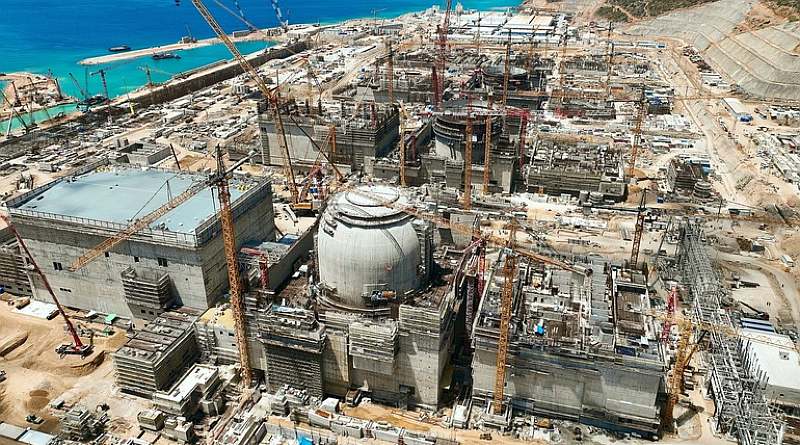
– “Rosatom,” which is building Turkey’s first nuclear power plant “Akkuyu” (pictured – Ed.), is losing the prospect of obtaining new contracts in the country. Ankara is negotiating with Canada and South Korea regarding the construction of subsequent nuclear power plants, effectively pushing the Russian state corporation out of participation in new projects.
– Turkish Energy Minister Alparslan Bayraktar stated that both potential partners have already significantly convinced Ankara with their technological proposals. A final decision is expected in the coming months.
– The Turkish government has also discussed project financing with Canadian pension funds. Criteria for selection include competitiveness, diversification, and technological advantages. For Russia, this means losing the opportunity to secure positions in the Turkish nuclear market through new multi-billion-dollar contracts. “Akkuyu” remains a separate project, but participation in it no longer guarantees Rosatom access to further development of nuclear energy in Turkey.
– At the same time, Ankara aims to accelerate the electrification of the economy and expand the use of renewable energy, including through electricity supplies from Central Asian countries. This creates additional prerequisites for diversifying the energy balance and gradually reducing the role of Russian gas in the Turkish market.
– Should these plans be implemented, Moscow risks losing not only potential orders for Rosatom but also part of its long-term energy influence on Turkey.
