

Information on the current losses of Russia due to sanctions as of 07/13/2026.
1. Ukrainian drones attacked an oil depot in Stavropol for the second time in a week and hit the port of “Kavkaz”.
– On the night of July 13, Ukrainian drones once again attacked the oil depot in the village of Vyazniki, Stavropol region. According to local residents and satellite images, a large fire broke out after the strike, which was not extinguished for a long time.
– Ukrainian monitoring resources report that at least two tanks caught fire. This is the second attack on oil infrastructure in Vyazniki in the past week. On July 9, another oil depot owned by JSC “NK Rosneft-Stavropol” was hit.
– Simultaneously, drones attacked the Krasnodar region. According to Ukrainian sources, a fire broke out at the port of “Kavkaz” in the oil products transfer complex and the railway station. The port is one of the key logistical hubs connecting Russia and the occupied Crimea via the Kerch ferry line.
2. In Russia, gasoline prices rose by a quarter over the year amid the fuel crisis.
– In the first decade of July, median prices for AI-92 and AI-95 gasoline in Russia increased by 20% and 24% respectively compared to the same period last year. The data covers every third gas station in the country and indicates a sharp rise in demand, especially for premium AI-100 gasoline.
– The fuel deficit cannot be compensated by changing consumption patterns. High demand and limited supply leave no prerequisites for price reductions in the coming weeks. Rising fuel prices have already become one of the key factors accelerating inflation, which reached 6.02% in June.
– Only a slowdown in the pace of price increases is expected, but not a reduction, indicating sustained inflationary pressure on the Russian economy.
3. The fuel shortage in Russia is already disrupting government operations.
– The fuel crisis in Russia has begun to directly affect the operation of the public sector. Due to shortages of gasoline and diesel fuel, hospitals, social services, municipal enterprises, and state-owned companies increasingly cannot procure fuel through the government tender system.
– In May-June 2026, the number of canceled, failed, or re-announced fuel procurements was at least three times higher than in the same period the previous year. The main reason was the lack of suppliers willing to participate in the tenders.
– Amid the fuel shortage, regional authorities are imposing restrictions on its sale to the public. At the same time, separate pumps are set up for emergency services, police, fire services, and public transport, and restrictions on fuel dispensing are lifted.
– The Russian authorities describe the situation in occupied Crimea as the most difficult. Mass tender disruptions increase budget pressures as purchasers are forced to re-conduct procurements and raise the starting contract price in line with rising market fuel prices.
4. Russia is increasingly dependent on a few energy resource buyers.
– After EU sanctions, Russia redirected its fossil fuel exports to China, India, and Turkey. Meanwhile, the EU remains the largest market for Russian LNG and pipeline gas.
– Since December 2022, China and India have become key buyers of Russian oil, accounting for 86% of its exports. This has increased Russia’s dependency on a narrow circle of buyers and their pricing conditions.
– Turkey has become the largest importer of Russian oil products (26%), surpassing China, Brazil, and Singapore, and remains a key distribution channel.
– The EU remains the largest buyer of Russian LNG and pipeline gas, accounting for 49% and 32% of their exports, respectively. This indicates that the sanctions have changed the supply routes but not eliminated the energy dependency on Russia.
5. The EU is purchasing record volumes of gas from the flagship Russian plant.
– In the first half of 2026, EU countries imported a record 9.89 million tons of liquefied natural gas from the Russian project “Yamal LNG,” which is 18% more than in the same period of 2025.
– The biggest buyers were France (3.6 million tons), Belgium (2.9 million tons), and Spain (2.7 million tons). It is estimated that the total purchase value could reach about €6 billion.
– Despite statements about reducing energy dependency on Russia, the EU continues to be one of the main markets for Russian LNG.
– This provides the Kremlin with significant foreign currency earnings and helps partially offset losses from restrictions in other energy directions.
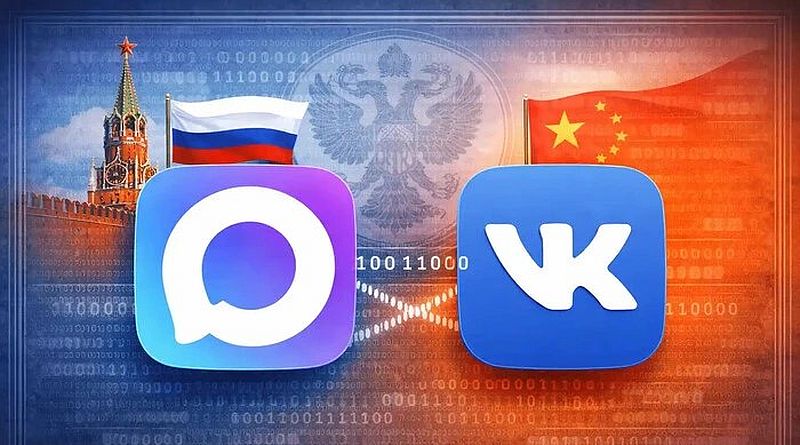
6. The EU has imposed sanctions against Russian VK and the Russian state messenger Max.
– The European Union has imposed sanctions on the Russian holding VK and its subsidiary “Communication Platform” — the developer of the state messenger Max.
– According to the EU decision, VK facilitates the repressive policies of the Russian authorities, particularly by providing law enforcement agencies with user data who posted materials criticizing the war against Ukraine.
– The company is also accused of collaborating with the authorities to enhance censorship and block Russians’ access to independent information sources by combating VPN services.
– Regarding the Max messenger, the EU emphasizes that its development was conducted under the FSB’s control, and the service itself is used as a digital surveillance tool.
– According to the European Union’s assessment, the application can collect a variety of user data without their knowledge, and the obtained information has already been used by the Russian authorities to persecute citizens for their online activities.
– Brussels also noted that the promotion of Max was accompanied by restricting access to independent platforms, including WhatsApp and Telegram, as well as intensifying the fight against VPN services.
7. The United Kingdom introduces new sanctions against Russian cyber networks.
– The United Kingdom has imposed sanctions on 24 individuals and entities involved in Russian cyberattacks, hybrid operations, and disinformation campaigns in Europe.
– The sanctions list includes senior officials of the GRU, whom London considers involved in coordinating Russian cyber and hybrid operations. According to the British government, GRU Unit 29155 collaborated with the company “Impulse,” involving hackers and cybersecurity specialists from Russian universities and academies.
– Sanctions have also been imposed on individuals associated with the malicious software Lumma Stealer, used for mass theft of confidential data.
– The British government stated that the credentials obtained with this tool were used by Russia for cyber-espionage in the interests of the Kremlin. A separate package of restrictions concerns ten individuals connected to the pro-Kremlin project “Rybari,” including managers and content authors.
– According to London’s assessment, the project is funded by the Russian state, spreads disinformation about Ukraine, and interferes in electoral processes in European countries, including Moldova and Armenia.
– The British government emphasized that the new sanctions are aimed at countering Russia’s increasingly aggressive attempts to destabilize the situation in Europe.
– Simultaneously, the United Kingdom and the EU announced the first joint cyber sanctions package, holding Russia responsible for a cyberattack against Poland.
