

Information on the current losses of the Russian Federation due to sanctions as of 31.07.2026.
1. Ukraine continues to systematically strike Russian infrastructure: refineries, logistics hubs, and ports have been attacked.
– On the night of July 31, Ukraine launched a massive drone attack on Volgograd and other regions of Russia. At least two strategically important objects were hit — the Lukoil-Volgograd Refinery and the Wildberries distribution center.
– Preliminary data indicate explosions at the Volgograd Refinery. The enterprise is one of the largest oil refineries in Russia and produces gasoline, diesel, and aviation fuel.
– Previous Ukrainian strikes had already forced the plant to temporarily halt processing due to damage to technological installations.
– There are also reports of a fire at the Wildberries distribution center in Volgograd. The logistics complex, covering about 44,000 sq. meters, serves the Volgograd, Astrakhan, and neighboring regions.
– In addition to Volgograd, Russian sources report an attack on Nizhnekamsk in Tatarstan, where the refinery allegedly dropped pressure as a precautionary measure, as well as air defense activity in the vicinity of Kaspiysk in Dagestan, where port infrastructure might have been attacked.
2. Ukraine announced the targeting of 205 Russian vessels in the Black and Azov Seas.
– Ukrainian drone forces have targeted 205 Russian vessels used to supply occupied Crimea since the start of Operation “MoLoChKa” on July 6, 2026.
– The commander of the SBS, Robert “Madyar” Brovdi, reported this. According to him, of the vessels hit, 130 were in the Azov Sea, and another 75 in the Black Sea. During the latest attack, Ukrainian drones also struck four Russian tankers, although the locations of these strikes are not disclosed.
– Earlier in this campaign, Ukrainian drones attacked ferries connecting Russia with occupied Crimea, cargo ships, gas carriers, tugs, and port infrastructure.
– The goal of the operation is to isolate occupied Crimea, destroy logistics supporting the Russian group, disrupt maritime transport operations, and reduce Russia’s ability to supply fuel and goods to the peninsula.
– The scale of the campaign is already being called the largest maritime drone operation in recent decades.
3. Ukrainian drones damaged grain and oil terminals in the port of Taman.
– Ukrainian drones struck the export infrastructure of the Taman port in the Kerch Strait, damaging grain and oil terminals. One of the drones significantly damaged a large grain export terminal controlled by the company “Demetra.”
– The facility in the Krasnodar region has a throughput capacity of 5 million tons of grain per year and is one of the key nodes of Russian agricultural exports.
– A separate strike targeted the sunflower oil export terminal in Taman port, owned by the company “EFKO” — one of the largest agro-industrial holdings in Russia.
– The Taman port is a strategic logistical center for Russia, through which exports of grain, vegetable oil, and other cargo are conducted.
4. One of Lukoil’s largest refineries lost a third of its capacity after an attack by Ukrainian drones.
– One of the largest refineries of “Lukoil,” “Permnefteorgsintez,” was forced to stop about a third of its production capacity following an attack by Ukrainian drones on July 29.
– The enterprise had to emergency-stop the primary oil processing unit AVT-5 with a capacity of 12.9 thousand tons per day, which amounts to 34% of the total refinery capacity.
– “Permnefteorgsintez” is among the top ten largest refineries in Russia and is the second most powerful plant of “Lukoil.” The enterprise can process 13 million tons of oil per year, producing about 2 million tons of gasoline and over 5 million tons of diesel fuel.
– This is already the seventh major refinery in Russia to be damaged by Ukrainian drone attacks since the beginning of July.
5. “Rosneft” stopped one of Russia’s largest refineries after an attack by Ukrainian drones.
– The Ryazan refinery of “Rosneft,” which supplies fuel to the Moscow region, among others, completely halted oil processing after an attack by Ukrainian drones on July 29.
– The Ryazan refinery is among the top three largest refineries in Russia. Its capacity is 17 million tons of oil per year, with an annual production exceeding 2 million tons of gasoline and 3 million tons of diesel fuel. A fire occurred at the plant following the strike.
– Preliminary estimates indicate that resuming the plant’s operations will take two to three weeks. This is the second stoppage of the plant in the last three months. After the attack on May 15, the plant also ceased processing, and repairs lasted until mid-July.
– The new strike effectively disrupted the resumption of stable operations for one of Russia’s key fuel producers.
6. Transshipment of black metals through Russian seaports fell by more than 21%.
– In the first half of 2026, the transshipment of black metals through Russian seaports decreased by 21.2% to 10.87 million tons, according to Argus data. This reflects the deepening crisis in Russia’s metallurgical industry amid weak domestic demand, sanctions, and the loss of export markets.
– Despite the sharp decline in cargo flow, port transshipment rates have hardly changed. This is explained by the high share of fixed terminal costs, long-term contracts, and the limited number of alternative logistic routes.
– As a result, port operators are forced to maintain tariffs even under conditions of significant underloading.
– The reduction in transshipment coincided with a general decline in the Russian metallurgy sector. Steel production in Russia fell to its lowest level in the past 15 years, and domestic demand is decreasing due to a crisis in construction, engineering, and the transportation sector.
– According to market participants, part of the export volumes was lost due to reduced deliveries to traditional buyers, while reorientation to other ports, including Murmansk, failed to compensate for the decline due to higher logistics costs and limited infrastructure.
7. The overdue accounts receivable of Russian companies reached 9 trillion rubles at the end of May for the first time.
– Over the month, its volume increased by 2.6%, and since the beginning of the year, by 16.9%. The share of overdue debts in the total accounts receivable of businesses increased from 6.2% to 6.7%.
– It is estimated that the volume of non-payments already accounts for almost 4% of Russia’s GDP. The Central Bank acknowledged that the main reason is delays in settlements between counterparties. A sharp economic slowdown and record high interest rates contribute to the worsening situation.
– The increase in loan servicing costs leads to the accumulation of overdue debts, primarily to suppliers.
– Additional pressure is created by the reduction in investments and spending by state-owned companies, while budget resources are increasingly directed towards military needs.
– Negative trends have affected virtually all sectors of the economy, and growth rates are slowing even in the Russian defense industry. This indicates growing financial problems for businesses and a further deterioration of Russia’s economic condition.
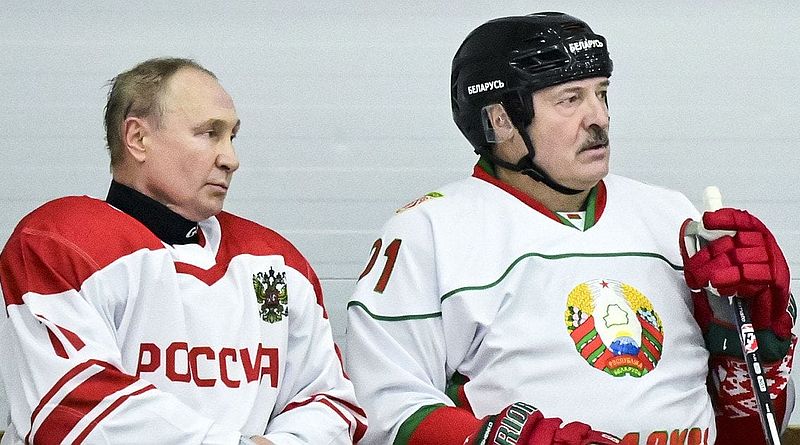
8. The International Ice Hockey Federation extended the suspension of Russia and Belarus from world championships.
– The International Ice Hockey Federation (IIHF) extended the suspension of the Russian and Belarusian teams from most international tournaments for the 2026–2027 season.
– The federation explained the decision by citing ongoing risks to security, safety, and sporting integrity. Russian teams will not participate in all key IIHF tournaments in the 2026–2027 season, including: the men’s world championship; the youth world championship; and the under-18 world championships for boys and girls.
– Belarus is also still banned from participating in the youth world championship, although the IIHF previously mentioned the possibility of Belarusian teams returning to certain lower-level tournaments.
– Meanwhile, the question of possibly admitting the Russian women’s team to the 2027 world championship will be considered separately by the IIHF Council in November 2026, taking into account the security situation and risk assessment.
