

Information on current losses of the Russian Federation due to sanctions as of 31.01.2026.
1. Russian businesses are sinking deeper into pessimism: at the beginning of 2026, only 4% of companies positively assess the situation in the economy.
– This is the lowest for the year and nearly five times less than in December, when the share of optimists was 14%. Every third company reports a drop in demand, and every fourth — an increase in contract breaches by counterparties. Two-thirds of enterprises face rising purchase prices, and about 25% are already preparing to raise their own prices, passing the cost increases onto consumers.
– Increased tax pressure, including higher VAT and taxes for small businesses, has finally destroyed any remnants of optimism after the brief budget “respite” at the end of the year. Simultaneously, the state of industry is worsening.
– The industrial optimism index has remained in the negative zone for 14 consecutive months and at the beginning of 2026 almost returned to the worst levels of the pandemic era. Current assessments are compared to the crises of 2008–2009 and even the 1990s.
– The key problem is the sharp decline in demand. Less than a third of enterprises consider it “normal”, which is worse than during the COVID shock. The high key rate, which has remained at an excessively high level for a long time, has essentially strangled investments and led to stagnation: economic growth has fallen below 1%, and civil industrial sectors have been in decline since 2025.
– Collectively, these signals indicate systemic degradation of the business climate in Russia and the exhaustion of the economy’s resources to adapt to war, sanctions, and internal fiscal experiments.
2. Russia has postponed the launch of the “Kondor-FKA” No. 3 radar Earth remote sensing satellite by at least three years.
– Instead of the previously promised 2026, the satellite is now planned to be launched into orbit only in 2029, and the launch of the fourth satellite has been postponed to 2030.
– The revision of the timeline means an actual disruption of previous plans and demonstrates the limited capabilities of the Russian space sector, which is increasingly facing a shortage of funding, technologies, and production resources. Even projects that formally have no military purpose are being pushed to the background.
– The “Kondor-FKA” series satellites are designed for round-the-clock and all-weather observation of the Earth’s surface, including mapping, environmental monitoring, and exploration of natural resources.
– The delay in their launch weakens Russia’s capabilities in these areas and underscores that the country’s space infrastructure is gradually losing its ability to develop even in basic civil directions.
3. The EU is preparing new sanctions against Russia and its financial intermediaries.
– The 20th package of European Union sanctions is planned to include restrictions against Russian banks and oil companies, as well as crypto services and financial structures in third countries that help Moscow circumvent the sanctions regime.
– Adoption of the package is expected by the end of February. Separately, the EU is discussing a more radical step — replacing the price cap on Russian oil with a full ban on maritime services.
– This concerns insurance, transportation, and other services without which oil export is practically impossible, regardless of the price per barrel.
– However, unanimous support from all EU countries is required to approve the sanctions, and some capitals are already opposing a complete refusal of the price cap.
4. The European Union is preparing to take another step in closing off channels for circumventing sanctions that Russia has been actively using since the start of the full-scale war.
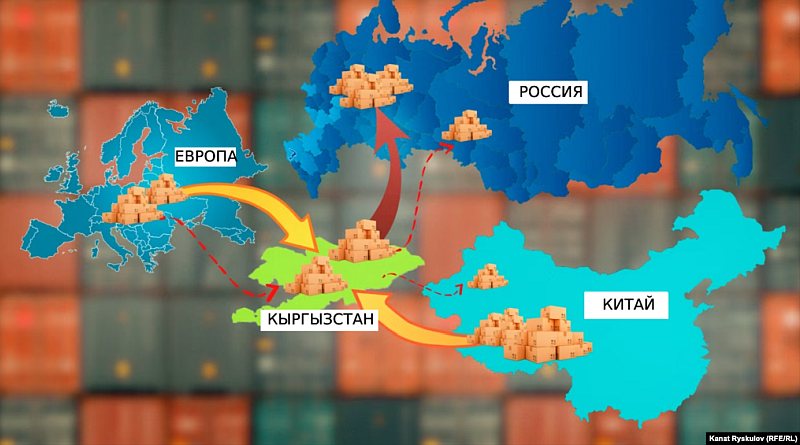
– As part of the preparation for the 20th package of restrictions, sanctions against a post-Soviet state — Kyrgyzstan — are being considered for the first time due to systematic assistance to Moscow.
– This involves the application of a special mechanism to combat the circumvention of sanctions. If a decision is made, the EU may ban the supply of industrial machinery and radio electronics to Kyrgyzstan — precisely those goods that subsequently ended up in Russia despite formal restrictions.
– Since the beginning of the war, Kyrgyzstan has effectively become a transit hub for European goods destined for the Russian market.
– The statistics of a sharp increase in exports from EU countries to this Central Asian republic by thousands and tens of thousands of percent became one of the most striking pieces of evidence of large-scale re-export in the interests of the Kremlin. This is essentially a systemic undermining of the sanctions regime intended to limit Russia’s access to critically important technologies.
– The EU also draws particular attention to the financial infrastructure circumventing sanctions. A cryptocurrency platform with a stablecoin pegged to the ruble was launched in Kyrgyzstan, used for cross-border settlements under the conditions of Russia’s sanctions isolation.
– The volume of transactions through this instrument reached about $100 billion by early 2026, highlighting the scale of shadow financial flows serving Russia’s war economy.
5. Brazil has increased its import of Russian diesel fuel.
– This indicates not so much stability in supplies as a forced re-entry of the Russian Federation to certain markets through aggressive price dumping. In January, diesel supplies from Russia to Brazil increased to about 151,000 barrels per day — three times more than in December.
– This effectively means the resumption of purchases after a several-month decline caused by sanctions pressure, temporary restrictions on diesel exports from the Russian Federation, and a drop in processing due to strikes on Russian refineries by Ukraine.
– For comparison, in 2025 Brazil was actively purchasing Russian fuel purely for pricing reasons: in April and August, volumes reached 800-900 thousand barrels per day.
– This dynamic underscores Russian export dependency on situational discounts and unstable logistical solutions.
– The resumption of supplies confirms that the Russian Federation is forced to sell oil products at discounts to maintain market share under sanctions and increasing technological and production constraints.
6. The US offers India Venezuelan oil amid a slowdown in Russian oil imports.
– Washington has indicated to New Delhi that the Indian side can resume purchases of Venezuelan oil specifically as a replacement for Russian supplies.
– This is about gradually pushing Russia out of one of its key markets. India, which became one of the main buyers of Russian oil after the full-scale invasion, providing Moscow with foreign currency income circumventing Western sanctions, is already preparing for a sharp reduction in imports.
– In the coming months, purchases may drop below 1 million barrels per day, and later to 500–600 thousand barrels. For comparison: back in August 2025, India imported about 2 million barrels per day from Russia.
– Such a decline means a significant blow to Russian oil revenues. The Indian direction was one of the few that allowed the Kremlin to partially compensate for the loss of the European market after the start of the war against Ukraine.
– Now this channel is also narrowing—under US pressure and due to India’s changing trade priorities. Notably, Washington last year imposed 25% tariffs against India for purchases of Venezuelan oil, but is now ready to “give the green light” to Caracas just to reduce New Delhi’s dependence on Russian energy resources.
– This demonstrates that the strategic goal for the US remains depriving Russia of oil rents that fuel its war machine.
Infographics: Radio Liberty
Copyright © 2021 RFE/RL, Inc. Reprinted with permission from Radio Free Europe / Radio Liberty
